Bedroom
Upholstered Bed Ideas That Balance Headboard Profile, Color, and Room Scale
Upholstered bed ideas focused on headboard silhouette, profile, color field, bedside relationships, room scale, and circulation across six bedroom settings.
An upholstered bed can act as the largest soft surface in a bedroom, so its shape matters as much as its color. Headboard height, edge profile, visible texture, and the proportion of the lower frame all influence how nightstands, lamps, bedding, benches, walls, and circulation are perceived around it.
The most useful upholstered bed ideas keep the bed readable as a complete furniture form rather than letting pillows or surrounding decor hide the profile. A tall channelled headboard should still show its full vertical rhythm, a wingback bed should retain both projecting side wings, and a low platform should remain clearly low. Color works the same way: if the upholstered surface is meant to be the hero, the rest of the room should support rather than compete with that field. These six rooms use different profiles, textures, and scales while keeping the bed-to-room relationship clear.
1. Let a tall channelled headboard carry the vertical emphasis
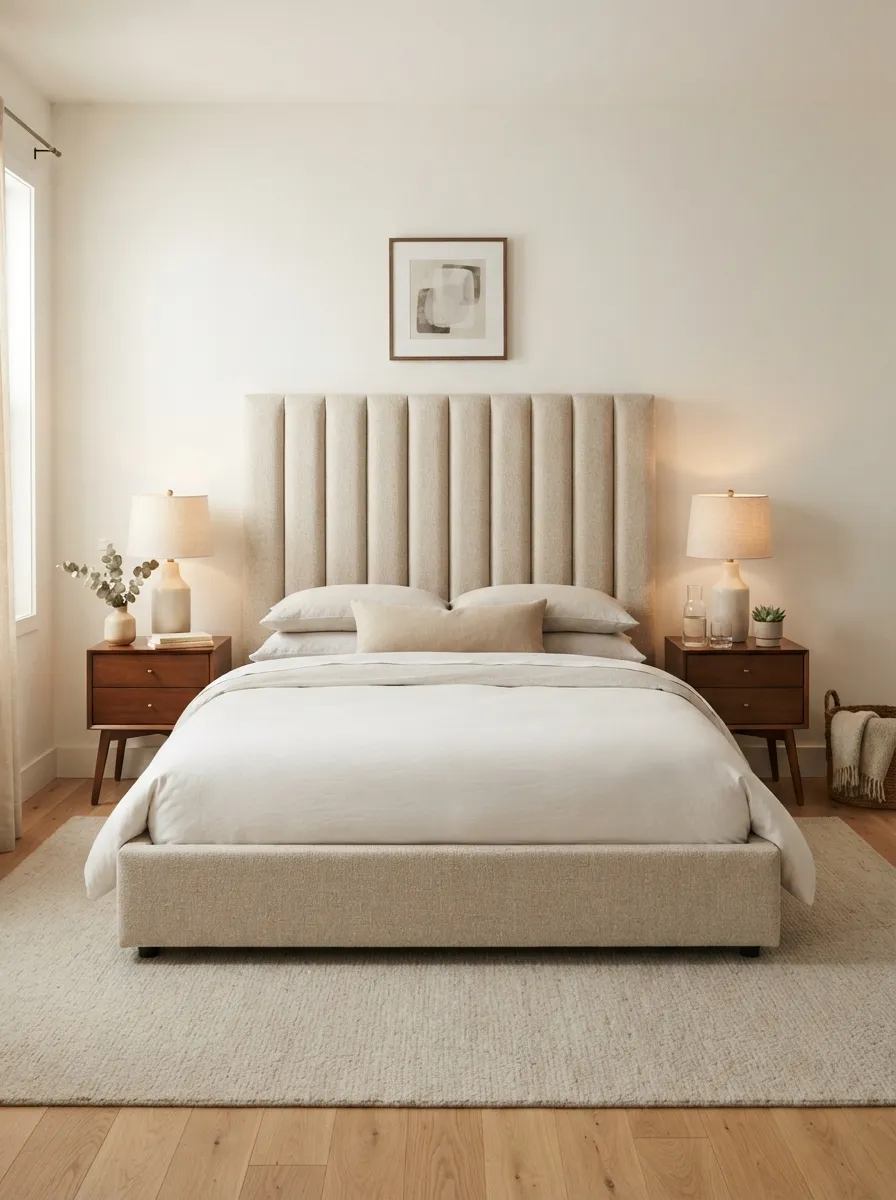
A tall oatmeal upholstered bed can give a neutral bedroom structure without relying on a busy wall treatment. The key is to preserve the full headboard height and both outer edges so the vertical channel rhythm reads as one continuous architectural surface rather than a partially hidden background.
Pale bedding stays subordinate and does not rise high enough to erase the channelled surface. Warm dark wood-toned nightstands add contrast while remaining proportionate to the tall bed, so they frame rather than overpower it. Visible floor beside the bed also matters because a large headboard can feel visually dominant even when the route around the frame remains practical.
The photograph supports color, visible channels, silhouette, relative scale, and circulation. It does not establish actual linen or wool, exact wood species, actual walnut, construction, support system, exact headboard height, dimensions, load capacity, comfort, or durability.
2. Keep both wings visible on a charcoal wingback bed
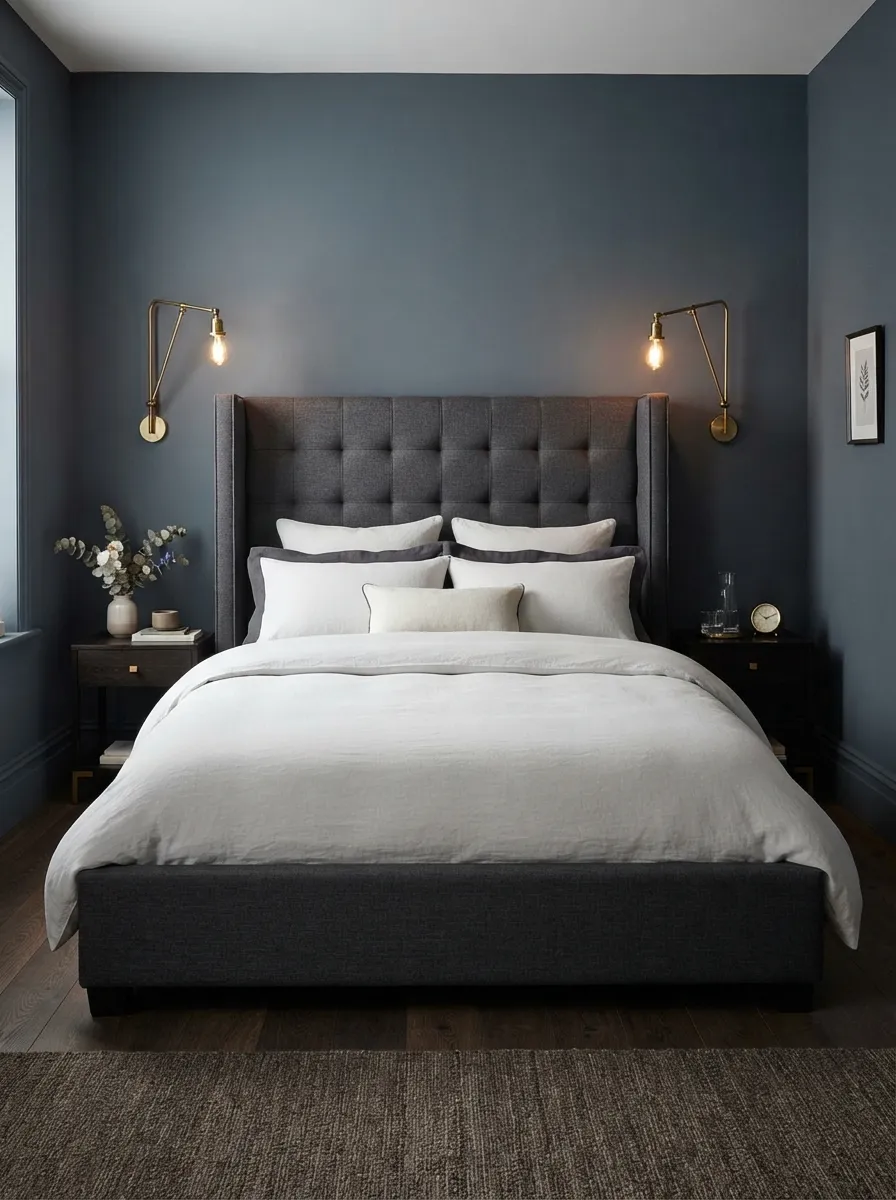
A wingback bed depends on the side profile. Against deep blue-gray walls, the charcoal upholstered headboard reads as a defined enclosure because both side wings visibly project forward around the pillow zone. If those wings disappeared, the bed would become a different straight-headboard silhouette.
Pale bedding creates a lighter center, while restrained nightstands keep the outer width of the bed easy to read. Brass-toned sconces sit outside the wing profile and frame the composition without blocking either side. That relationship is especially useful in rooms where the headboard already carries substantial visual width.
Use the image to compare wing depth, outer width, wall clearance, color, and bedside scale only. Exact upholstery fiber, construction, support, dimensions, finish, care method, and durability require merchant verification.
3. Keep a compact bedroom distinctly low and open
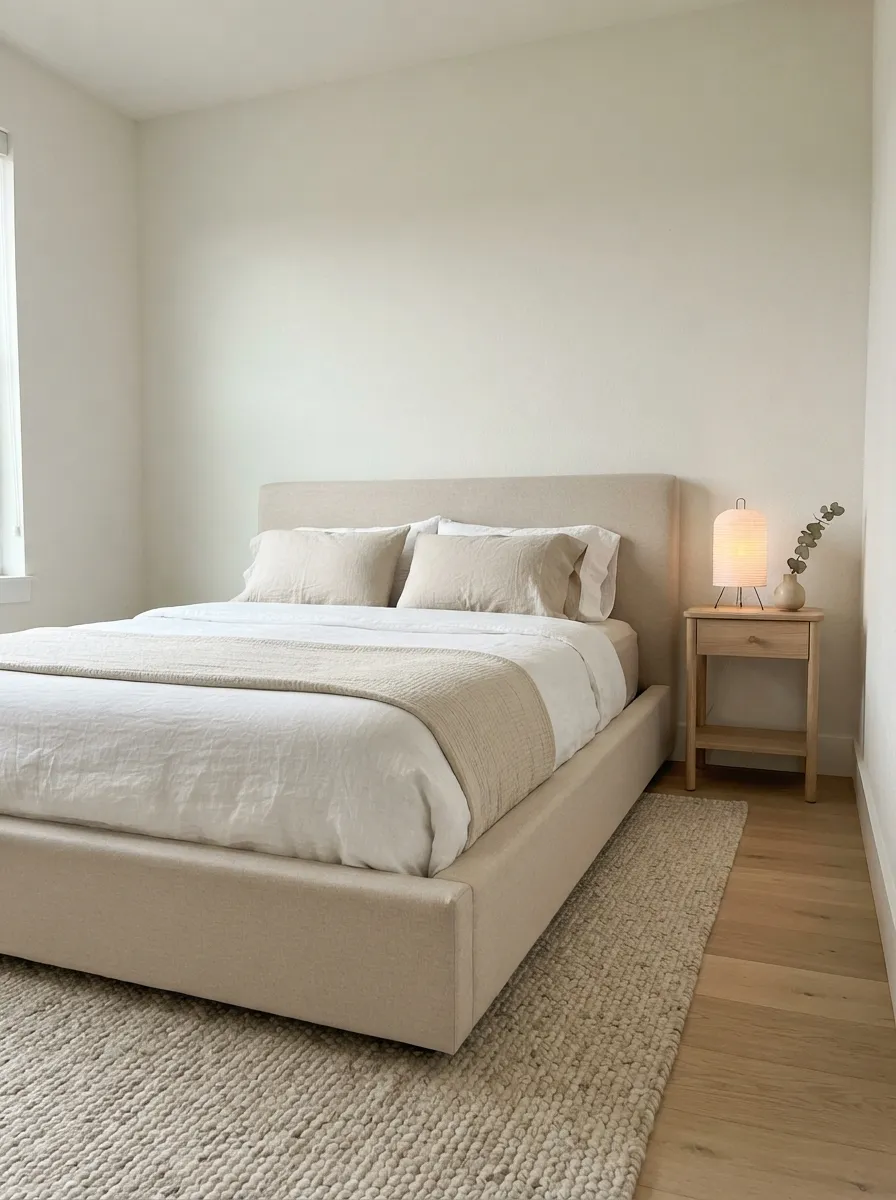
A low beige upholstered platform shifts attention toward the horizontal plane of the room. Here, the headboard remains distinctly low, with generous breathing room on the wall above it. That open vertical space is part of the design logic and should not be replaced by a taller profile.
Slim supporting furniture stays visually quiet, while at least one clear side path shows how the low bed sits within the compact room rather than merely looking small in isolation. The mattress, upholstered frame, and headboard remain coherent as one low furniture silhouette.
Nothing visible proves under-bed storage, drawers, access panels, or a lift mechanism. Do not infer exact frame height, under-bed clearance, dimensions, construction, support system, or storage function from the photograph.
4. Use side daylight to reveal textile-like surface variation
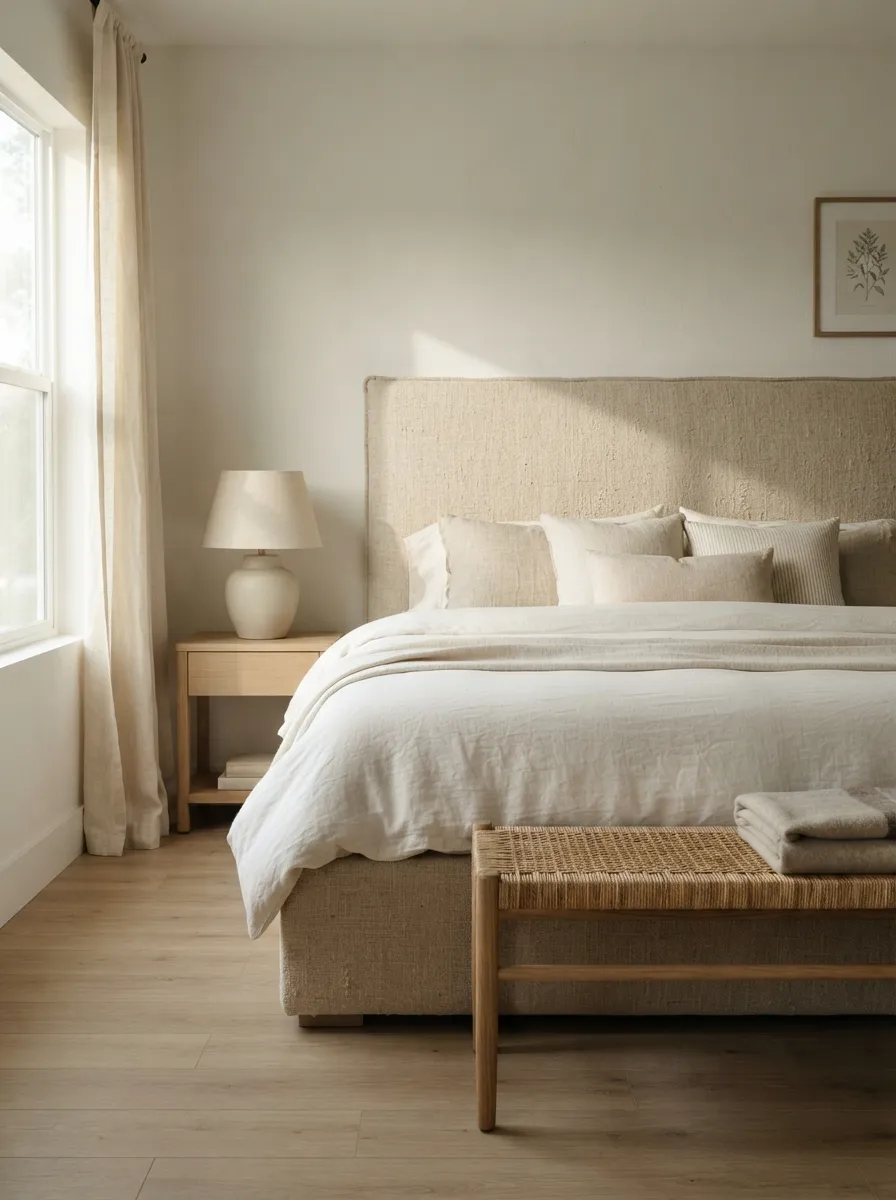
A flax-toned upholstered bed becomes more interesting when directional daylight reveals subtle variation across the surface. The broad headboard field remains visible, allowing the texture to register without needing a stronger color contrast.
Creamy drapery, light wood-toned flooring, and ceramic lighting reinforce the pale daylight atmosphere. A woven-look bench at the foot adds another tactile-looking surface, but it remains secondary to the bed. Bedding stays low enough to preserve a broad readable headboard area.
Flax-toned and linen-look describe appearance only. The image does not verify actual flax, linen, fiber composition, cleanability, stain resistance, durability, padding, construction, or performance.
5. Treat a substantial lower frame as storage-oriented visual mass only
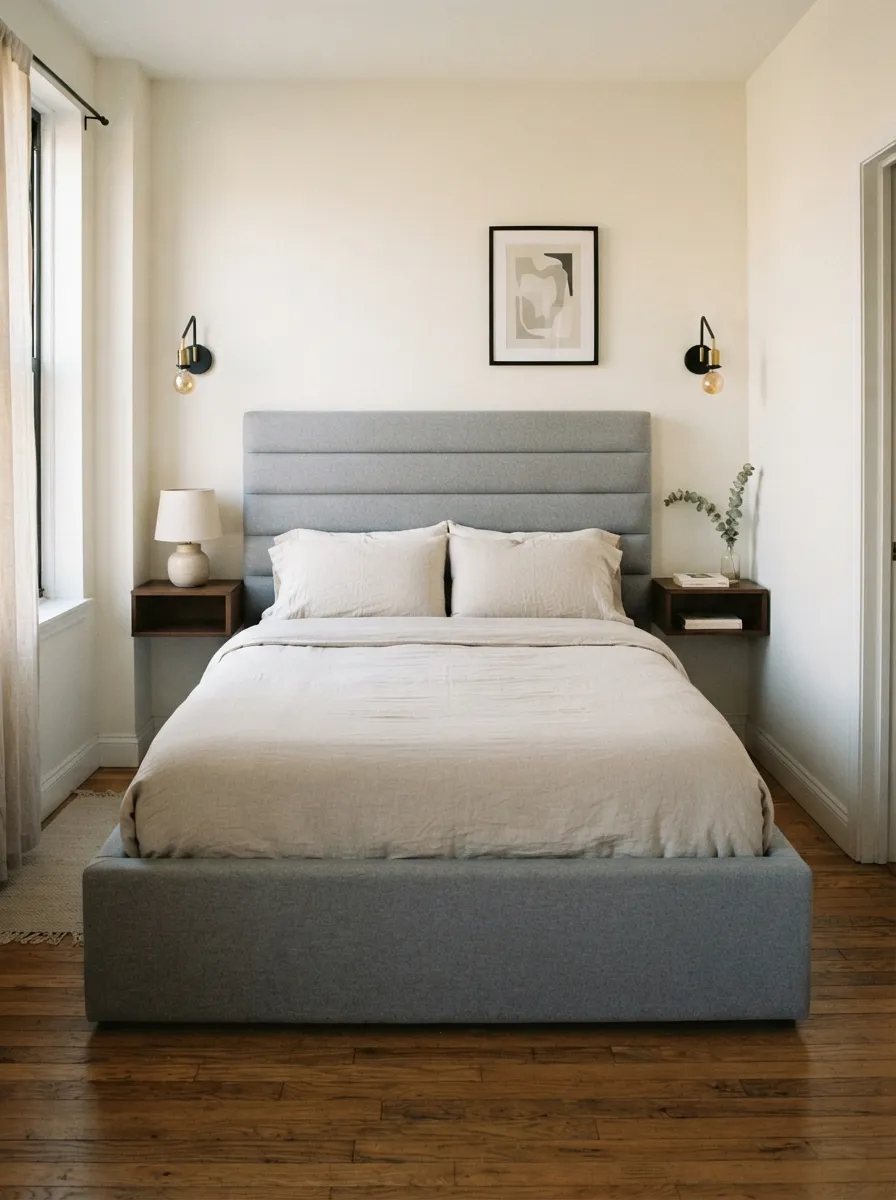
In a compact urban bedroom, a soft gray upholstered bed can feel grounded because the lower frame has more visual mass than an open-legged design. Narrow nightstands and wall-mounted lights help keep the surrounding footprint visually controlled, while quiet beige bedding lets the bed silhouette remain clear.
The frame may suggest storage-oriented design, but the image does not prove storage functionality. There are no visible drawers, open compartments, lift-up mechanism, hydraulic parts, hinges, handles, or access panels. The supported editorial point is the grounded lower-frame appearance and how that mass relates to a small room.
Actual storage, storage capacity, frame construction, internal hardware, under-bed clearance, dimensions, support, assembly, and warranty must be confirmed from merchant information.
6. Keep deep moss as the room’s dominant green field
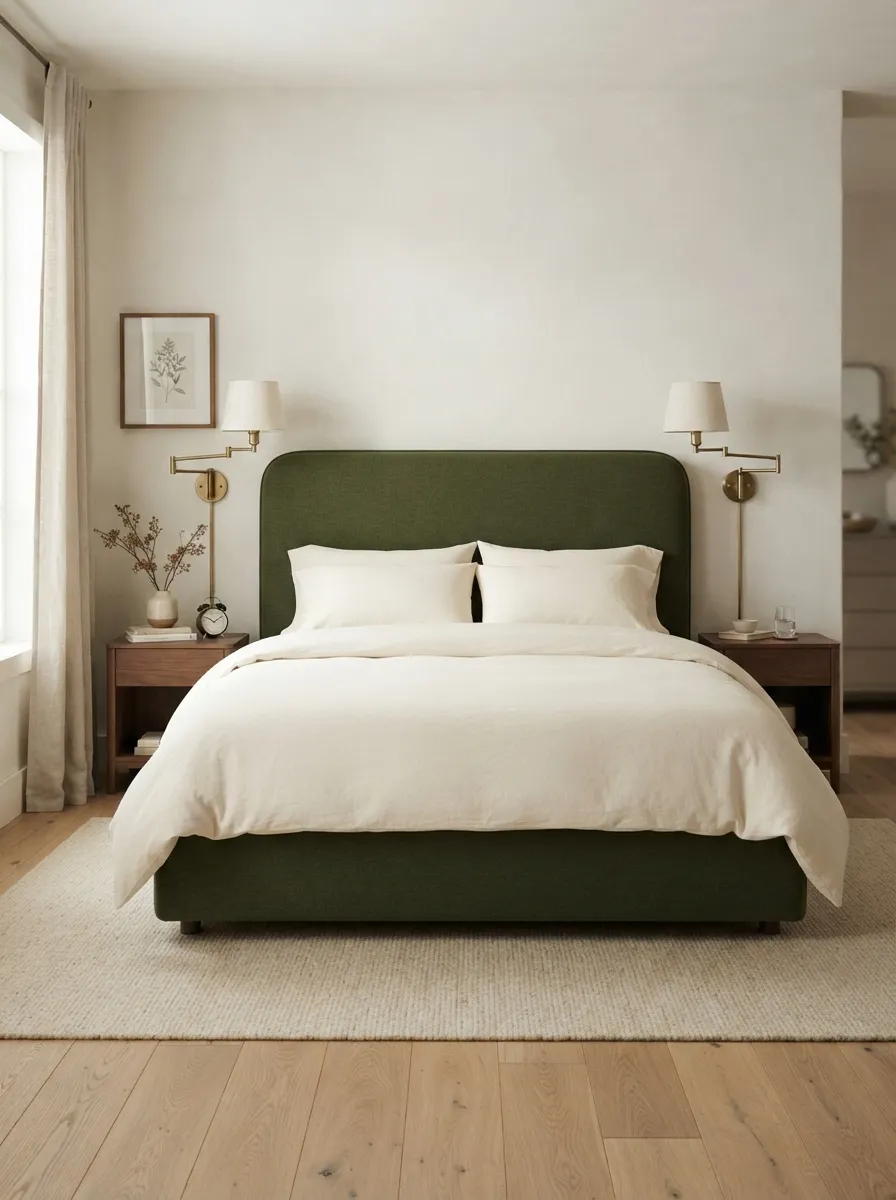
A deep moss upholstered bed works best when the green remains concentrated on the bed itself. The headboard is unmistakably green rather than gray, teal, or blue, and its softly rounded outer corners stay visible so the color field also retains a clear silhouette.
Cream bedding gives the center contrast without introducing more green. Warm dark wood-toned nightstands and brass-toned swing-arm sconces frame the bed while staying secondary. No large green pillows, blanket, rug, or curtains compete with the headboard, so the upholstered bed remains the unmistakable color hero.
The scene supports visible color, rounded corners, bedside relationships, and room scale only. It does not verify velvet, linen, exact fiber content, actual walnut, construction, support, comfort, firmness, dimensions, care requirements, or finish.
Compare silhouette first, then verify the hidden specifications
An upholstered bed is easiest to assess when its headboard profile, lower frame, bedside relationships, and circulation remain visible together. Start with the silhouette: tall or low, straight or winged, rounded or channelled. Then compare how much wall remains around the bed, how nightstands and lights frame the edges, and whether the upholstered color field has enough visual space to remain dominant.
Use photographs for appearance, geometry, visual mass, relative scale, and room relationships. Verify actual materials, fiber composition, mattress and frame construction, support system, storage mechanisms, dimensions, capacity, finish, assembly, warranty, care, and availability directly with the merchant before making a purchase decision.