Dining Room
Dining Room Bench Seating Ideas That Balance Table Shape, Chair Rhythm, and Circulation
Dining room bench seating ideas focused on bench silhouette, table and chair relationships, circulation, and visual mass across six dining-room settings.
A dining bench changes more than the number of chair backs around a table. Its long silhouette can reduce visual interruption on one side, create a stronger horizontal line, or make a compact zone feel more contained. At the same time, a bench changes how people approach the table, how individual chairs pull away, and how much visual mass sits along the perimeter.
The most useful dining room bench seating ideas make the bench easy to read as a distinct seating element while keeping its relationship to the table and chairs clear. A backless bench should not become a sofa-like form, a built-in banquette should read as part of the room rather than a loose object, and a solid-base bench should not be described as verified storage unless product information confirms it. Across these six rooms, the recurring questions are simple: where does the bench sit, what does it balance, and does the layout leave a believable route around the dining group?
1. Keep one backless bench clear along a rectangular table
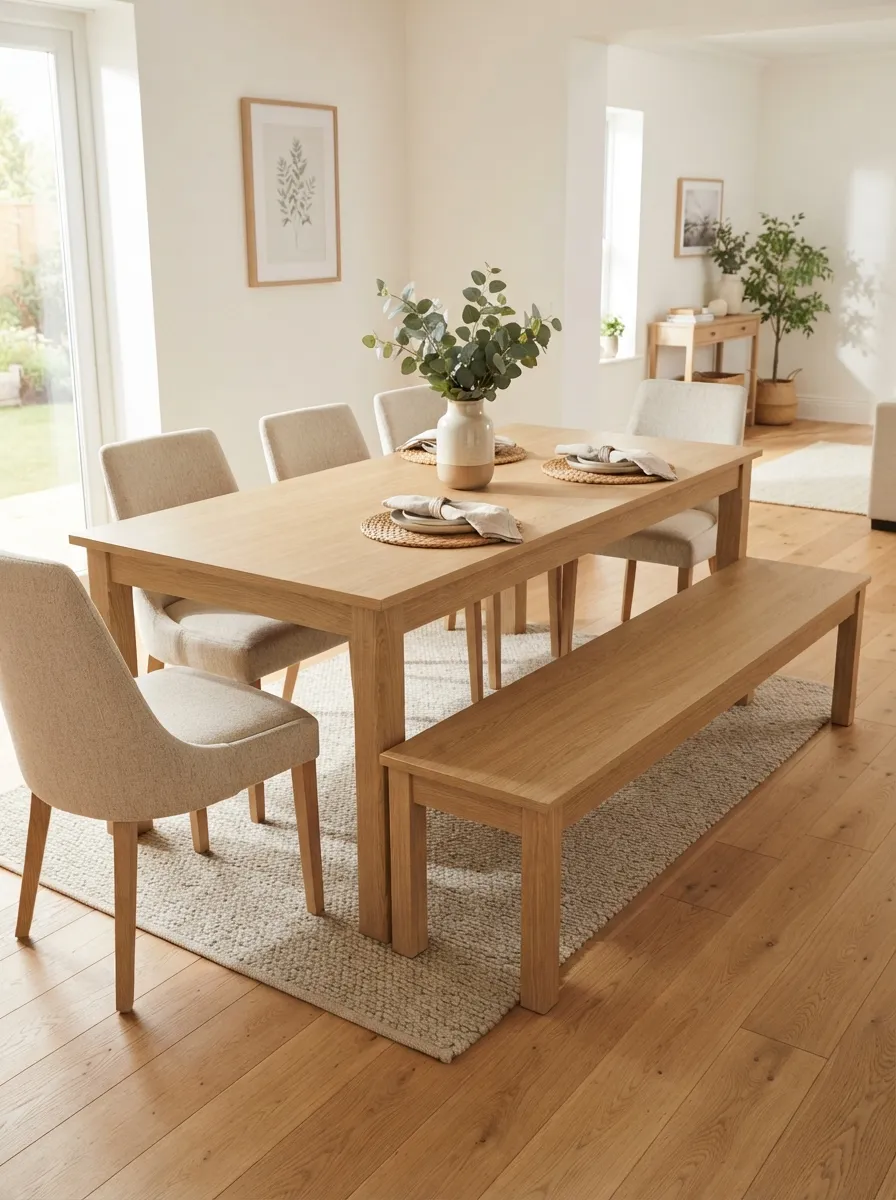
A long backless bench can simplify one long side of a rectangular dining table by replacing several upright chair backs with one continuous horizontal line. In this setting, exactly one light wood-toned bench runs along one long side of the table, while upholstered chairs sit opposite and separate end chairs complete the group.
At least one chair is visibly pulled out, which makes the approach route more informative than a perfectly tucked arrangement would be. The full bench silhouette remains visible from end to end, so its shallow profile, seat line, and relationship to the table can be judged without introducing a backrest that is not present.
Use the image to compare visible bench length, placement, chair rhythm, and circulation only. The light wood tone may suggest an oak-toned appearance, but exact wood species, construction, load capacity, dimensions, support, and finish require merchant verification.
2. Treat a window banquette as built-in seating, not a sofa
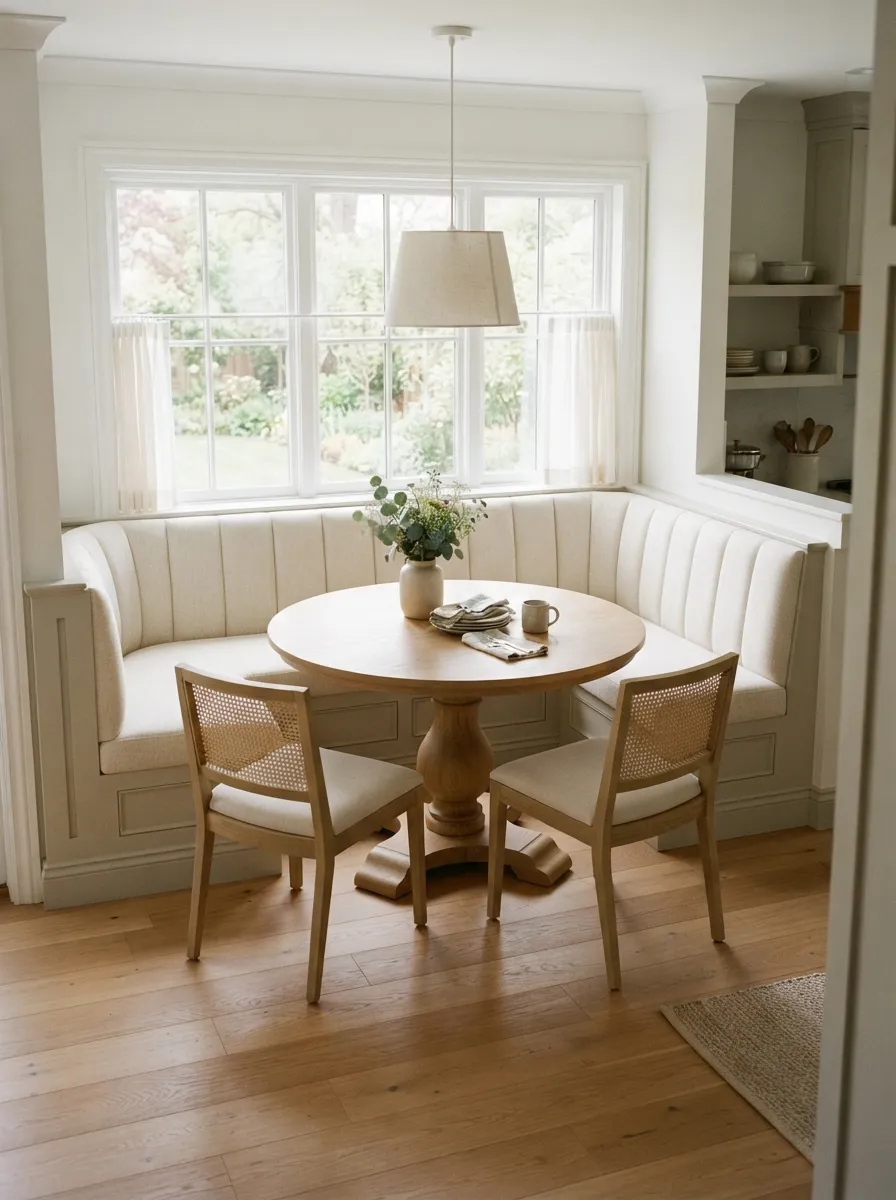
A banquette beneath a window works differently from a freestanding dining bench because it becomes part of the room perimeter. Here, the upholstered seating is clearly built into the window side of the nook rather than reading as a movable sofa.
Exactly two separate freestanding chairs occupy the open side of the round pedestal table. That count matters because the open side is what keeps the nook accessible. The central pedestal remains readable beneath the tabletop, helping the seating group feel organized rather than crowded by multiple legs.
The photograph supports the visible built-in relationship, upholstered appearance, round table, two-chair count, pedestal, and circulation. It does not establish installation method, framing, exact upholstery fiber, dimensions, cushion fill, construction, or durability.
3. Use a dark backless bench as a low horizontal counterpoint
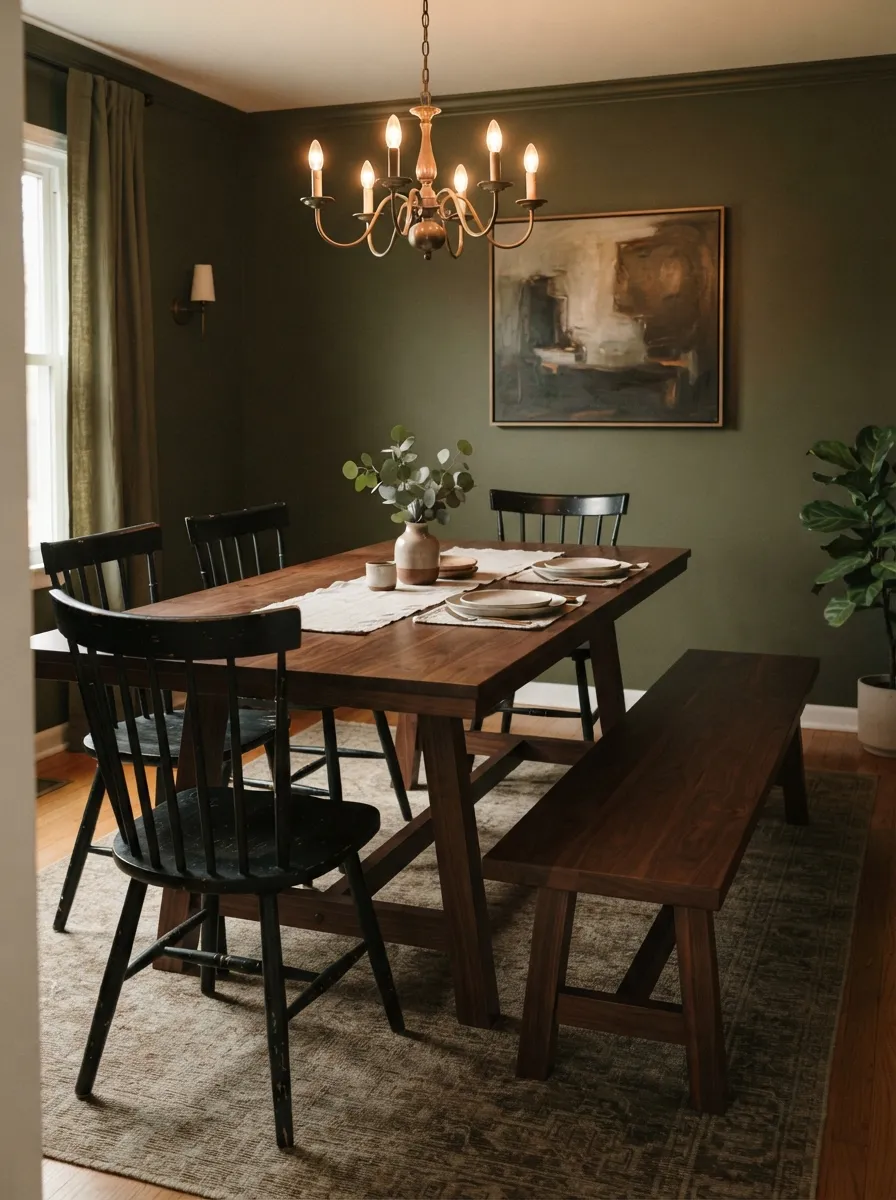
In a moody dining room, one dark backless bench can act as a low horizontal counterpoint to more vertical chair silhouettes. Here, exactly one dark wood-toned bench sits with a warm dark wood-toned table, black spindle chairs, deep olive walls, and a brass-toned chandelier.
Negative space around and beneath the bench is important because it prevents the dark furniture from merging into one dense block. The bench remains readable as a separate seating element, while the spindle chairs bring a repeating vertical rhythm to the opposite side.
Use dark wood-toned or walnut-toned appearance wording only. The image cannot verify actual walnut, exact wood species, finish specification, construction, load capacity, cleaning method, care requirements, or long-term durability.
4. Read a solid-base bench as visual mass, not verified storage
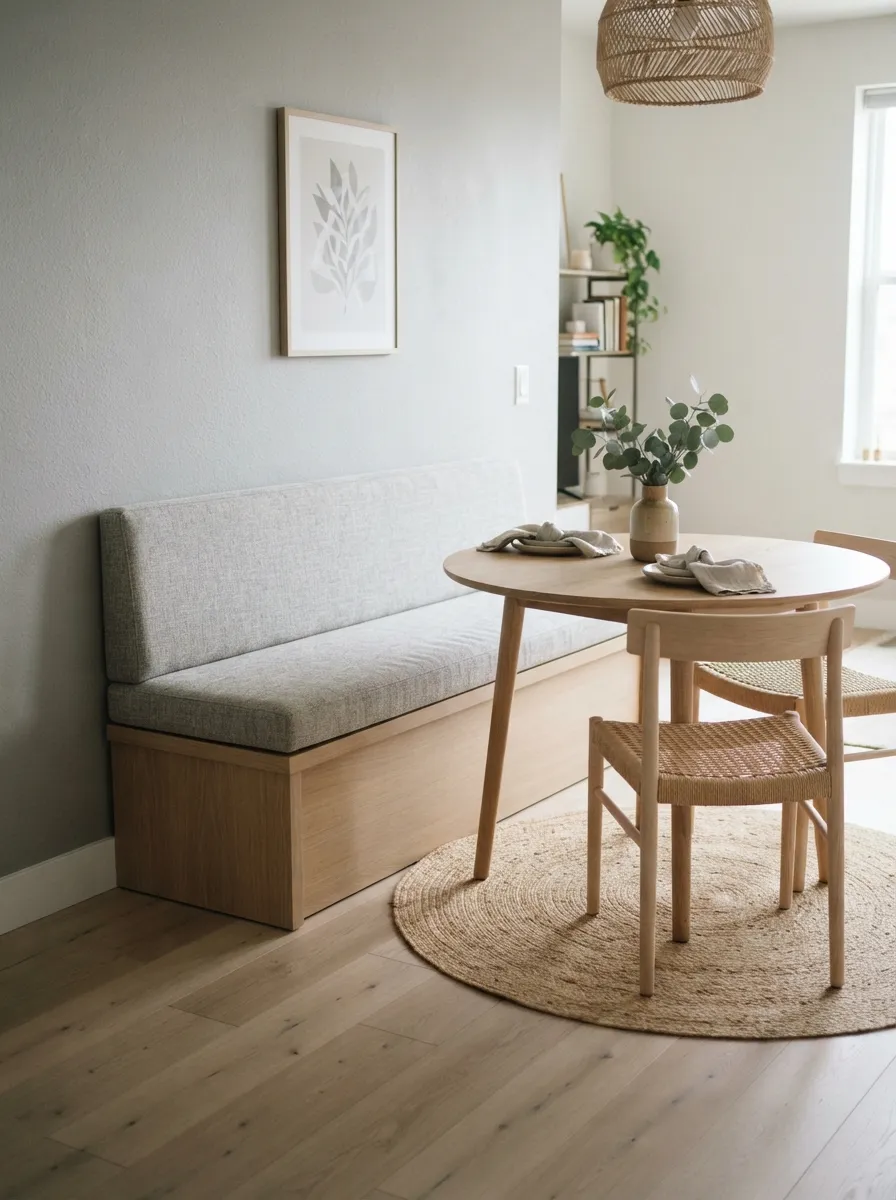
A compact dining zone can use a solid-base upholstered bench to create a contained block of seating without adding another line of chair legs. This scene shows exactly one upholstered bench with a visible front edge, seat, full length, and closed solid base, paired with slimmer chairs on the opposite side.
The closed base gives the bench a storage-bench-like visual mass, but the photograph does not show an open lid, internal compartment, hinge, handle, hardware, or another mechanism that proves storage. The useful editorial point is therefore the relationship between the solid base, compact seating footprint, opposite chairs, and nearby circulation.
Do not infer verified storage, storage capacity, mechanism, construction, upholstery composition, exact dimensions, load capacity, or internal structure from the image. Those details require merchant data.
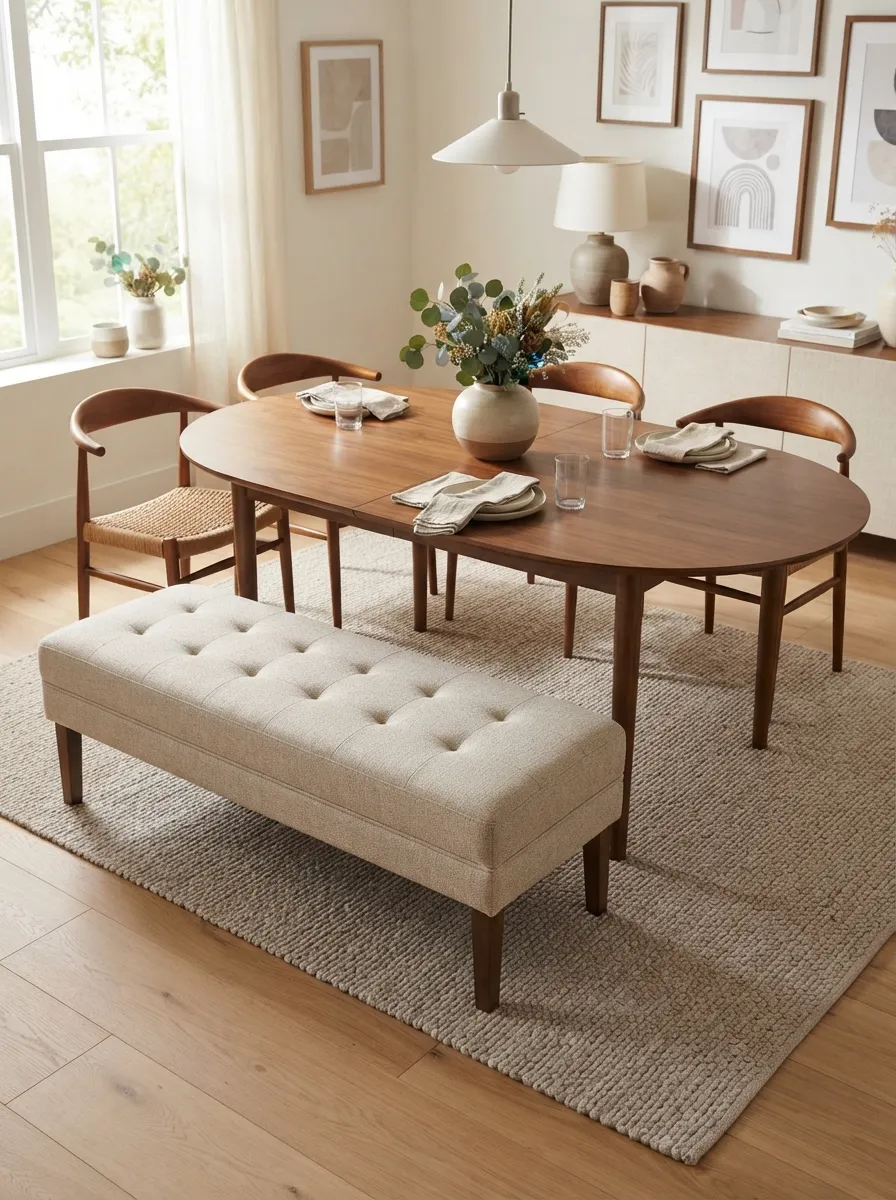
5. Keep the bench on the long side of an oval table
An oval table changes the way a bench relates to the dining group because the table has a clear long axis and two rounded ends. In this family setting, exactly one low upholstered bench sits along one long side of the oval table. It is not positioned at either rounded end.
Curved chairs occupy the opposite side and retain visible pull-back space. The table itself remains unmistakably oval: its long axis is readable, both rounded ends stay visible, and the composition does not collapse into either a round or rectangular shape. Clear floor around the ends helps explain how people approach the table without forcing the bench into an end position.
The image supports bench placement, oval geometry, chair relationship, and circulation only. Exact upholstery fiber, wood species, dimensions, construction, comfort, and durability remain unverified.
6. Separate the cushion from the bench structure
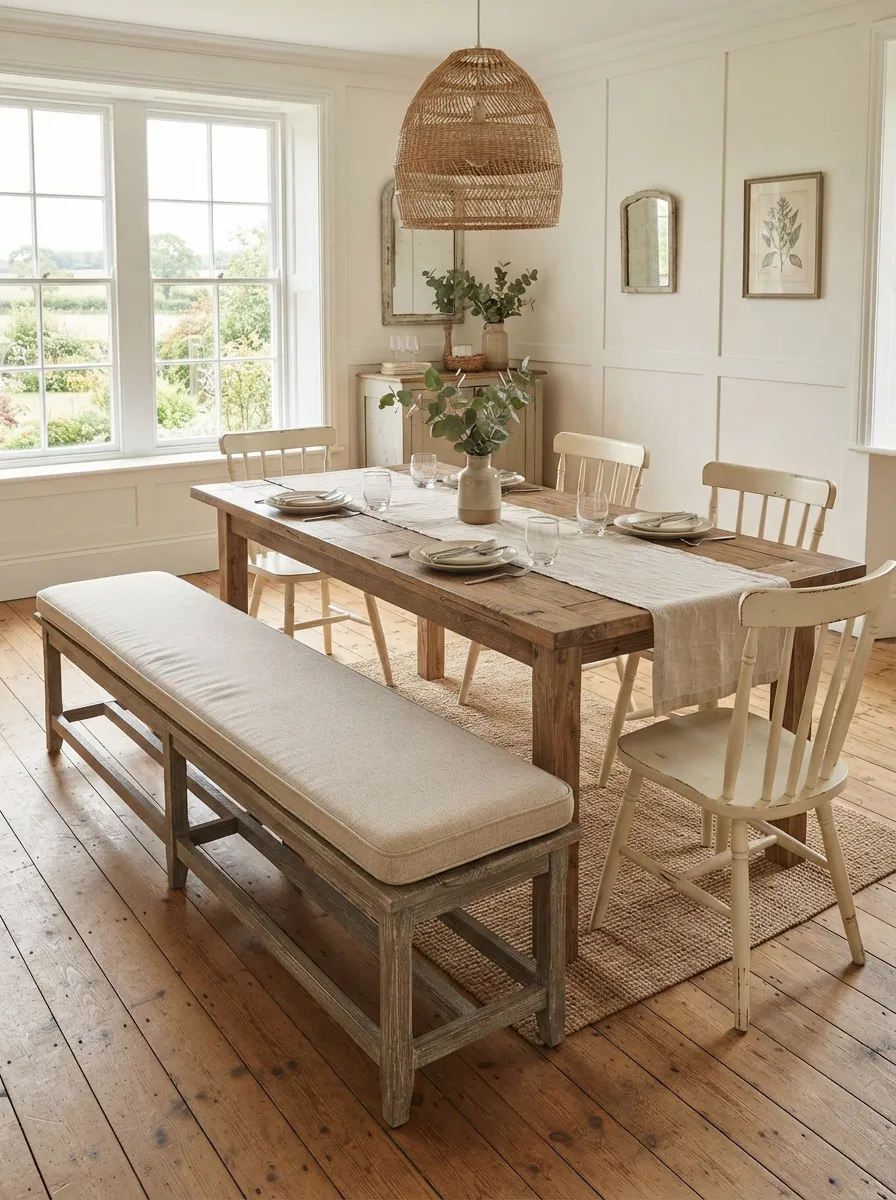
A lightly cushioned bench can soften a farmhouse-style dining group while still keeping the underlying bench form easy to read. Here, exactly one long bench sits beside a reclaimed-look rectangular table, with painted spindle chairs, a woven-look pendant, and a restrained runner.
The cushion reads as a separate layer rather than turning the bench into a fully upholstered sofa-like form. That distinction keeps the bench frame, legs, full length, and seating line legible. The runner stays restrained enough that the table surface and bench remain visually separate, while clear entry points at the ends and opposite side preserve circulation.
Use reclaimed-look, woven-look, fabric-like, and upholstered-appearance wording conservatively. The scene cannot verify actual reclaimed wood, exact wood species, cushion fill, fiber composition, comfort, construction, stain resistance, durability, or cleaning method.
Choose bench placement before judging materials
The strongest bench arrangements start with position and circulation rather than finish. First identify whether the bench is freestanding or built in, backless or solid-base, cushioned or bare. Then check whether it belongs on a long table side, at a room perimeter, or beside a particular chair pattern. Finally, look at how people would approach the group and whether chairs can pull back without the bench becoming an obstacle.
Visible material cues can help establish mood and visual weight, but they should not be treated as hidden product specifications. Use inspiration images to compare silhouette, bench-to-table relationship, bench-to-chair relationship, negative space, and circulation. Then verify actual materials, construction, dimensions, capacity, storage features, finish, assembly, warranty, care, and availability directly with the merchant.