Home Office
Home Office Desk Ideas That Balance Workspace Fit, Circulation, and Visual Clarity
Home office desk ideas focused on desk silhouette, work-zone relationships, devices, circulation, and room-scale fit across six workspace archetypes.
A home-office desk determines much more than where a computer sits. Its silhouette controls how much room remains for a chair, how devices relate to the work surface, how light reaches the zone, and whether movement around the workspace still feels natural. The most useful home office desk ideas begin with those visible relationships before hidden specifications enter the decision.
The six rooms below cover distinct desk archetypes rather than small styling variations: a slim writing desk, a substantial executive desk, a connected L-shaped desk, a wall-mounted floating desk, a straight monitor-centered desk, and a shared office with two separate desks. In every case, the desk should remain readable as furniture first, while screens stay visually inactive and technical claims remain reserved for merchant verification.
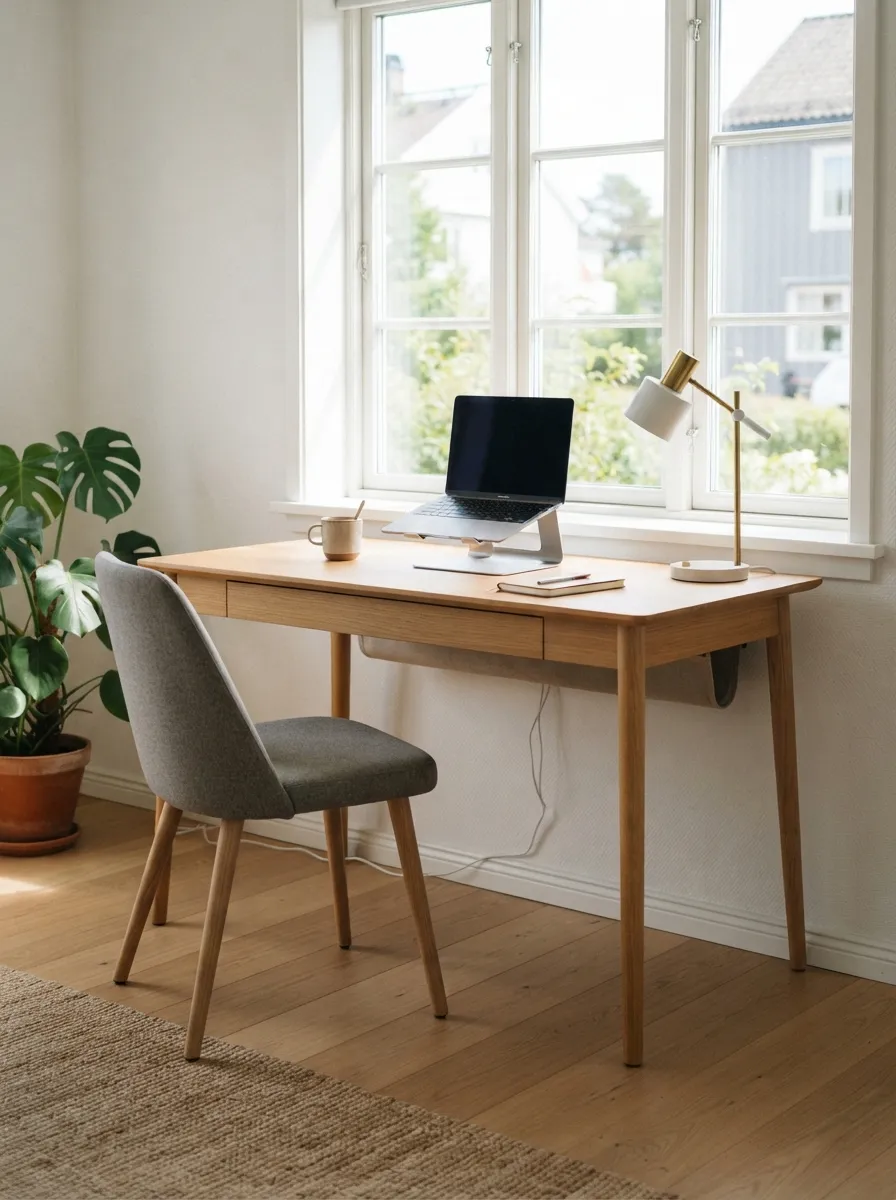
1. Keep a slim writing desk light beside a large window
A slim warm light wood-toned writing desk works well beside a large window because it gives the room a clear work point without turning the entire wall into storage furniture. The full desktop plane, front edge, horizontal profile, open leg space, and supports remain visible, so the chair-to-desk relationship is easy to understand.
The laptop screen is dark and unreadable, leaving the furniture rather than the device content as the visual focus. One loose cable is visible beneath the desk, so the setup should be described as relatively uncluttered rather than as proof of fully concealed cable routing. The light furniture profile and open floor around the chair keep the bright workspace breathable.
Use the image to compare silhouette, desk-to-chair fit, work-surface openness, and circulation. Do not infer actual oak, cable-management hardware, exact desk height or dimensions, ergonomic suitability, construction, or load capacity.
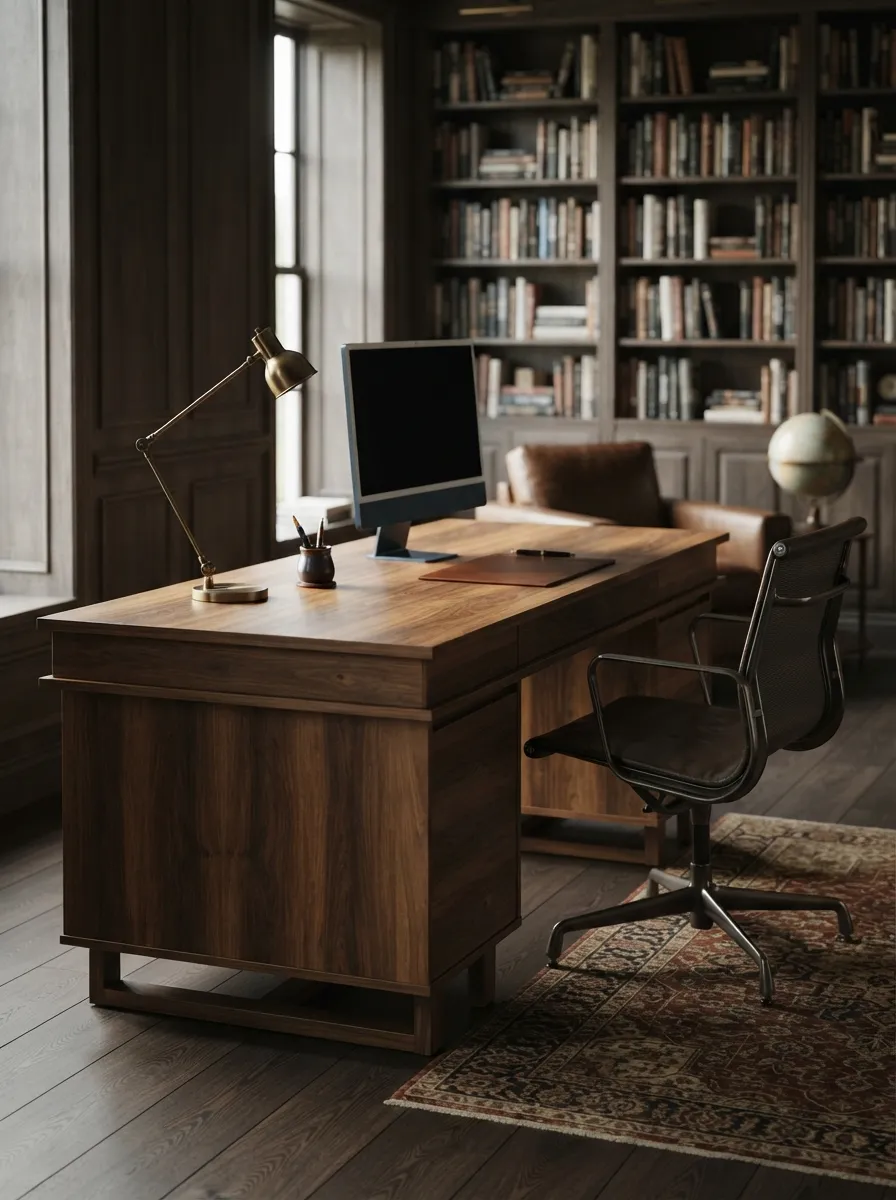
2. Give a dedicated study a substantial executive desk
A substantial warm dark wood-toned executive desk can define a dedicated study before accessories are added. The broad desktop, front edge, side depth, and pedestal structure create more furniture mass than a writing desk, making the desk itself part of the room architecture.
Exactly one monitor sits in the work zone, and its screen remains dark and unreadable. A task lamp supports the desktop without turning the arrangement into an equipment display. The paneled study and library backdrop are intentionally dense, so the desk is not visually isolated from its surroundings; it remains the main furniture anchor despite that competition.
Use warm dark wood-toned or walnut-toned appearance language only. The photograph does not establish actual walnut, exact dimensions, storage capacity, construction, desktop performance, or ergonomic suitability.
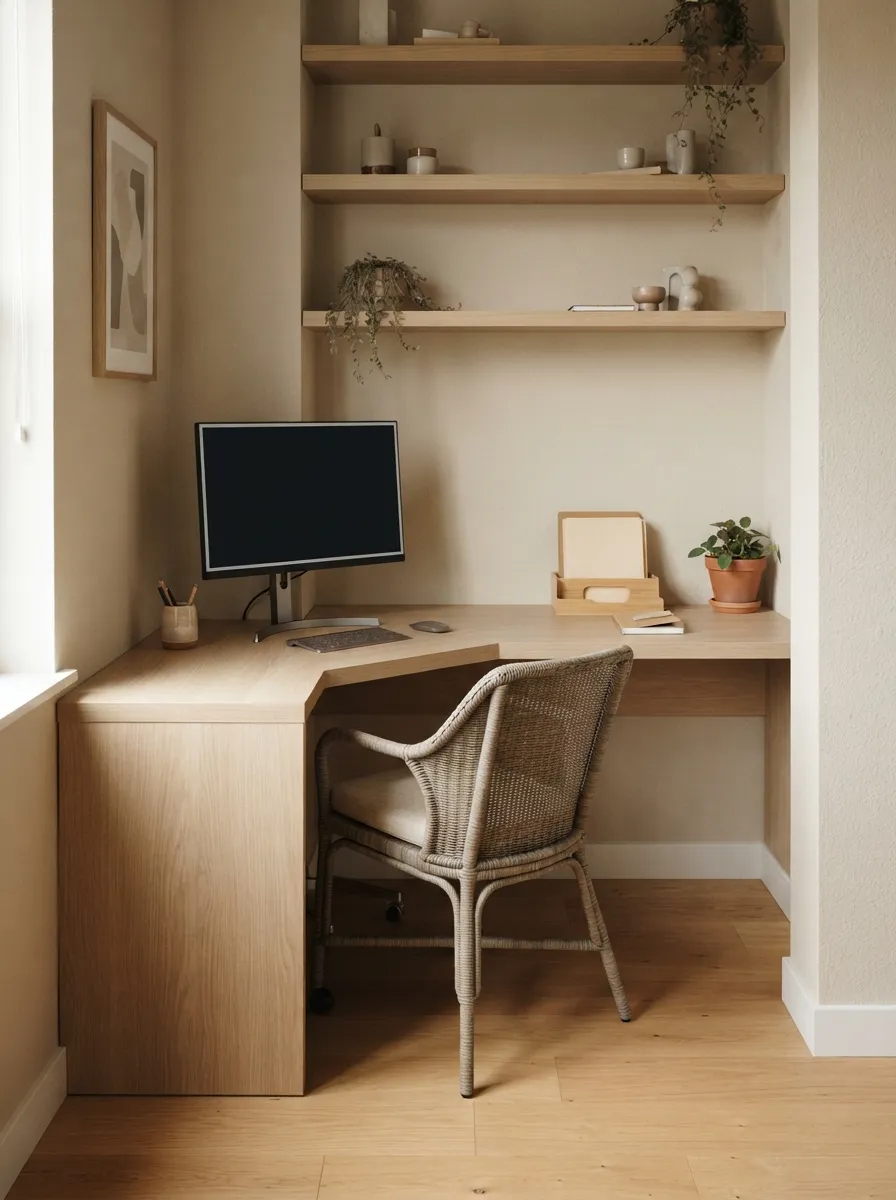
3. Preserve a true connected L shape inside an alcove
An alcove becomes more deliberate when one true L-shaped desk uses the corner through two connected work surfaces. The right-angle geometry should read immediately as one desk rather than as two separate desks or a desk paired with a side table.
Exactly one dark unreadable monitor occupies one work surface, while paper storage and shelves support the other side without introducing readable text. The woven-look chair is pulled back far enough that the inside corner remains visible and a clear pull-back route can still be understood.
The image supports geometry, task zoning, storage placement, and circulation only. It does not establish ergonomic fit, exact dimensions, joinery, construction, material species, or monitor compatibility.
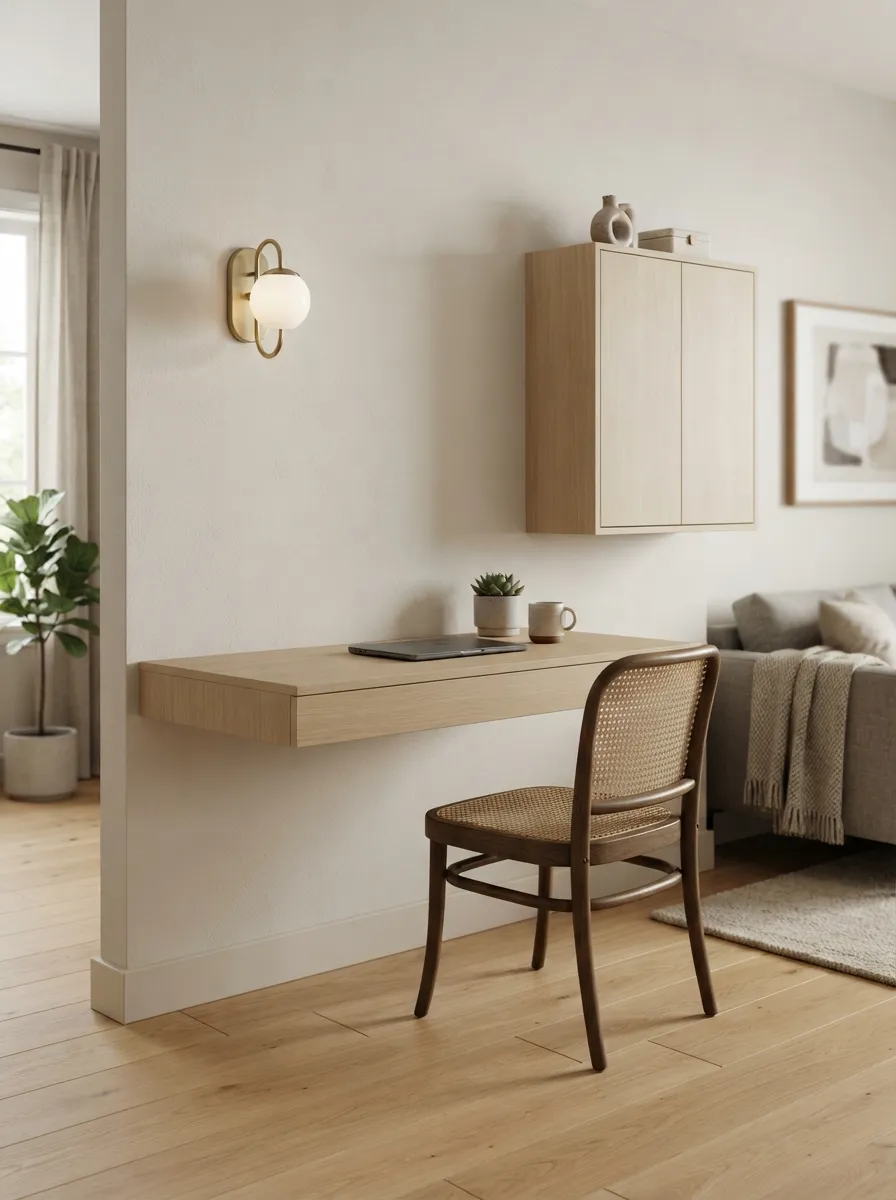
4. Use a floating profile when the office shares a living space
A pale wood-toned wall-mounted desk can integrate a work zone into a living space without adding a full furniture base to the floor. The desktop plane, front edge, shallow profile, visible wall connection, and underside remain readable while open floor continues beneath the work surface.
There are no floor-support legs, pedestal, or cabinet base beneath the desk. A compact chair, wall sconce, and closed storage remain secondary context, helping the work area feel integrated rather than freestanding and bulky.
Describe this as a wall-mounted appearance or floating profile only. The image cannot verify mounting method, wall anchors, hardware specification, construction, dimensions, or load capacity.
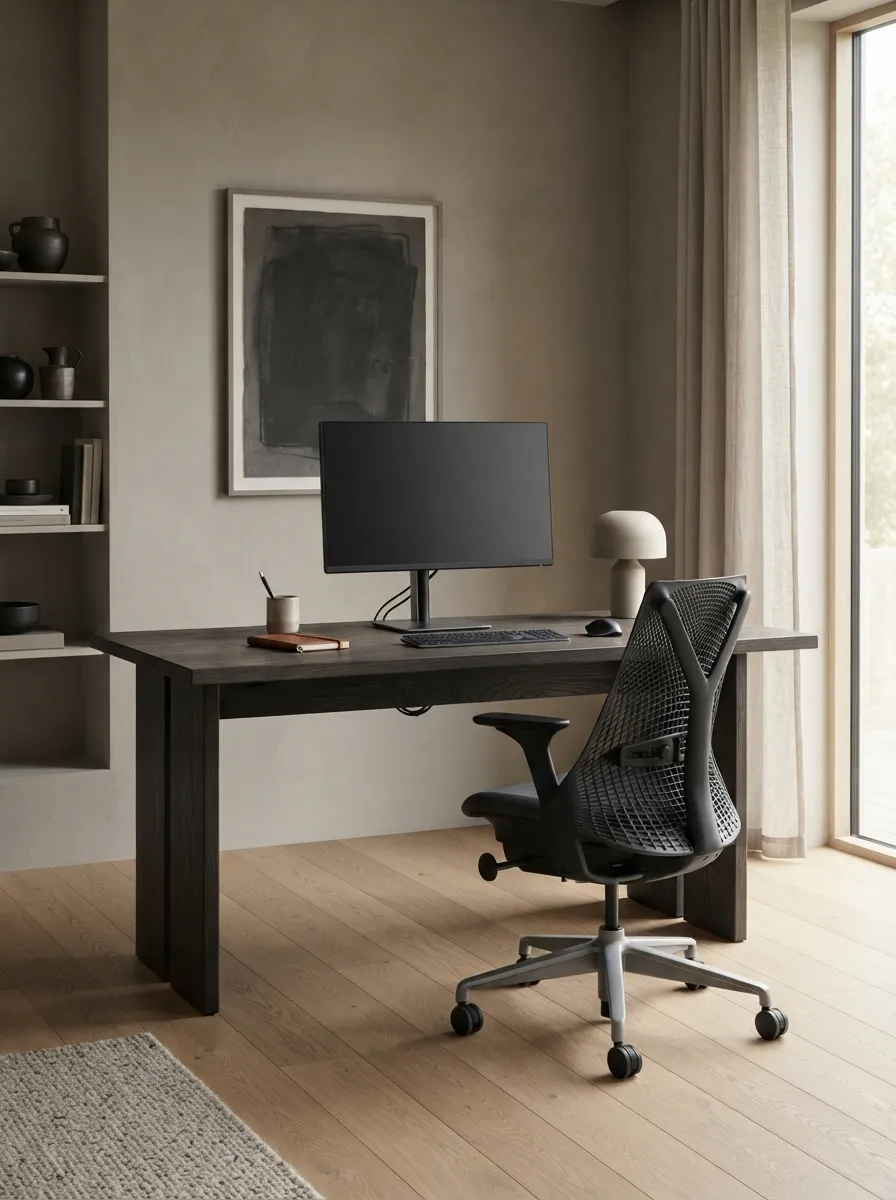
5. Center one inactive monitor without losing the desk silhouette
A charcoal-stained-looking straight desk can support a monitor-centered setup without turning into a featureless dark block. Exactly one monitor sits at the center with a dark unreadable screen, and the keyboard and mouse remain close enough to establish a coherent desk-monitor-chair working triangle.
Visible cable routing is minimal, but no cable-management hardware should be inferred from that appearance. The task chair overlaps part of the right desk support, so it would also be inaccurate to claim that every support edge is fully visible. Tonal separation still keeps the desktop and front edge legible against the restrained room.
The photograph does not establish adjustability, monitor compatibility, ergonomic suitability, exact dimensions, construction, or durability.
6. Separate ownership with two opposite-facing compact desks
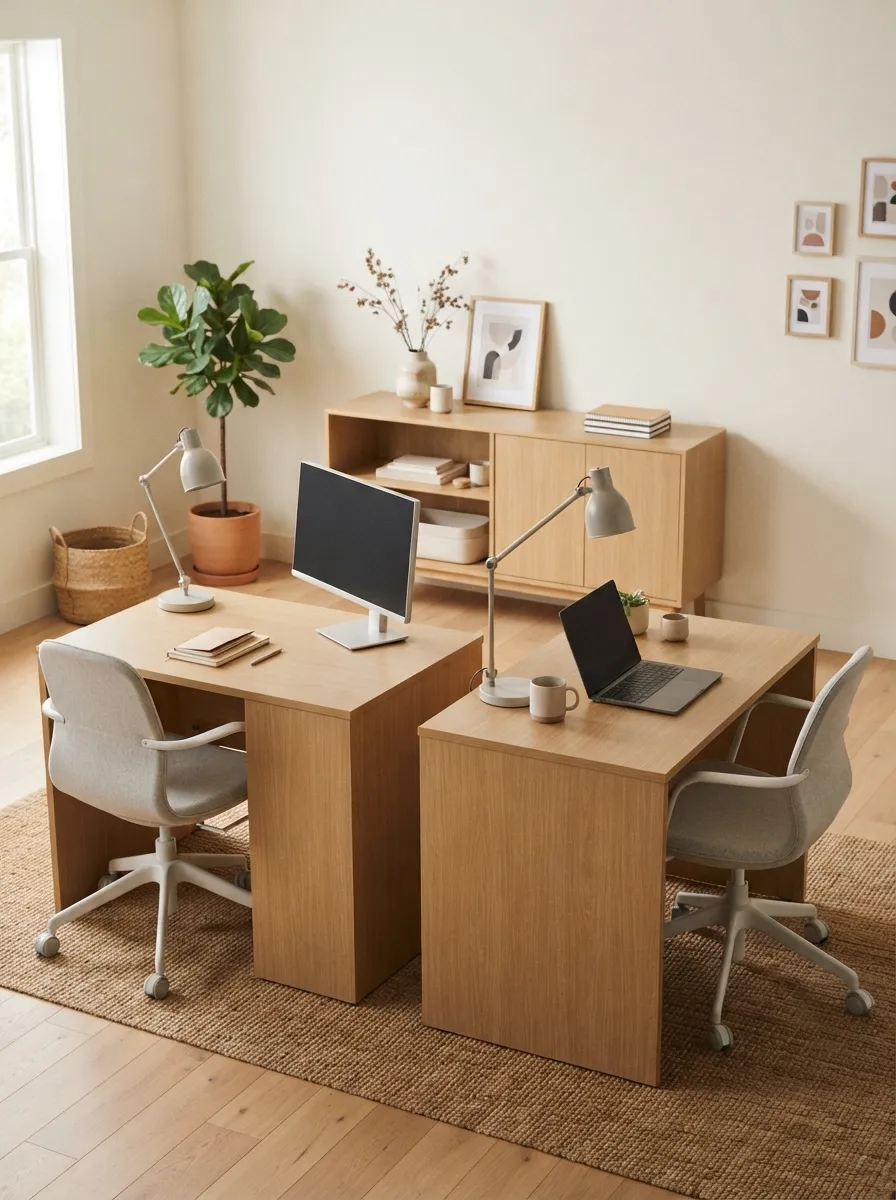
A shared home office works more clearly when two compact desks create two distinct work zones instead of one continuous desktop. Here, exactly two separate light wood-toned desks face opposite directions, making each work area visually independent while still belonging to the same bright warm-neutral spare room.
The room contains exactly two task chairs, exactly two individual task lights, and exactly one shared storage unit. Both desktop planes remain separate, and clear space behind each chair keeps circulation understandable. Any device screens remain unreadable and visually inactive.
This arrangement should not be described as one long desk, one continuous desktop, or two desks facing the same direction. Exact desk dimensions, storage capacity, hardware, construction, and ergonomic suitability still require merchant verification.
Choose the desk archetype before the hidden specifications
A useful home office begins with the visible work pattern. Decide whether the room needs a light writing surface, a substantial executive anchor, connected corner surfaces, a floating wall-mounted profile, a monitor-centered straight desk, or two distinct shared-office zones. Then compare the chair route, device placement, storage relationship, light source, and room-scale fit.
Use room images for silhouette, relative scale, device position, visible cable presence, and circulation. Verify actual materials, dimensions, desk height, construction, mounting hardware, cable-management features, capacity, adjustability, compatibility, durability, assembly, warranty, and availability directly with the merchant or appropriate workstation guidance.