Living Room
Accent Chair Living Room Ideas That Balance Role, Silhouette, and Circulation
Accent chair living room ideas using chair silhouette, placement, visual mass, and circulation—from rounded pairs and club chairs to open frames and wingbacks.
An accent chair works best when its role is clear before its color or surface becomes the main story. It can close the open side of a sectional, create a quiet reading corner, add a concentrated warm note beside a pale sofa, or give a fireplace wall a stronger vertical counterpoint. Silhouette, orientation, and visual mass determine whether it feels integrated or stranded.
The strongest accent chair living room ideas therefore begin with placement. Rounded forms can soften a sectional, a compact club-chair silhouette can add weight without another long upholstered block, and an open frame can preserve visible floor in a small room. Pattern, height, and surface appearance then refine that role. The six rooms below keep the accent chair visually dominant while using the sofa, tables, lighting, architecture, and circulation as supporting structure.
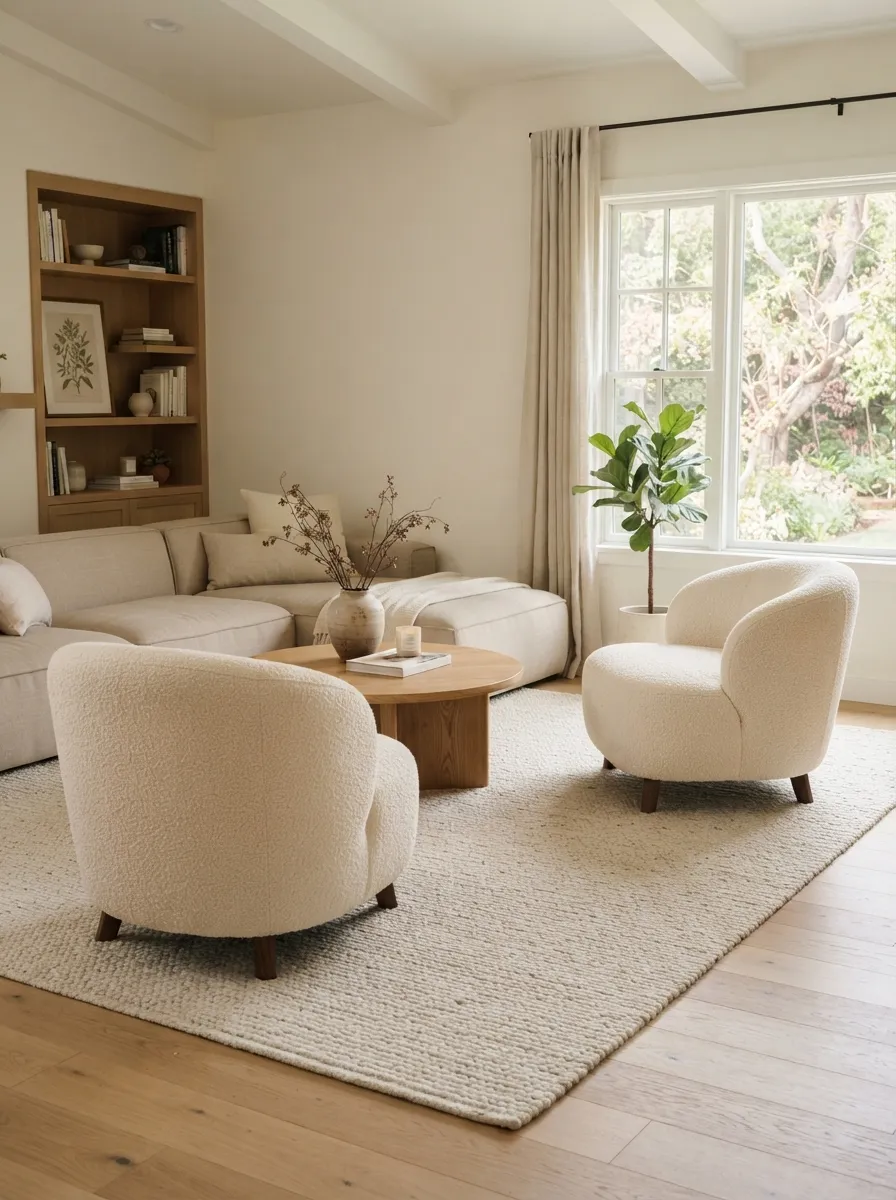
1. Use a pair of rounded cream chairs to complete a sectional conversation zone
A sectional often leaves one side of a seating group visually unresolved. Two rounded cream accent chairs can close that opening without creating another long upholstered wall. Their curved backs soften the sectional’s straighter outline, while the pair gives the room a clear second seating element rather than a collection of unrelated single chairs.
Orientation matters here more than any assumed mechanism. The chairs relate to the sectional and can also acknowledge the nearby window, but the image should be read as evidence of placement, visible scale, and direction only. One foreground chair is seen mostly from the rear, so its back shape and overall mass are clearer than its seat depth or arm details.
Keep the sectional subordinate. The visual lesson is the relationship between two rounded chairs, the larger sofa, and the open circulation around them. Whether a matching product actually swivels, how its base is built, and how much room it needs in use should be confirmed with the merchant rather than inferred from the scene.
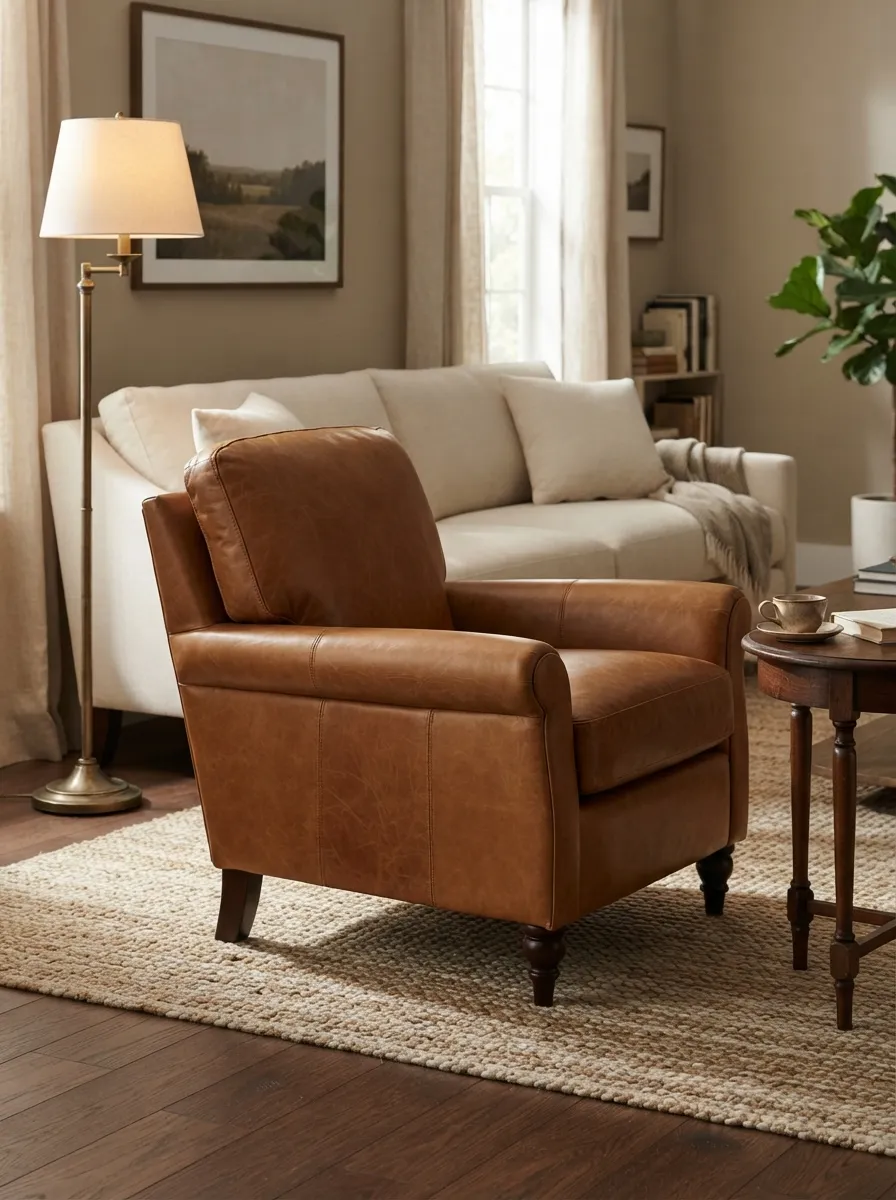
2. Add warm visual weight with a caramel-toned club chair
Beside a pale sofa, a caramel-toned club chair can act as a compact warm punctuation mark. Rounded arms and a deep-looking profile give the chair concentrated visual mass, while a small dark table and brass-toned lamp help define the corner without competing with the chair’s silhouette.
The comparison is primarily about mass and posture. A slimmer sling-like chair would expose more wall and floor around the seat, while the club-chair form creates a denser, more intimate visual anchor. A leather-like surface appearance can reinforce that warmth, but the photograph does not establish leather grade, exact upholstery composition, cushioning, construction, durability, or performance.
Use the scene to judge visible shape, warmth, and proportion. Treat material identity and all hidden specifications as merchant-verification questions.
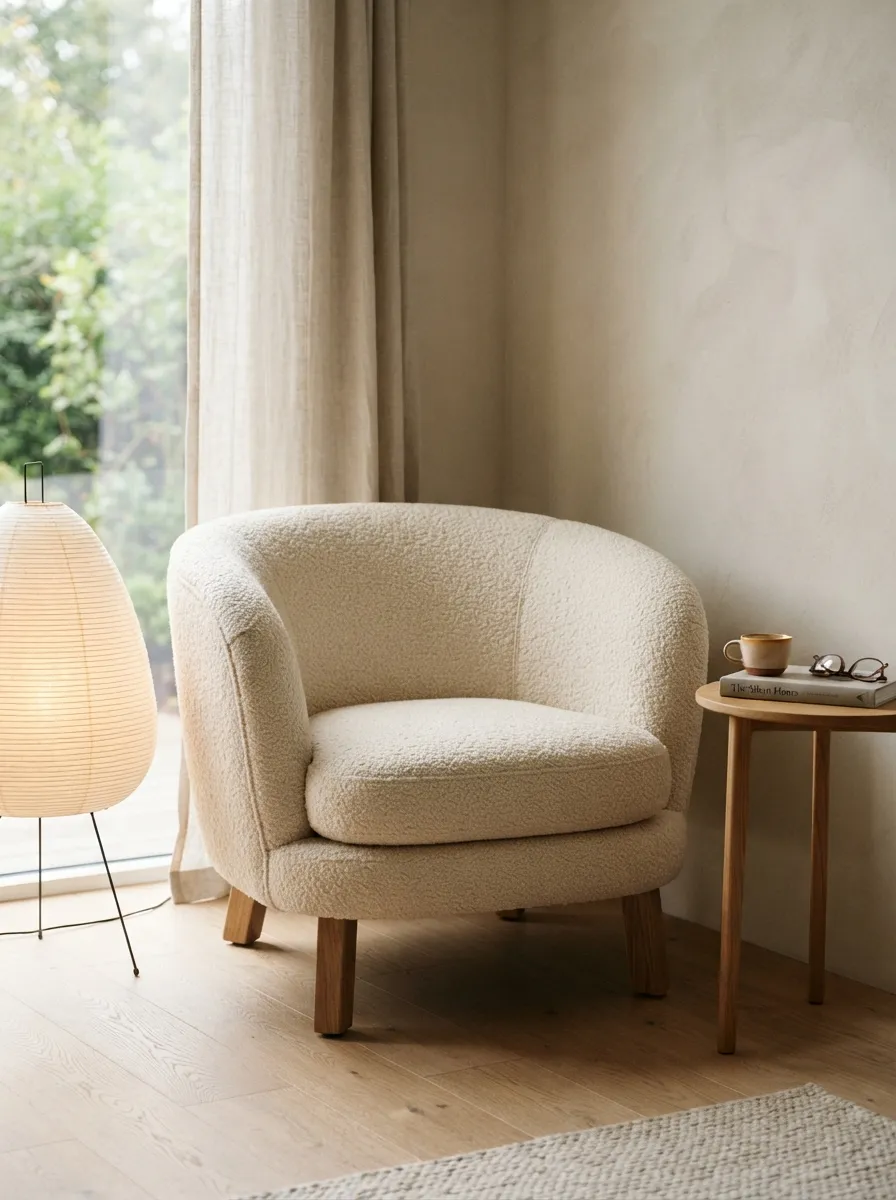
3. Keep a low curved chair quiet in a reading corner
A low curved accent chair can turn an underused corner into a believable pause without making the corner visually heavy. Its low back keeps the eye close to the floor, allowing a pale wall and softly glowing floor lamp to remain spacious rather than empty.
A narrow side table gives the chair a functional relationship without turning the corner into a second full seating group. Compared with a tall wingback, this lower form preserves the room’s horizontal lines and feels less architectural. The surrounding negative space is part of the effect: if the route to the chair becomes crowded, the corner starts to feel staged rather than integrated.
The surface may appear bouclé-like because of its soft, nubby visual texture, but that appearance is not proof of fiber composition, abrasion performance, cleaning requirements, or durability. Those details need independent merchant confirmation.
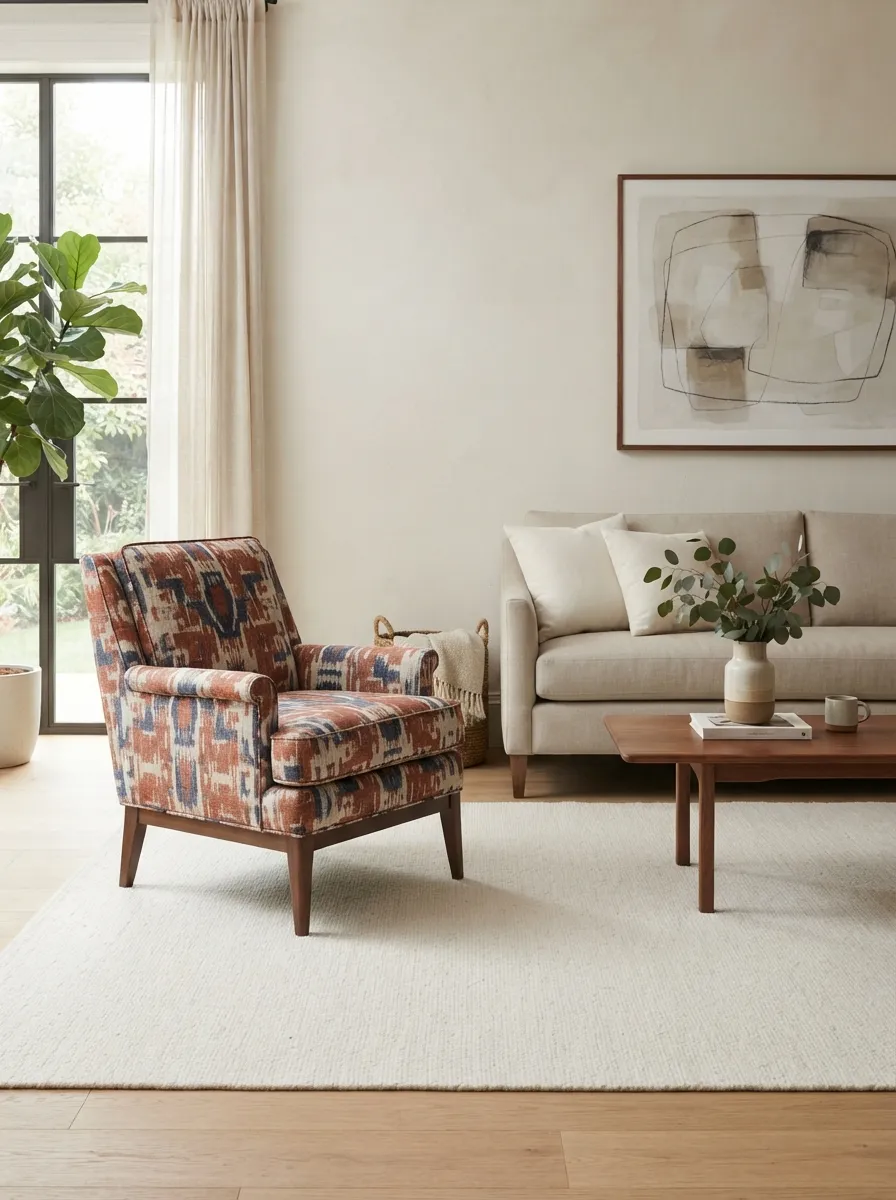
4. Make one rust-and-blue patterned chair the upholstered focal point
Patterned upholstery is easiest to read when the rest of the room gives it one clear stage. A rust-and-blue accent chair can become the only patterned upholstered focal piece while the neutral sofa and cream rug stay deliberately quiet.
The pattern gains strength from restraint around it. A warm-toned table can echo part of the chair’s palette without duplicating the motif, allowing the room to feel layered rather than matched. This also makes the styling tradeoff easy to see: a patterned chair commits the room more decisively, while a solid chair would leave more freedom for changing art, pillows, and smaller accents.
That is a visual and styling distinction only. The scene does not support claims about fiber content, stain resistance, cleaning method, performance, or long-term wear.
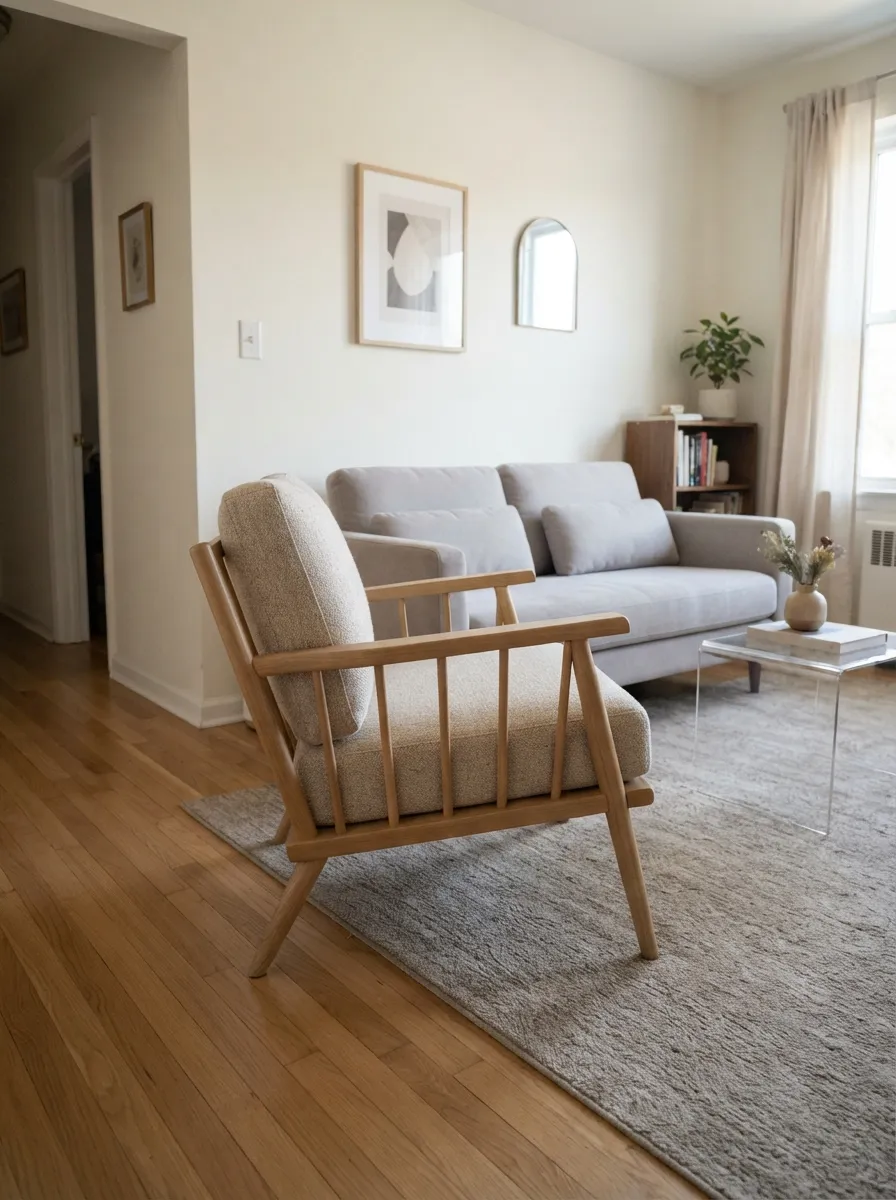
5. Preserve visible floor with an open wood-frame chair in a compact room
An open wood-frame appearance can make an accent chair feel lighter in a compact living room because floor and wall remain visible around the seat. The exposed frame breaks the chair into separate lines and planes instead of creating one continuous upholstered block.
The glass table reinforces that openness by avoiding a second dense object beside the chair. Light cushions soften the frame’s geometry without hiding it. A fully upholstered alternative would create a more continuous silhouette and could make the same area read as denser, even before any actual dimensions are compared.
Use the image to judge openness, visible floor, and the relationship between the chair and nearby sofa. Do not infer an exact wood species, joinery, frame construction, load capacity, or dimensions from visible appearance alone.
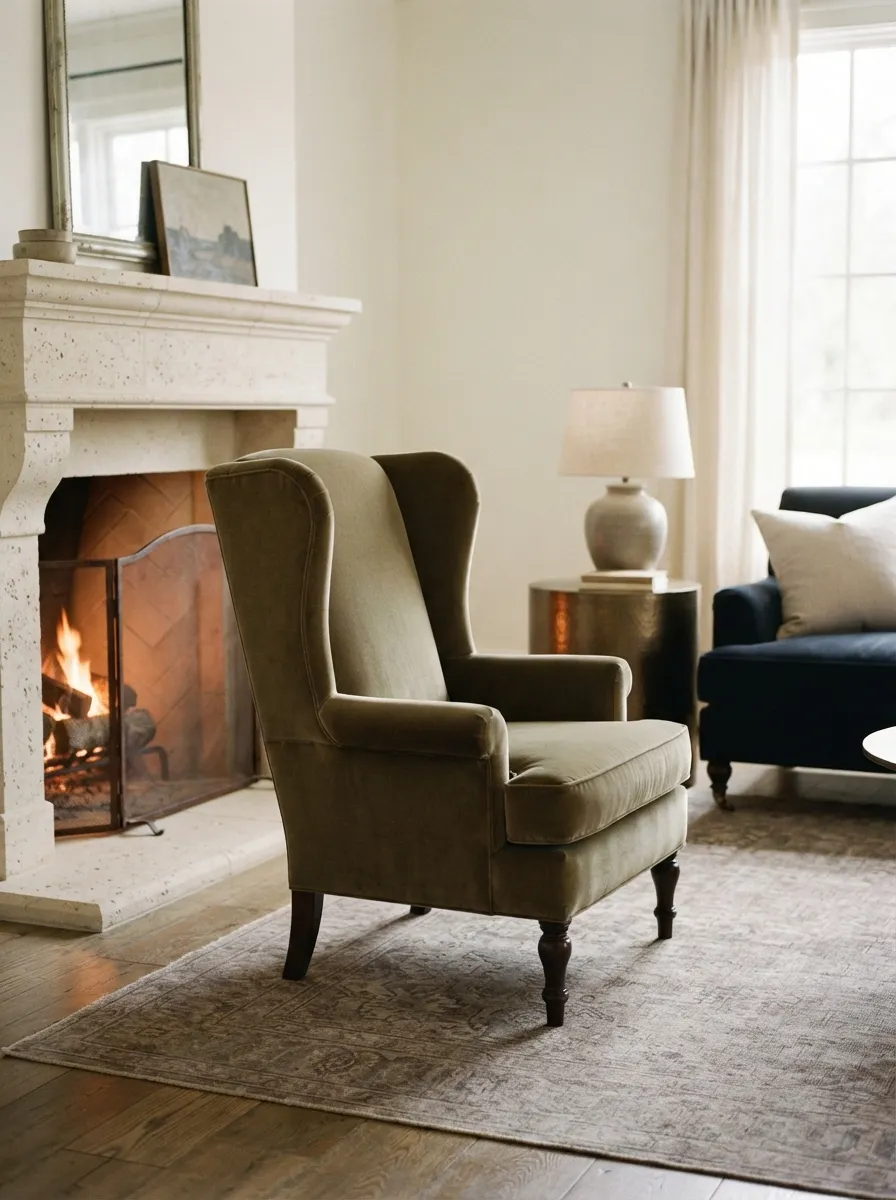
6. Let a tall olive wingback become the vertical hero beside the fireplace
A tall olive wingback can hold visual ground beside a fireplace because its height answers the architecture with a strong vertical silhouette. The navy sofa remains subordinate, while a small bronze-toned table and muted rug support the chair without forming another competing focal point.
The winged sides give the chair a more enclosed, ceremonious outline than an armless chair would provide. That makes the seat useful as a visual counterweight to the larger sofa and as a directional reading position near the fireplace. The scene works because there is enough negative space around the chair for its height and side profile to remain legible.
Directional light may give the olive upholstery a velvet-like depth or subtle light response, but that visible appearance does not establish exact material, pile composition, durability, performance, or care requirements. Those specifications belong to the merchant listing.
Choose the chair’s role before choosing its finish
Across these rooms, the accent chair succeeds because its job is visible. The rounded pair closes a sectional grouping. The caramel club-chair silhouette adds warm mass. The low curved chair creates a quiet corner. The patterned chair becomes the single upholstered focal point. The open frame preserves visual lightness, and the wingback gives a fireplace wall vertical presence.
That role should lead product selection. Use inspiration images to compare silhouette, orientation, visual mass, visible surface appearance, surrounding contrast, and circulation. Then verify dimensions, actual materials, moving mechanisms, frame construction, cushion fill, care, performance, warranty, and availability directly with the merchant.
A well-placed accent chair does more than fill space: it changes how the room is read from the entrance, how the seating group relates internally, and where the eye is allowed to pause.