Living Room
Beige Sofa Living Room Ideas That Make Neutral Rooms Feel Deliberate
Beige sofa living room ideas for oatmeal, deep beige, cream-beige, mushroom, warm beige, and light beige-ivory sofas—using undertone, contrast, layout, and light to keep the sofa readable.
A beige sofa is rarely a blank decision. Its undertone, visible texture, arm shape, base, and neighboring surfaces determine whether it becomes a quiet foundation or simply disappears into the room. The goal is not to force stronger color into every neutral space. It is to create enough distinction for the sofa to keep a readable silhouette.
That distinction can come from texture, a darker focal point, saturated art, compact proportions, warm wood, metal, or simply a clear walking path around the furniture. These six beige sofa living room ideas preserve the same basic hero—beige seating—but solve six different design problems. The result is a neutral article about undertone and room relationships rather than six versions of the same organic-modern room.
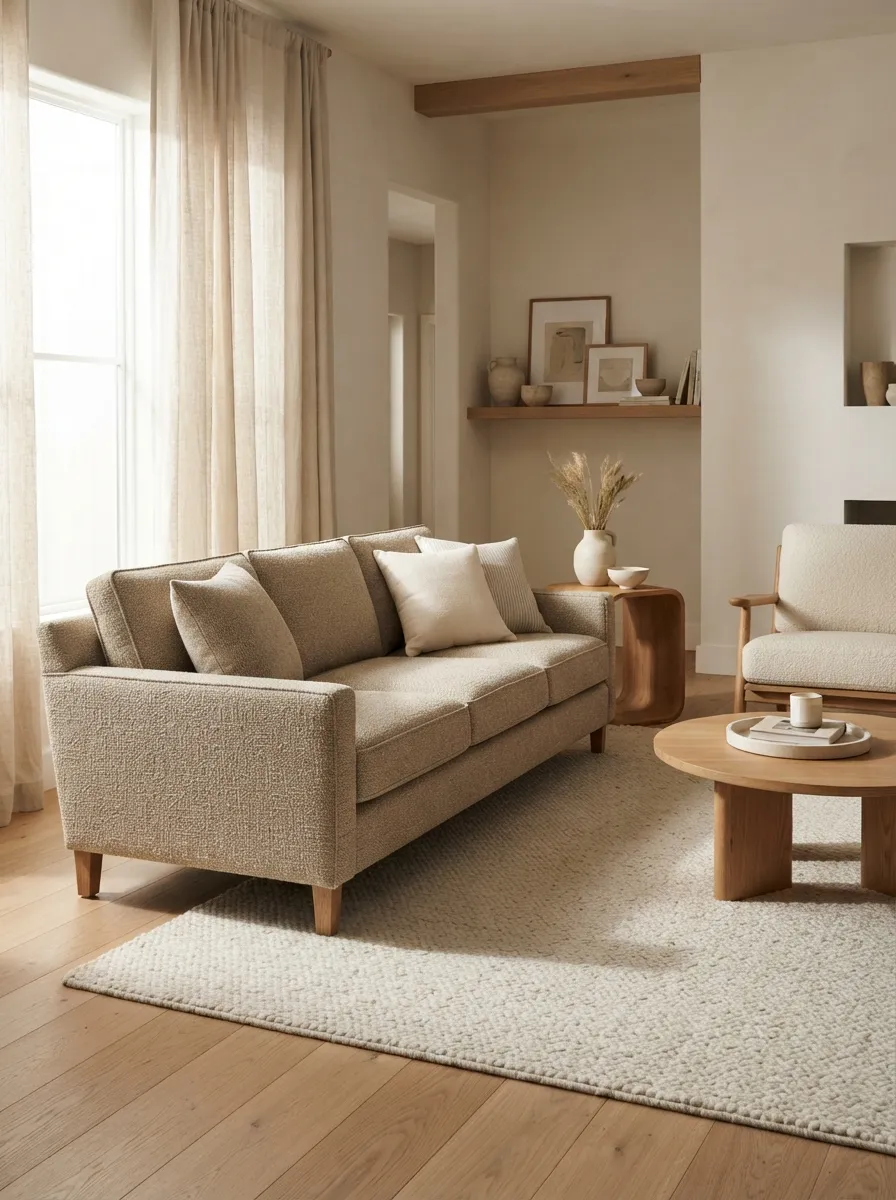
1. Build depth with oatmeal-beige texture and tonal layering
An oatmeal-beige sofa can feel rich rather than bland when the room varies texture instead of hue. Flax-toned drapery, pale oak, a textured rug, and warm neutral objects all sit close together on the color spectrum, but they do not reflect light in the same way.
Directional side daylight is especially useful here because it helps the sofa separate from nearby warm neutrals without introducing a strong contrast color. The upholstery can stay visibly oatmeal-beige while the drapery leans flax, the floor reads lighter, and the rug softens the transition below.
The useful design question is not whether every object matches. It is whether the tonal layers remain distinct enough for the sofa to lead the room. A smoother-looking sofa would produce a cleaner, more minimal result; a more visibly textured surface adds depth. The image can support that visual choice, but exact fabric composition, care, performance, and construction still require merchant verification.
2. Use sectional geometry against a black focal point
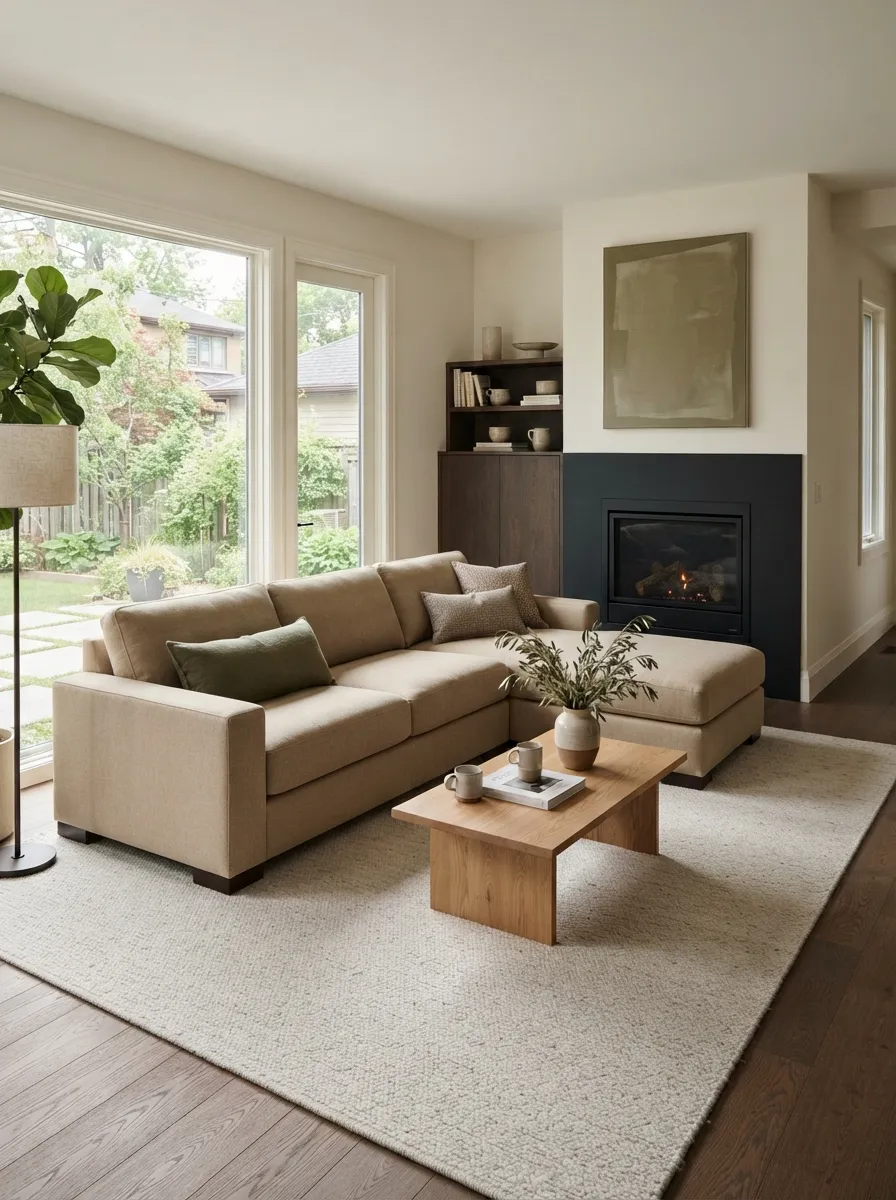
A deep beige sectional needs more than color to stay readable. A slim black fireplace gives the seating a strong visual counterpoint, while the pale rug and low oak table keep the larger composition from becoming heavy.
The key decision is sectional geometry. The chaise should support the focal relationship without sealing off the route through the room. When the black fireplace establishes the vertical anchor, the beige sectional can remain broad and relaxed without having to provide all of the visual structure itself.
Muted olive accents prevent the palette from becoming only beige, black, and oak, but they should remain secondary. The room works because the sectional, fireplace, rug, and table each have a distinct role. The photograph can show orientation and apparent visual mass; actual depth, dimensions, comfort, and construction belong to the exact product listing.
3. Let saturated art and a red rug carry the color
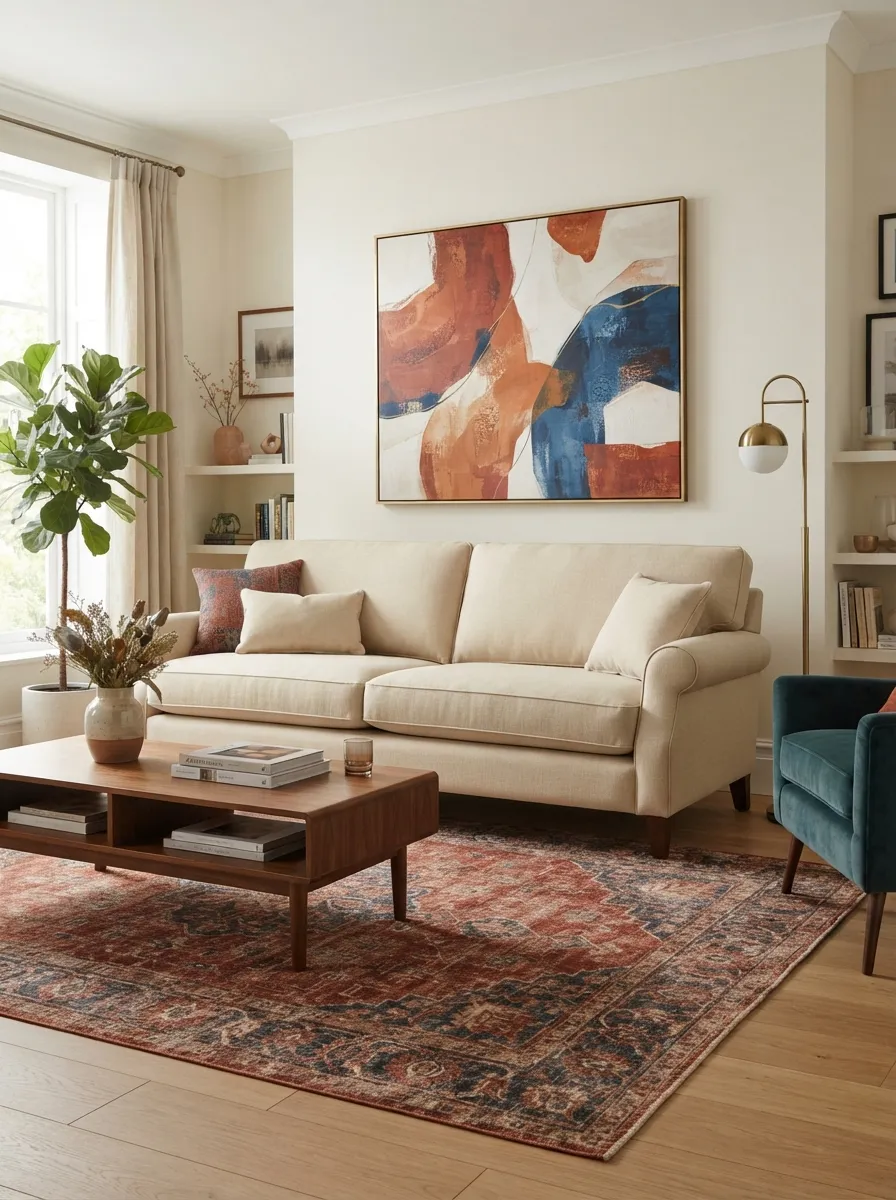
A warm cream-beige sofa can sit comfortably beneath saturated art and above a red rug without becoming background furniture. In this type of room, the sofa’s restraint is what lets the color elsewhere feel intentional.
Rust-and-blue artwork creates a stronger upper focal point, while a vintage-style red rug gives the floor movement and depth. The walnut table connects those warmer notes without asking the sofa to join the saturated palette. The result is a useful division of labor: art and rug carry the color; the beige sofa provides the visual pause.
This makes the sofa especially effective as a long-term anchor. Changing artwork or the rug could shift the room dramatically without requiring the main upholstery to change. That flexibility is a visible styling advantage, not a performance claim about the fabric itself.
4. Keep mushroom beige compact and clearly proportioned
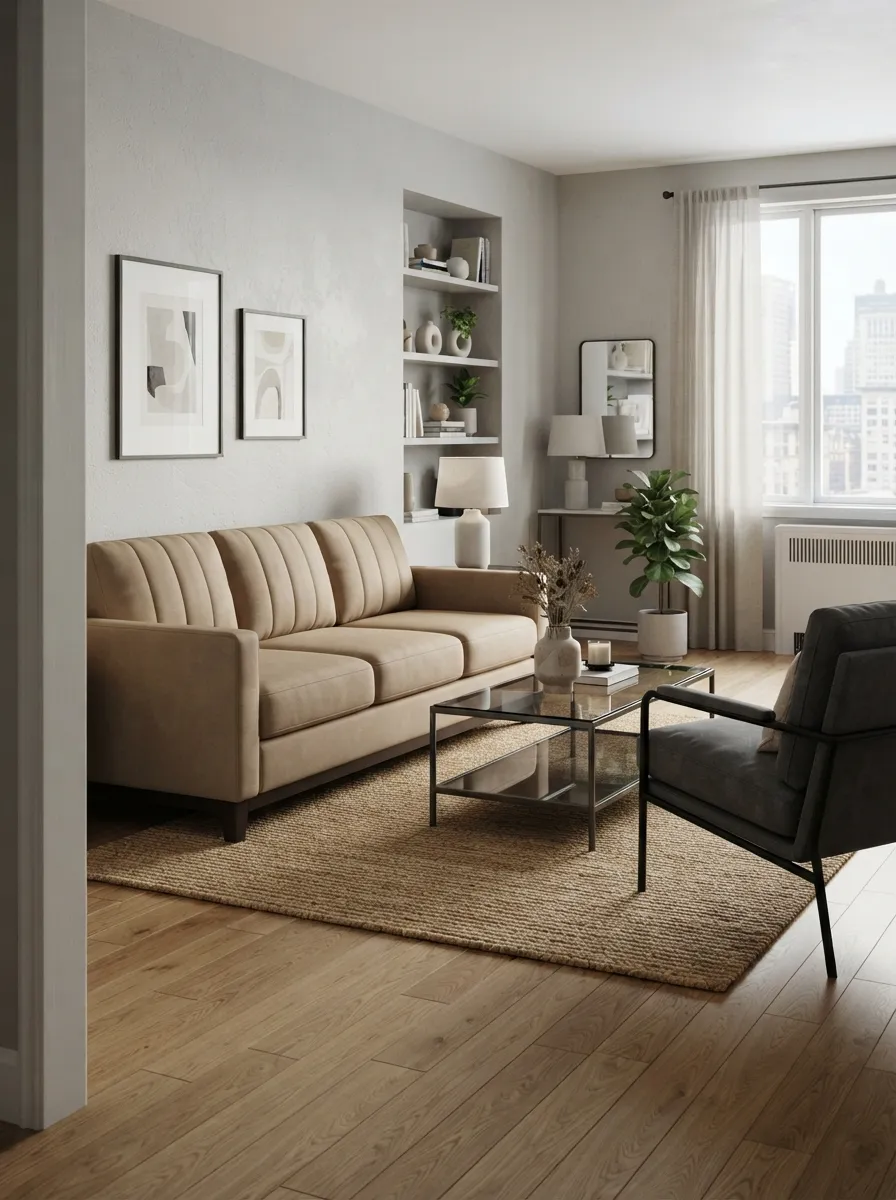
Mushroom beige is deeper and more muted than cream, but it should not be flattened into gray. In a city apartment, that undertone can work especially well beside smoked glass, graphite, and other darker urban accents.
The channelled back gives the sofa a defined face, while the smoked-glass table keeps the center of the room from becoming another opaque block. A graphite chair creates a clear edge beside the mushroom-beige upholstery and makes the sofa’s color easier to read.
What matters most is proportion. A trim sofa can preserve the entrance view and leave more of the route visible around the seating. Broad arms or an oversized lounge profile could change that balance even in the same color. The image can guide the desired scale relationship; exact dimensions must be verified before purchase.
5. Define warm beige with walnut, bronze, and olive
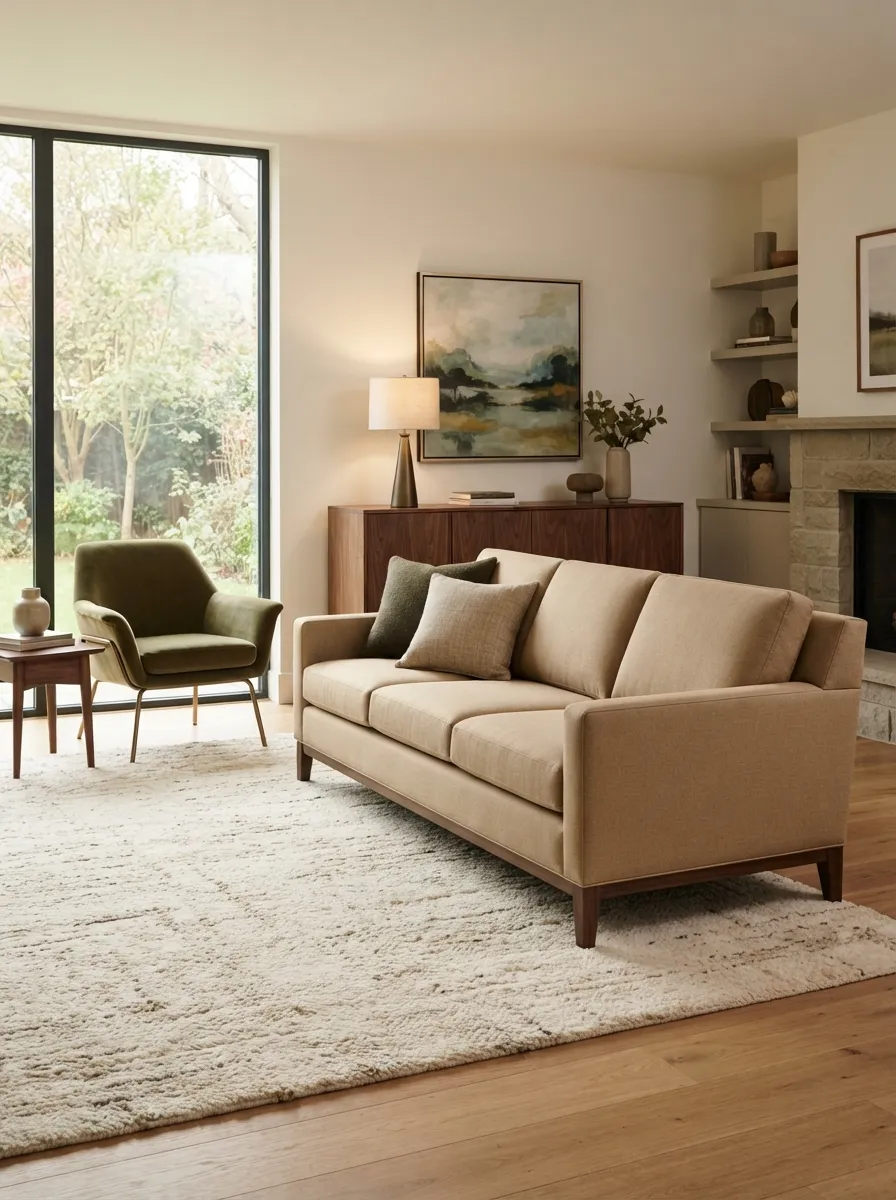
Warm beige becomes more convincing when nearby materials make its undertone easier to read. Walnut, bronze, olive, and landscape colors can provide that contrast without surrounding the sofa with more beige accessories.
The walnut sideboard adds a darker horizontal line behind or beside the seating. Bronze lighting contributes a smaller reflective note, while the olive chair introduces color close enough to nature to remain calm. Painterly landscape art can extend those earthy tones upward, leaving the sofa as the clean central form.
A tailored silhouette suits this relationship because it gives the beige sofa a crisp outline against more expressive wood grain and art. Looser cushions would create a softer visual posture, but that should be treated as an appearance difference rather than an assumption about comfort or internal construction.
6. Make light beige-ivory work with real family-room circulation
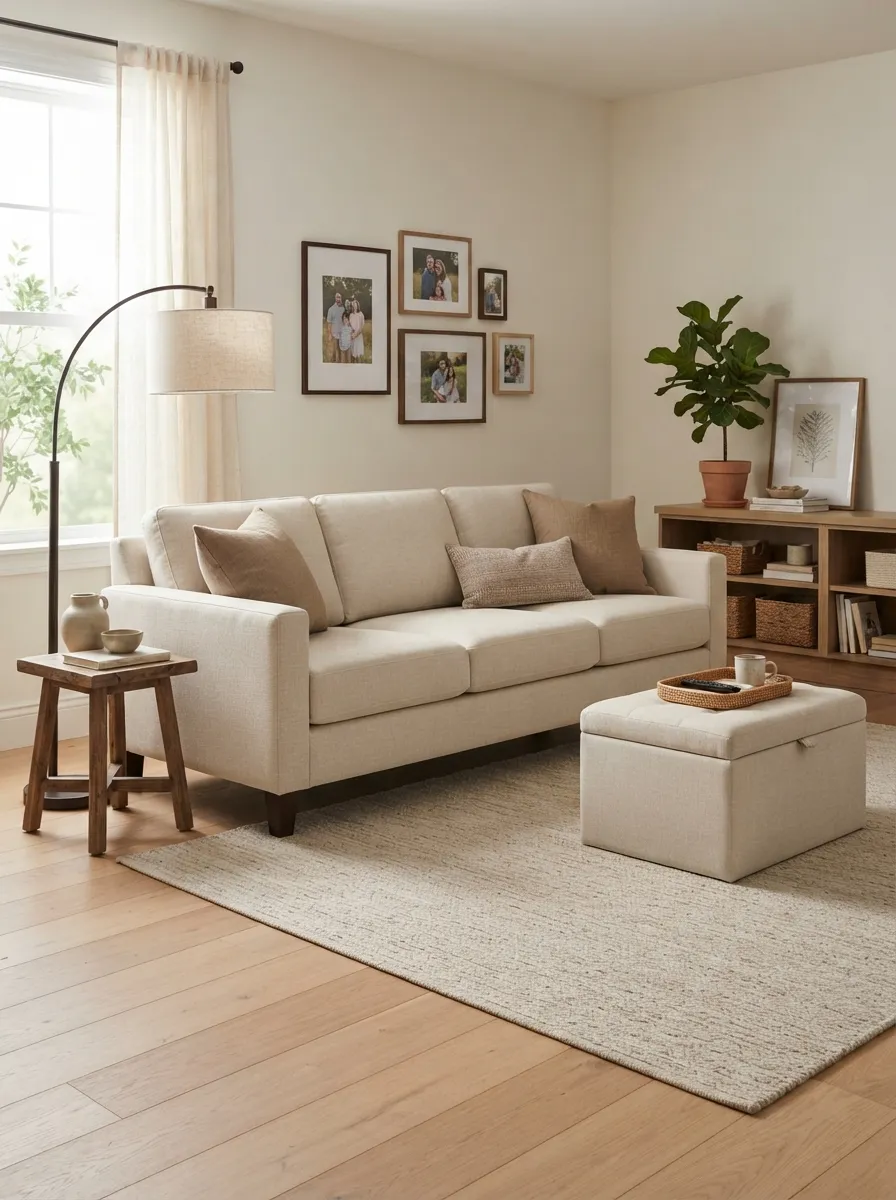
A light beige-ivory sofa can brighten a family room, but the room still needs to function when storage, tables, and everyday movement are added. The most useful family-ready layout shows a real path instead of a pristine arrangement that only works from one camera angle.
A low storage ottoman can create a softer center and provide visual separation from the sofa without introducing another tall furniture block. A flatweave rug keeps the floor calm, while a darker lamp, table edge, or small accent can help the light upholstery remain visible against nearby neutrals.
The important decision is circulation. The sofa, ottoman, and secondary furniture should leave the route through the room legible. The image can establish that layout logic, but it cannot establish product-specific care or household-use behavior. Those details must come from product information.
Use undertone to choose the right beige for the room
Beige is not one color. Oatmeal-beige feels warm and textured. Deep beige can support a larger sectional without becoming stark. Warm cream-beige works well as a quiet anchor beneath stronger art. Mushroom beige brings a deeper, more muted neutral to an apartment. Warm beige becomes clearer beside walnut and bronze. Light beige-ivory can keep a practical family room visually open.
The room should help the undertone stay readable. Warm wood can strengthen golden or oatmeal notes. Black creates a sharper edge against deep beige. Graphite makes mushroom beige easier to distinguish. Saturated art can make a cream-beige sofa feel quieter by comparison.
These are visible color relationships. They do not establish hidden upholstery specifications.
Let contrast give the sofa a boundary
The strongest beige-sofa rooms give the seating some kind of boundary: texture against smoother surfaces, shadow at the edge, a darker focal point, saturated artwork, a smoked-glass table, a walnut sideboard, or simply open floor around a compact silhouette.
That boundary is what keeps beige from disappearing. It also allows the room to stay calm without becoming flat. Once the desired undertone, silhouette, and room relationship are clear, use the merchant listing to verify the details an inspiration image cannot establish: exact upholstery composition, care guidance, construction, dimensions, warranty, and current availability.
A beige sofa works best when it is neutral without being anonymous. Give it the right contrast, the right neighbors, and enough space to remain the room’s hero.