Living Room
Brown Sofa Living Room Ideas That Balance Warmth, Light, and Contrast
Brown sofa living room ideas for warm, chocolate, cocoa, taupe-brown, walnut-brown, and earthy brown sofas—using light, contrast, and room palette to keep the sofa intentional.
Brown sofas are easy to place in a wide range of rooms, but the color still changes how much visual weight the seating carries. A soft taupe-brown can behave almost like a warm neutral, while a deep chocolate or walnut-brown sofa can become the darkest and most commanding shape in the room. The useful question is not simply whether brown matches the palette. It is whether the sofa’s color, silhouette, and surrounding surfaces distribute that weight in a way that feels intentional.
That is the through-line across these brown sofa living room ideas. Pale walls can give a darker sofa more air. Natural wood can extend warmth without turning the room monochromatic. A lighter rug can separate the sofa from the floor. Soft daylight can make a medium brown feel quieter, while evening light can deepen chocolate tones. The sofa remains the hero, but the room around it determines whether brown feels cozy, open, minimal, architectural, or compact-space friendly.
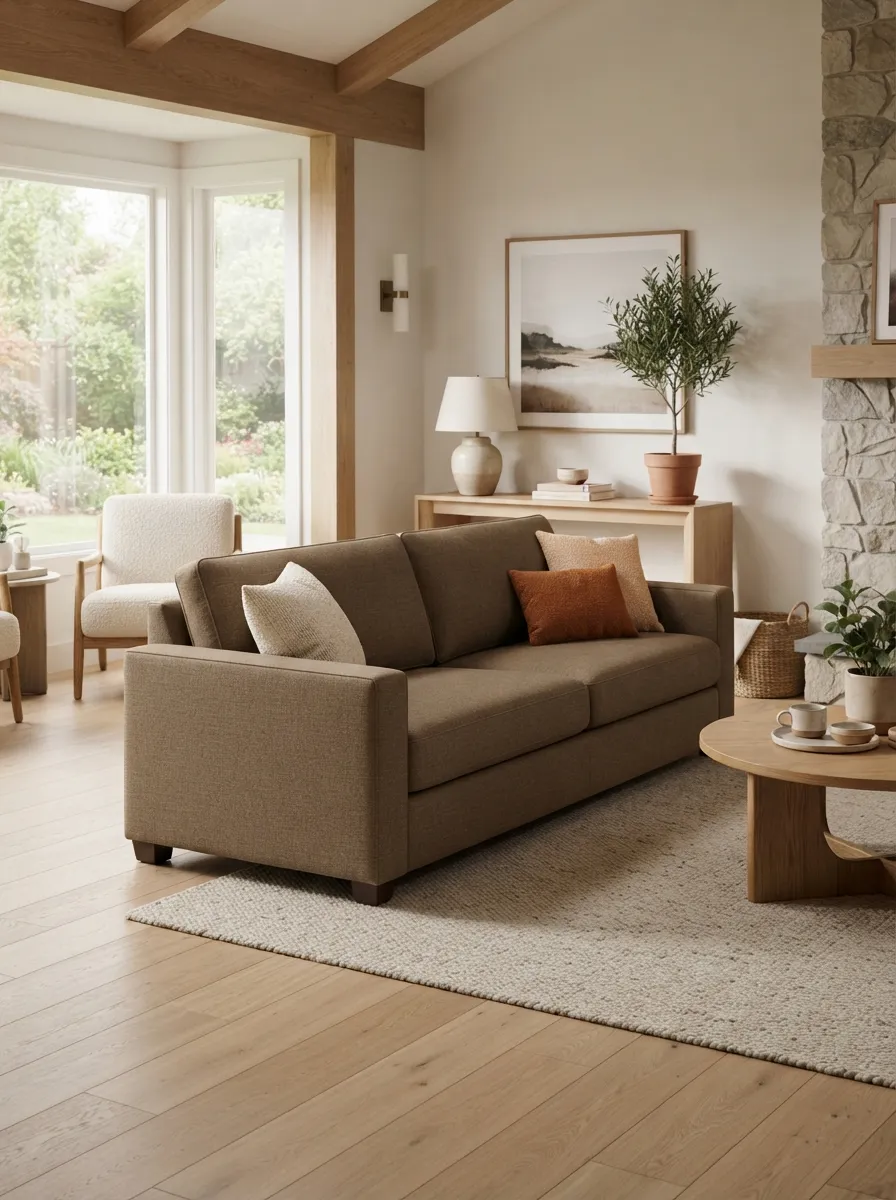
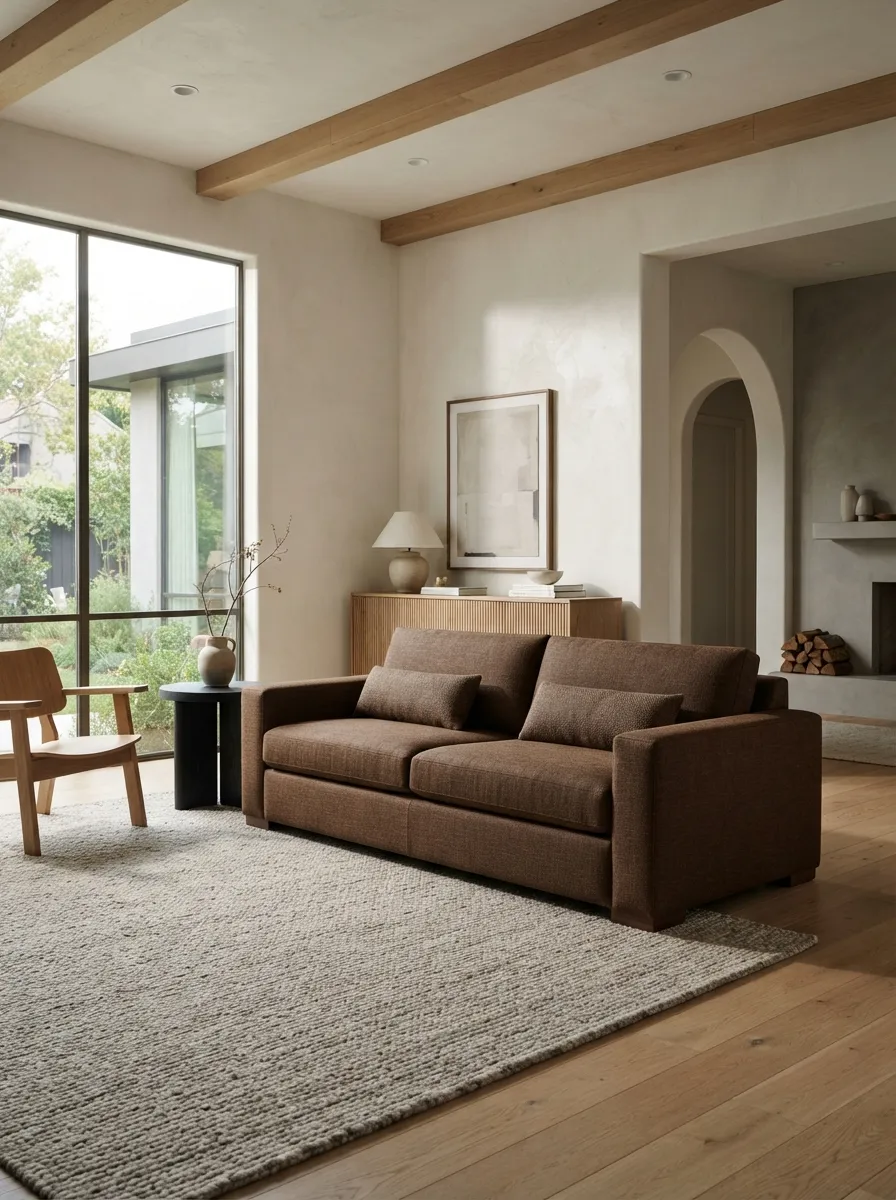
Let a warm brown sofa anchor a cozy organic-modern room
A warm medium-brown sofa works especially well in an organic-modern room because the color can connect natural wood, woven texture, soft plaster, and a light rug without requiring every object to match. Under soft daylight, the brown may read slightly toward taupe, which keeps the overall palette calm rather than highly saturated.
The strongest move is to leave enough light around the sofa. Pale walls, a cream or oatmeal rug, and an open area of visible floor keep the seating from reading as one solid dark block. A wood table can extend the room’s warmth, but choosing a slightly different tone prevents the sofa and table from merging into one brown field.
This is also where silhouette matters. Raised legs, a visible base, or a lighter arm profile can make a medium-brown sofa feel more buoyant, while a grounded form feels more settled. Those are visible relationships a room image can communicate. Exact upholstery composition, construction, care, and dimensions still belong to merchant verification.
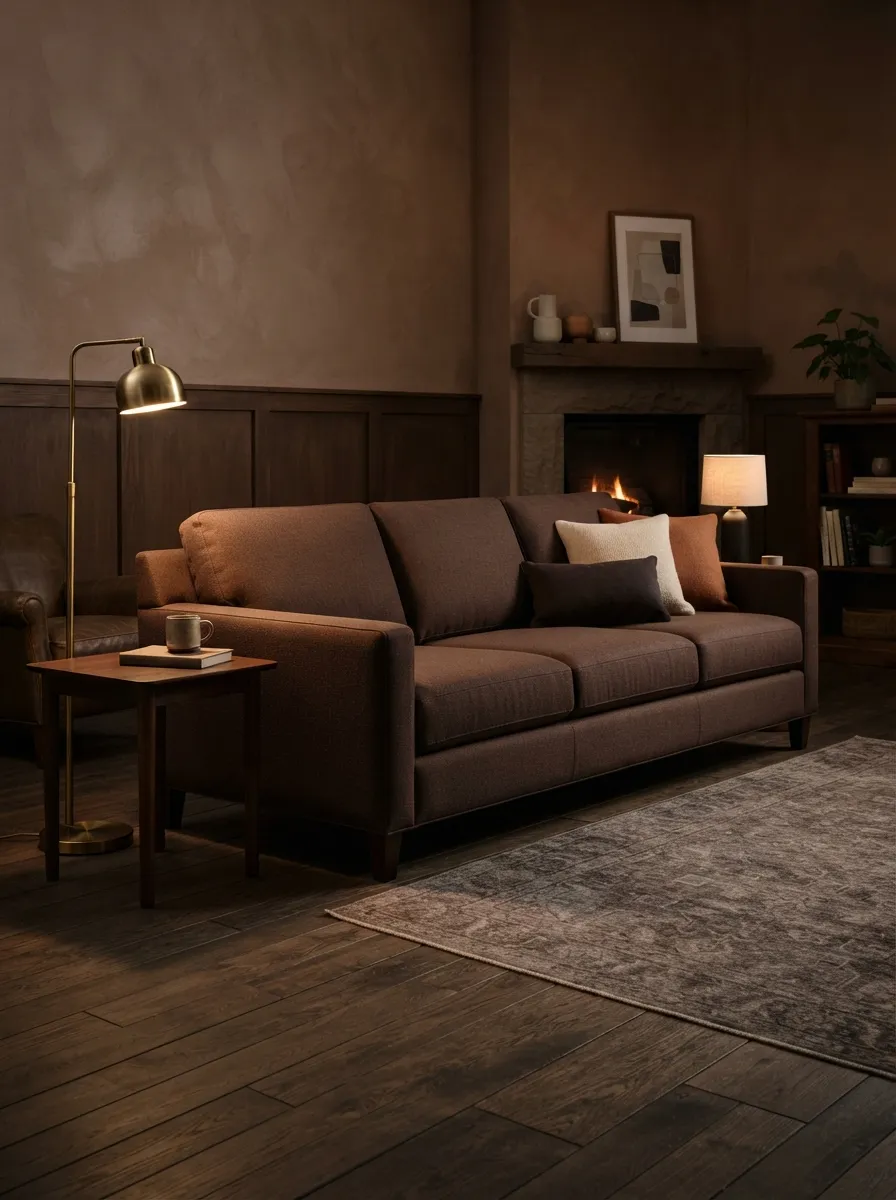
Use deep chocolate brown for an intimate evening room
Deep chocolate brown has enough visual weight to become the room’s main anchor, which makes it useful in a moody living room with dark wood and warm evening light. The risk is not that the room becomes dark; it is that the sofa, floor, tables, and walls all collapse into one continuous mass.
A lighter rug or a small amount of pale upholstery around the sofa creates enough separation for the dark silhouette to remain legible. Warm lamps can deepen the brown without flattening the room, especially when there are a few matte or lighter surfaces nearby to catch the light differently.
Keep the supporting palette controlled. Dark wood belongs naturally with chocolate brown, but repeating the exact same value everywhere makes the sofa less distinctive. A stone table, pale textile, brass or black accent, or soft plaster wall can give the seating group enough contrast to feel deliberate.
Keep light cocoa brown clearly within the brown family
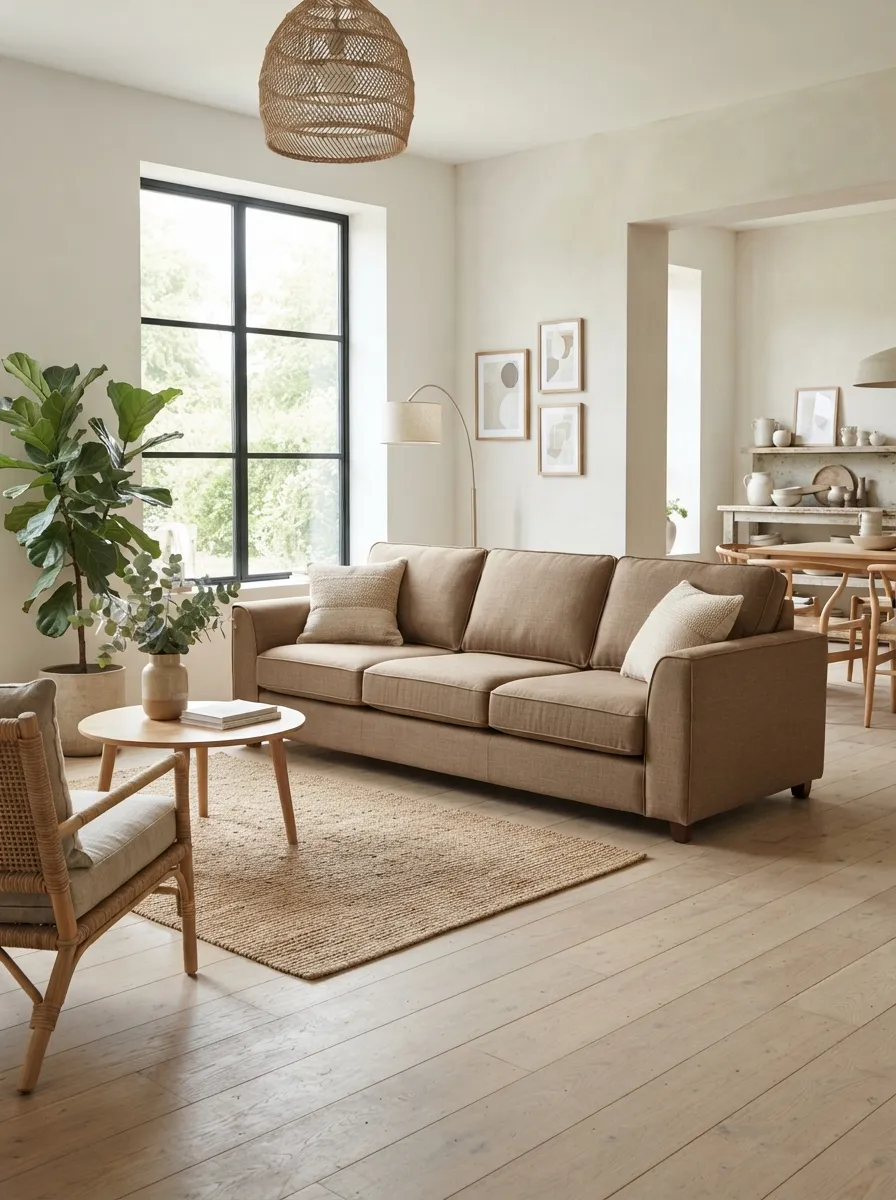
A light cocoa-brown sofa can bring warmth to a bright open living room without creating the visual heaviness of a deeper brown. The useful distinction is that cocoa still reads as brown rather than beige. It can work as a warm neutral while keeping enough color identity to remain the hero piece.
Natural textures make this color especially easy to integrate. Light wood, woven rugs, linen-like curtains, and pale stone can sit around the sofa without competing for attention. The brown becomes part of a broader warm palette rather than a separate dark object.
Because the room is bright, the sofa does not need strong contrast at every edge. A relaxed silhouette and open space around the seating can do much of the work. Use the image to judge the color relationship and apparent visual mass, then verify exact upholstery, dimensions, construction, and care from the product listing rather than inferring them from appearance.
Treat taupe-brown as a quiet warm neutral
Taupe-brown is useful when a living room needs warmth without a strong red, orange, or chocolate cast. It should still be described as brown: the point is not to turn it into gray or beige, but to use a softer brown that sits comfortably inside a restrained minimalist palette.
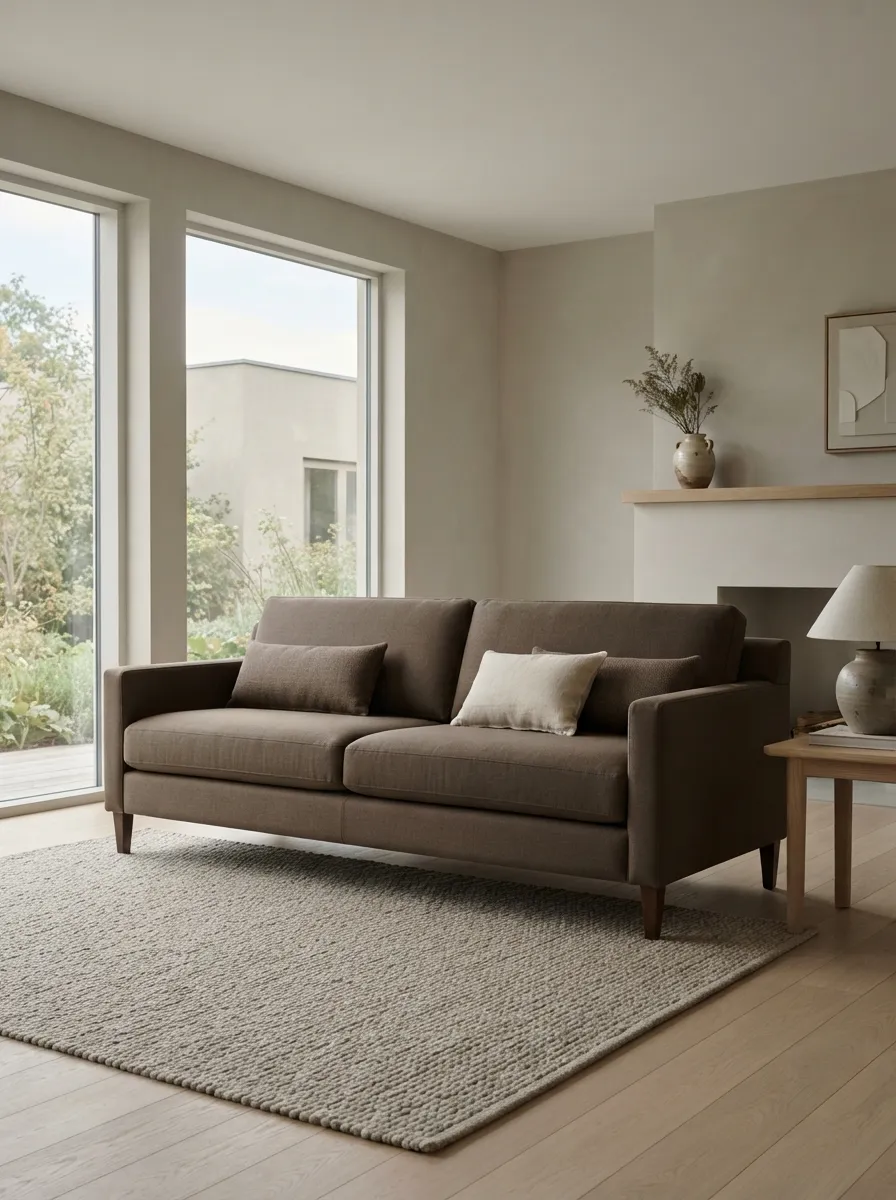
Soft morning light can make this type of sofa feel especially calm because the color changes gently across cushions and arms without becoming dramatic. Warm white walls, pale oak, stone, and a low-contrast rug can keep the room minimal while still giving the sofa enough separation to read clearly.
The strongest version of this room avoids excessive tonal matching. If every surface sits at the same value, the sofa loses definition. Small differences in lightness, texture, and reflectivity are enough to keep the composition layered while preserving the quiet mood.
Use walnut brown as an architectural focal point
A rich walnut-brown sofa can feel more formal or architectural when it sits against pale surfaces and clean contemporary lines. The darker color gives the sofa a strong outline, which makes its arm shape, back line, and relationship to the floor more visible from across the room.
This is a good setting for restraint. A broad light rug, a simple stone or wood table, and one or two secondary seats can frame the sofa without competing with it. The surrounding architecture carries the brightness, allowing the deeper brown to read as an anchor rather than a void.
A darker sofa also makes visual mass more obvious. If the base is grounded and the arms are substantial, leaving visible floor and wall around the piece becomes more important. If the silhouette is lighter, the same color can feel more buoyant. Those are appearance cues only; internal construction and other hidden specifications require product verification.
Use earthy brown to organize a compact living room
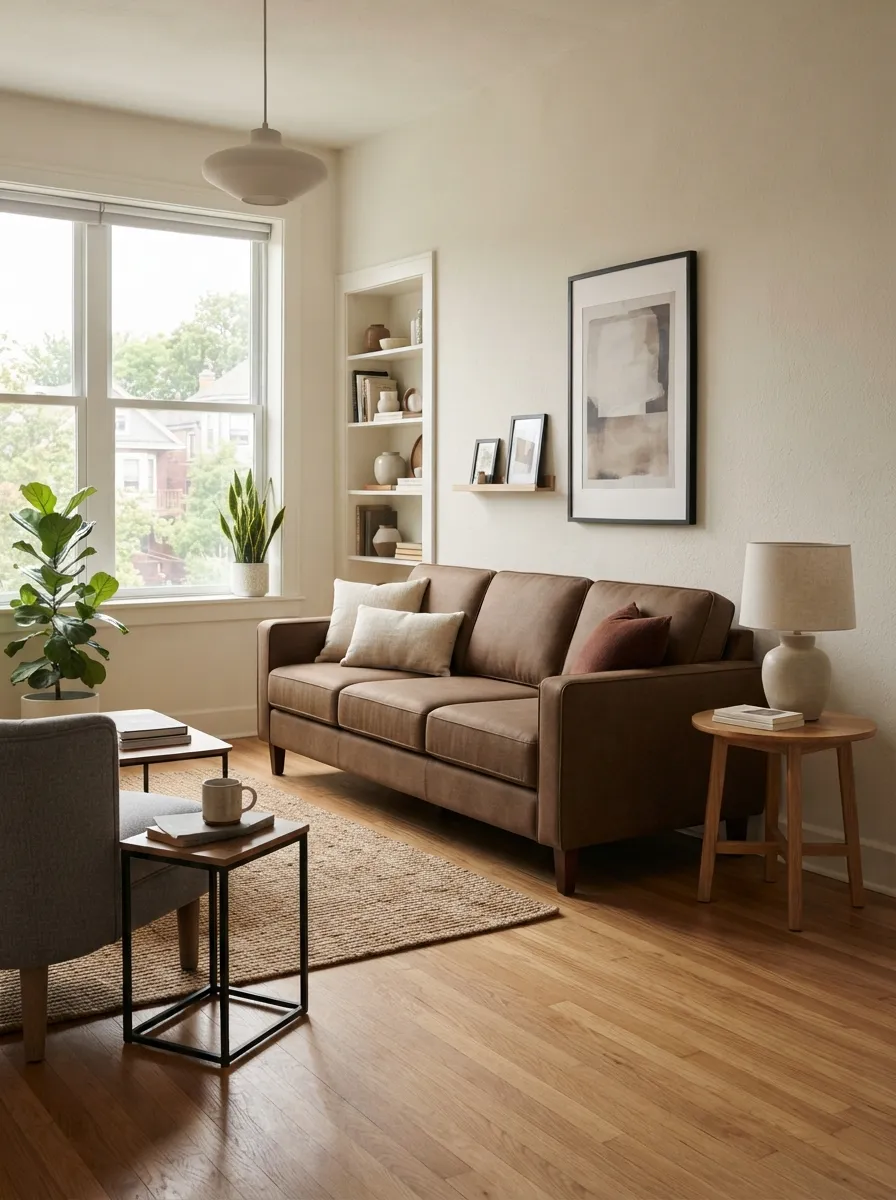
In a compact room, the sofa is judged by what remains visible around it. An earthy brown sofa can make the space feel grounded, but it should not consume the circulation path or force every secondary piece into a narrow leftover gap.
Keep the center furniture modest and avoid creating a second dense block directly opposite the sofa. A small table, one sculptural chair, or a slim side surface can give the room function without closing the floor. From the doorway, the path into the room should still be legible in the same view as the sofa.
Color can help here, but it cannot replace planning. A medium or earthy brown may feel visually softer than black, yet the actual sofa still needs to fit the room. Use the image to define the preferred proportion and circulation pattern, then verify product dimensions, delivery access, and other practical details with the merchant.
Let contrast do the work instead of matching every brown
A brown sofa does not need a room full of brown furniture. In the existing editorial logic for this article, some of the most successful combinations come from contrast: brown against a pale rug, warm upholstery beside cooler art, dark seating in light architecture, or a compact brown sofa paired with a visually lighter table.
That contrast keeps the sofa legible. If the room repeats the exact same brown across the table, rug, curtains, and storage, the hero piece can disappear. Using different values and materials creates a clearer hierarchy while keeping the palette cohesive.
The same principle applies to light. Soft daylight can make a medium brown feel calm. Bright daylight can keep cocoa brown open and relaxed. Evening light can deepen chocolate tones. Morning light can make taupe-brown feel quiet and understated. These are visible color-and-light relationships, not claims about the upholstery itself.
Choose the brown that matches the room you want to build
Warm medium brown feels cozy and organic-modern. Deep chocolate supports an intimate evening room. Light cocoa keeps an open living room warm without reading beige. Taupe-brown works as a restrained warm neutral. Walnut-brown can give contemporary architecture a strong focal point. Earthy brown can anchor a compact room when circulation remains clear.
Those differences are enough to guide the editorial and visual direction. A room image can help define color, silhouette, contrast, visible texture, and the way light moves across the sofa. It cannot establish exact fabric composition, durability, stain resistance, pet suitability, cleaning method, frame construction, cushion fill, dimensions, warranty, or availability.
Use the room to decide which brown belongs in the space, then use the merchant listing to verify the hidden product details. That separation keeps the inspiration useful and keeps the sofa as the room’s strongest, clearest furniture decision.