Living Room
Curved Sofa Living Room Ideas That Make the Shape Feel Intentional
Curved sofa living room ideas for open plans, compact rooms, and sculptural layouts, including cream and olive styling directions and practical buying considerations.
A curved sofa changes more than the outline of a seating group. Its back can define a living zone in an open plan, its inner arc can pull chairs and a coffee table into conversation, and its silhouette can soften a room built from straight walls, windows, and cabinetry. That is why the strongest curved-sofa rooms start with placement rather than decoration. The curve needs a job.
Before choosing color or accessories, look at the sofa from the room’s main approach. A curved piece is often visible from several angles, especially when it floats away from a wall. The back profile, the amount of floor visible around it, and the relationship between the arc and nearby furniture all become part of the composition. Once those relationships work, upholstery color can either keep the shape quiet or turn it into the room’s focal point.
Cream vs. Olive: Two Ways to Style a Curved Sofa
The same soft silhouette can lead a room in two very different directions. Cream keeps the visual mass low and lets the curve read almost like part of the architecture. Olive gives the same shape more presence, especially against warm white walls, pale wood, and natural textures. Neither approach changes the basic layout logic: the sofa still needs breathing room, a clear relationship to the coffee table, and enough contrast from the floor and wall to make its outline readable.
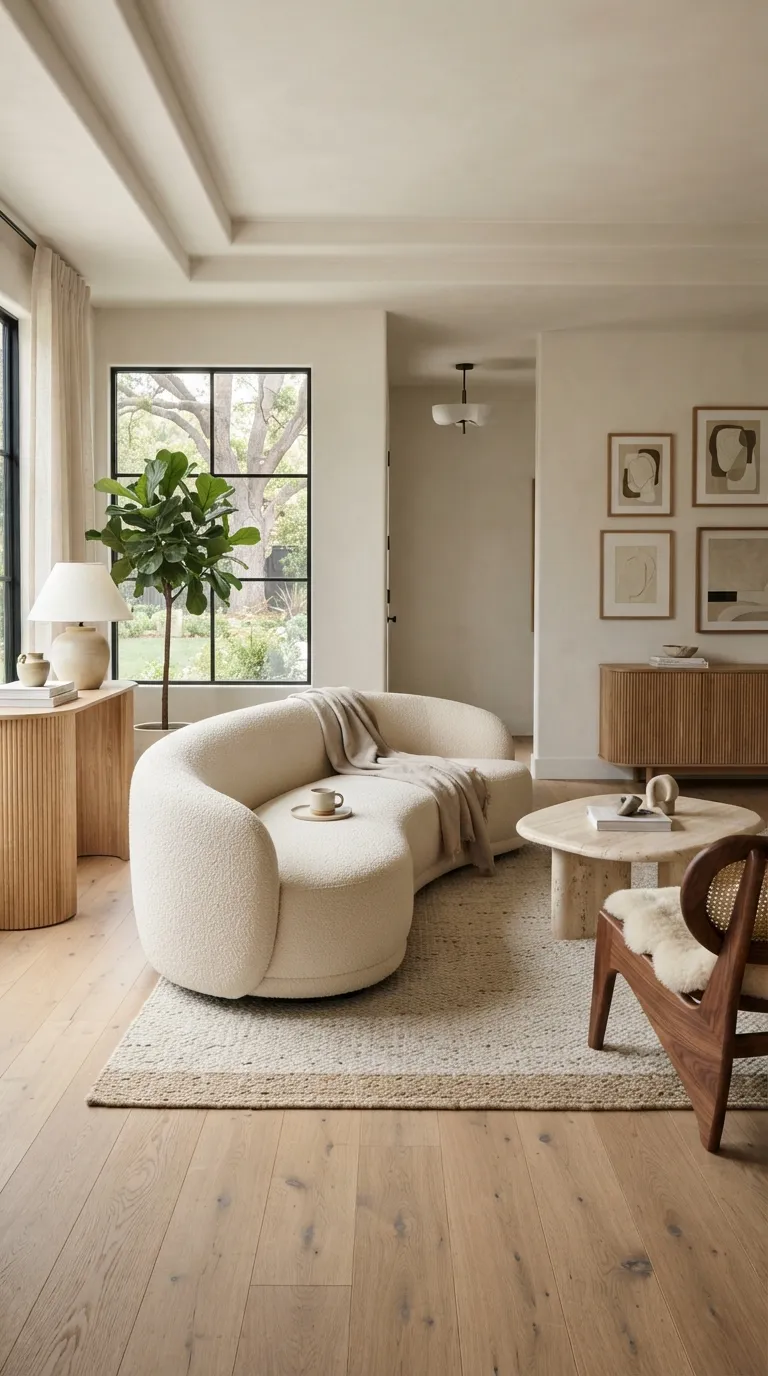
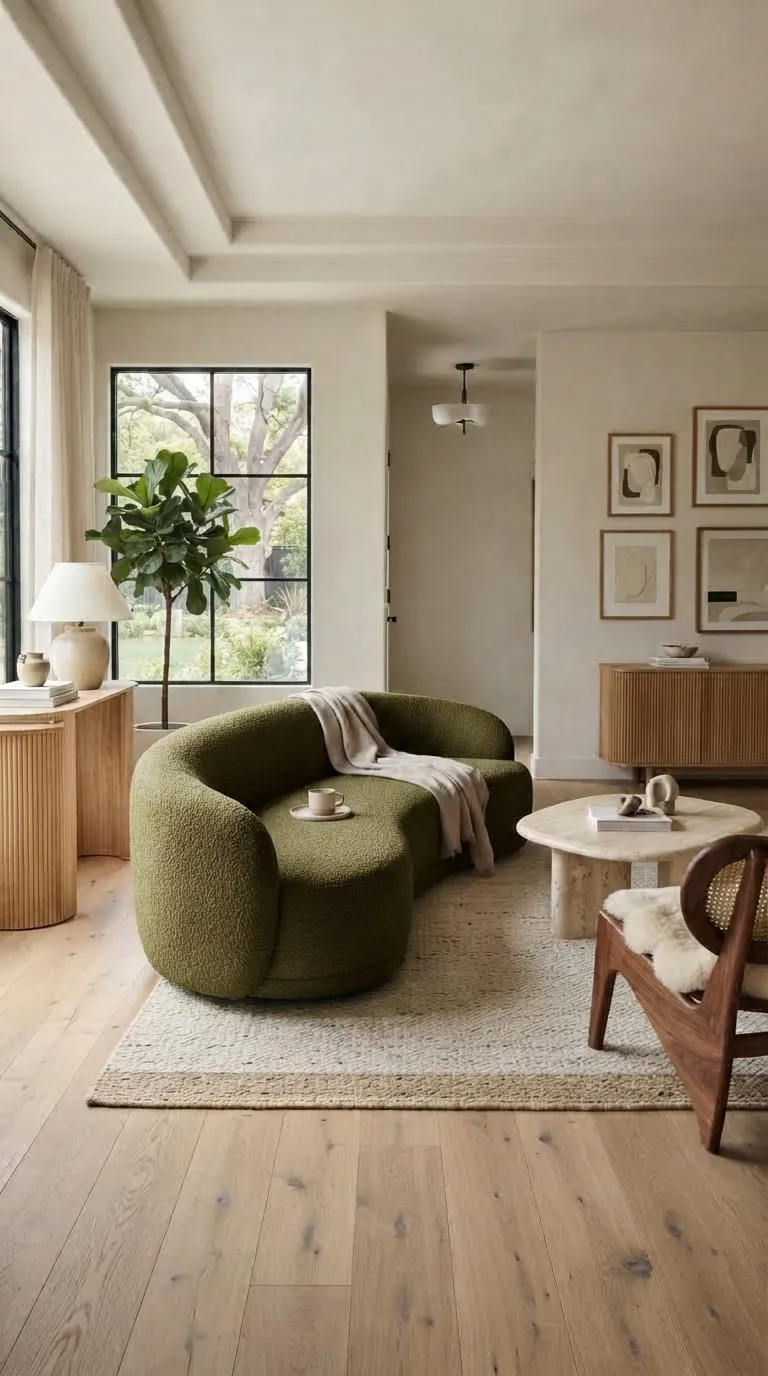
If the room already has strong color in art, stone, or a rug, cream can give the eye somewhere to rest. If the architecture is quiet and the palette is mostly neutral, olive can supply the visual anchor without losing the rounded, organic quality that makes the sofa appealing. In both cases, repeat the sofa color sparingly. A few related tones are enough; matching every accessory to the upholstery can flatten the room instead of supporting the curve.
Float the sofa when you want it to define an open plan
A curved sofa is especially useful when a living area needs a boundary but not a wall. Floating the piece allows its outer back to mark the edge of the lounge while the inner arc turns toward the people, table, fireplace, or view inside the seating group. A lower back keeps sightlines open across adjacent dining or kitchen zones, while a more substantial profile makes the living area feel more enclosed.
The useful shopping clue is the sofa’s rear view. If the back will face an entry or dining area, it should look intentional from that side rather than like a piece designed only to sit against a wall. Compare the continuity of the back, the base treatment, and how much of the floor remains visible beneath or around the piece. Those visible cues affect the room even before dimensions and construction details are checked on the product page.
Use round and oval pieces to support the arc, not copy it everywhere
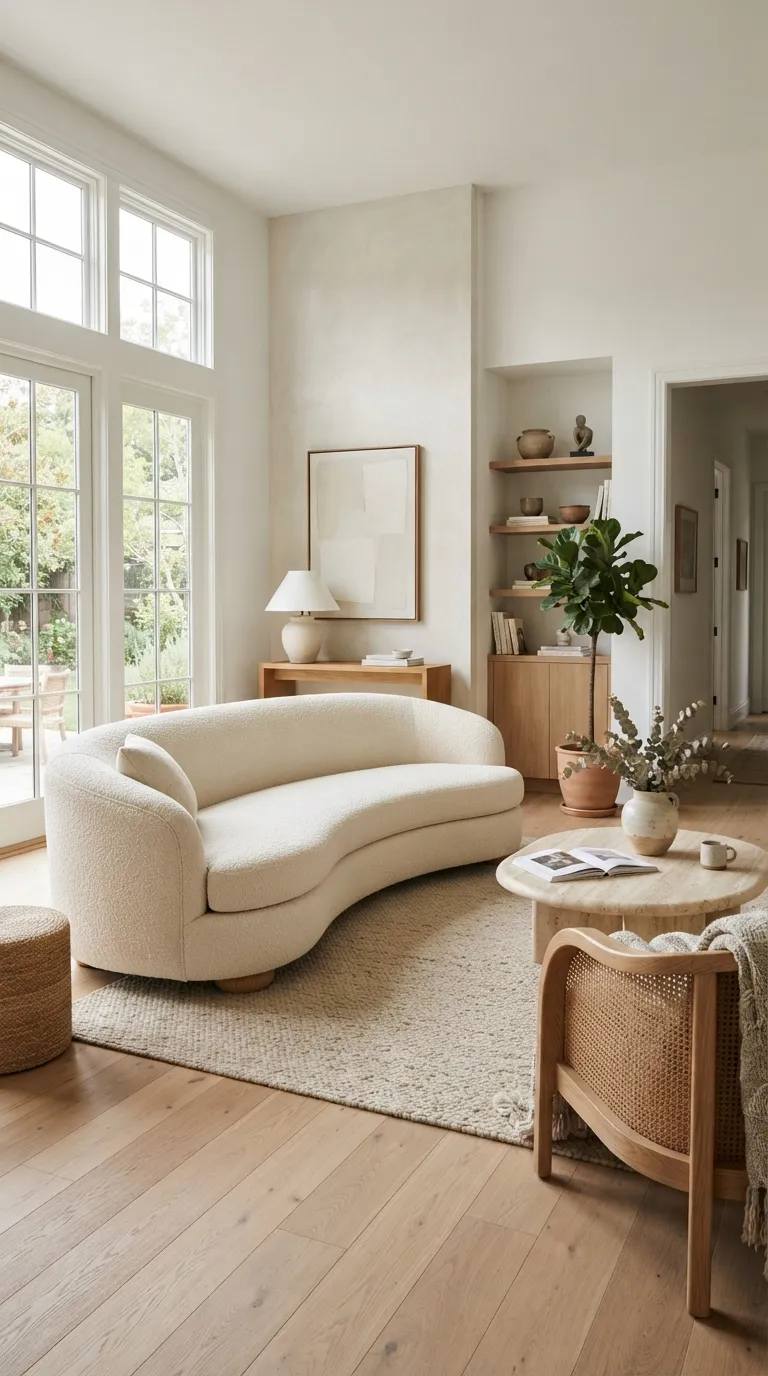
A curved sofa does not require a room full of curved furniture. One rounded coffee table or oval rug can reinforce the seating geometry without turning the space into a collection of matching shapes. The goal is to create a center that feels easy to approach from different seats.
A round table works well when the sofa wraps closely around the middle of the group because it avoids projecting corners into the arc. An oval or softly rectangular table can be more useful when the sofa is longer and the room needs a stronger directional line. Accent chairs can be straighter than the sofa, provided their placement continues the conversation rather than interrupting it. Mixing one dominant curve with a few simpler shapes usually gives the room more tension and clarity than repeating the same radius in every object.
Let windows and architecture decide how closely the sofa follows a curve
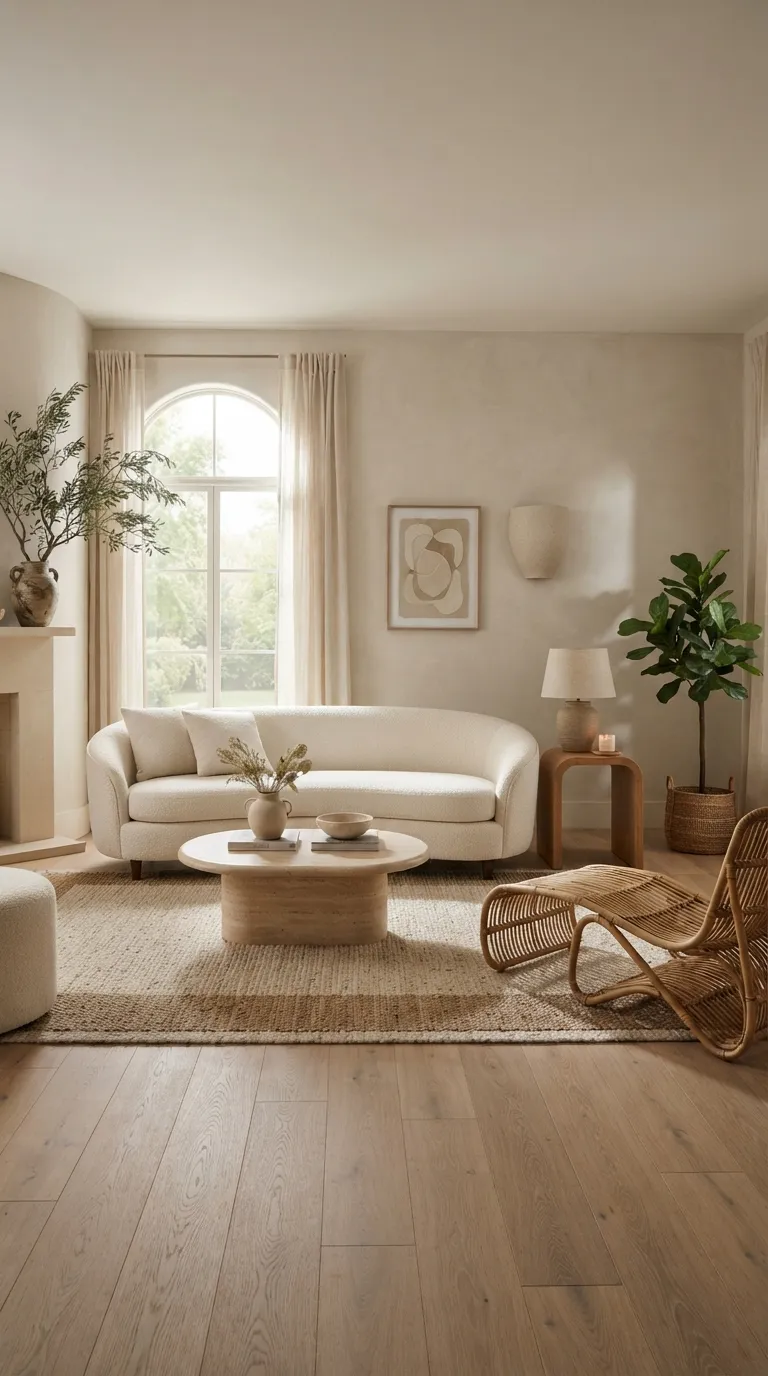
Curved sofas are often shown near bay windows, arched openings, or panoramic glazing because the shapes appear naturally related. The relationship does not need to be literal. A sofa can acknowledge a bay without being pushed tightly against it, and a curved back can sit near a straight window wall as long as the negative space looks deliberate.
Leave enough room for the architecture to remain visible and usable. If the sofa blocks a window detail, crowds access to glazing, or creates an awkward pocket that cannot be reached, the visual match is not helping the room. A smaller curved loveseat can sometimes express the same idea with less bulk. In a room with strong architecture, the sofa should frame the feature rather than compete with it.
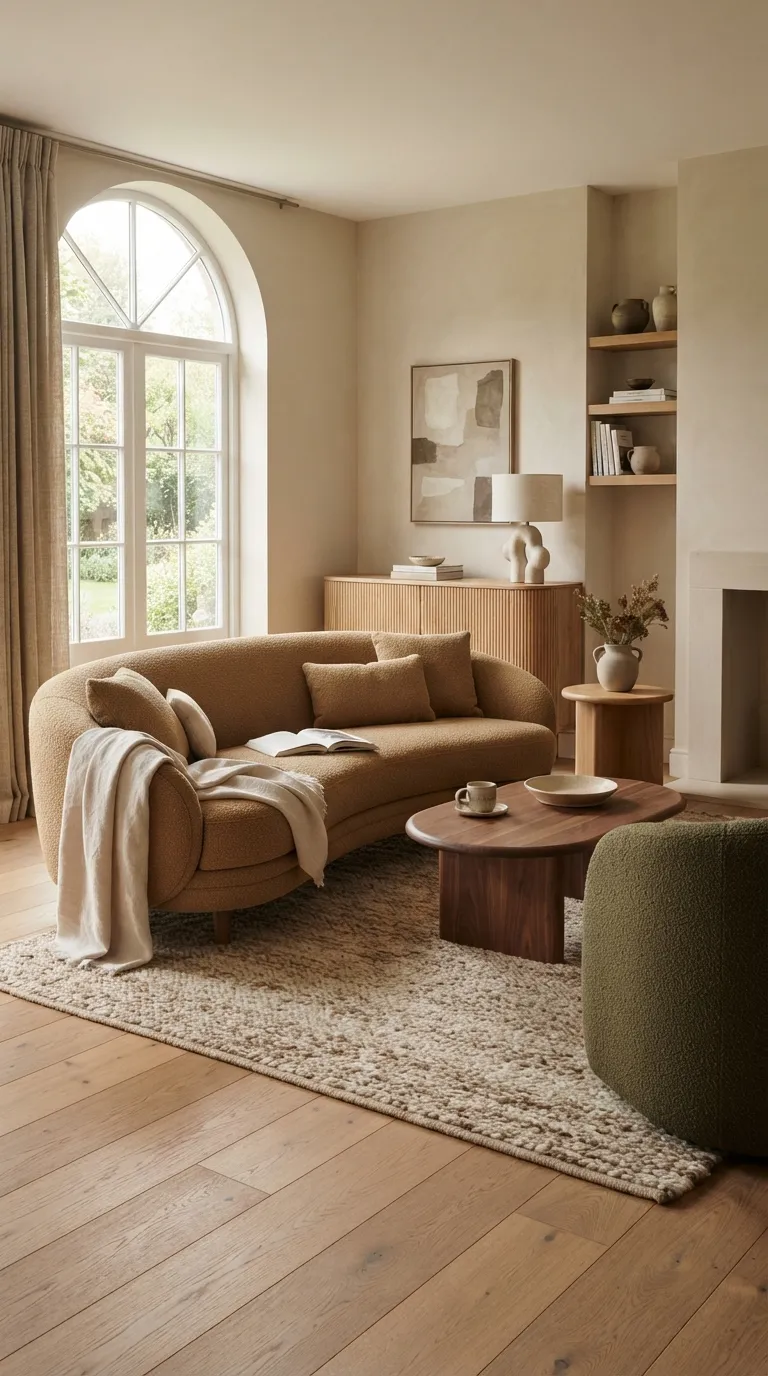
Choose the profile according to how much visual weight the room can carry
Not all curved sofas feel equally sculptural. A pale, low-backed crescent with a simple base can read as a quiet horizontal line. A deeper sofa with a taller back, thicker arms, or a grounded plinth can become the dominant mass in the room. Both can work, but they ask for different surroundings.
If the sofa is visually heavy, keep nearby tables and chairs lighter so the seating group still has separation. If the sofa is slim and low, one more substantial chair, lamp, or table can prevent the composition from feeling insubstantial. This is also where photographs have limits. They can show silhouette, apparent texture, color, and how a piece relates to the room, but they cannot confirm actual upholstery composition, cushion construction, care requirements, or comfort. Use inspiration images to narrow the form, then use merchant information to verify the hidden specifications.
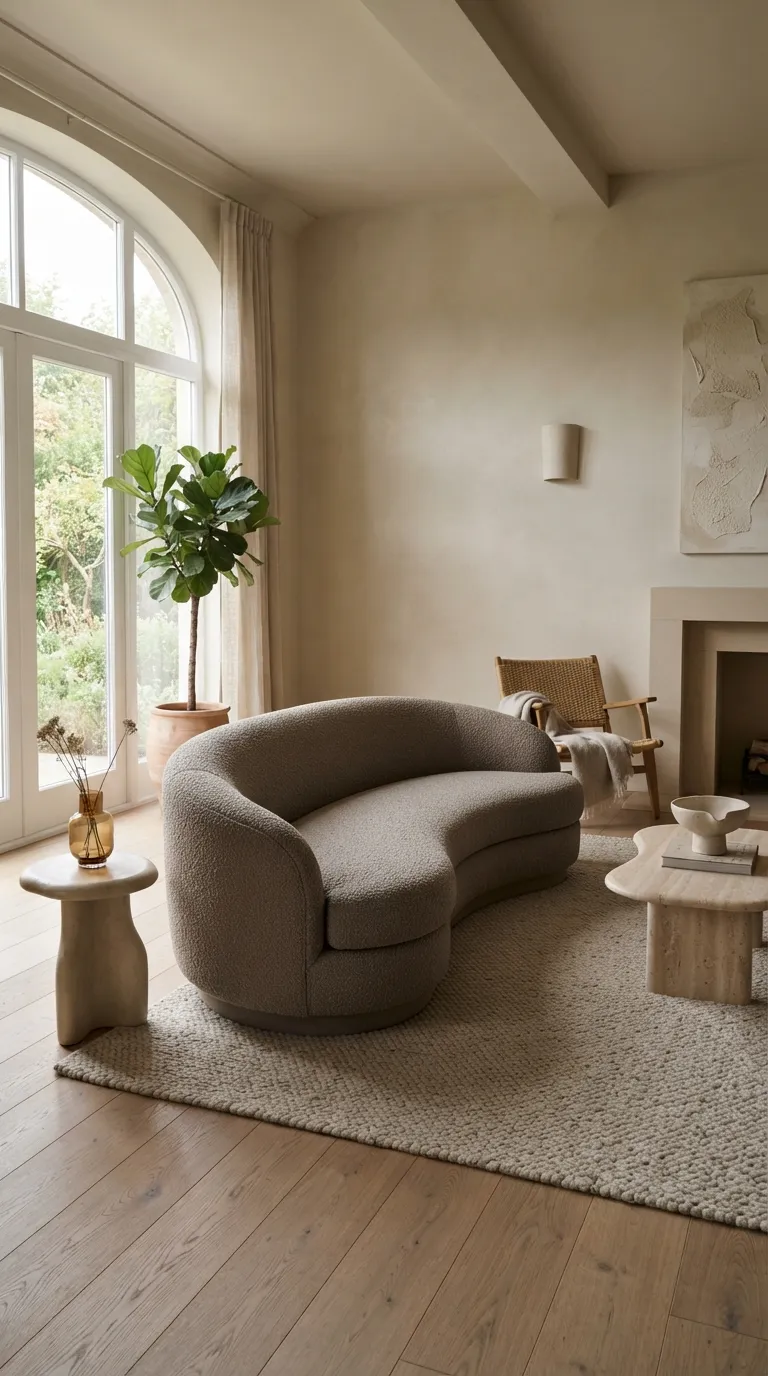
Make color a deliberate part of the sofa’s shape
Because a curved sofa is visible from multiple angles, color tends to read as a continuous field rather than a flat front-facing block. Pale upholstery emphasizes light and shadow across the arc. Darker or more saturated upholstery makes the silhouette easier to read from across the room and can turn the sofa into a sculptural focal point.
The cream and olive examples above show this difference without changing the underlying room language. Cream merges with warm neutrals and lets shadow describe the curve. Olive separates more clearly from pale walls and wood tones, so the sofa carries more of the room’s identity. Other colors can follow the same principle: decide whether the sofa should blend into the envelope or become the strongest colored object, then keep the surrounding palette disciplined enough for that choice to remain clear.
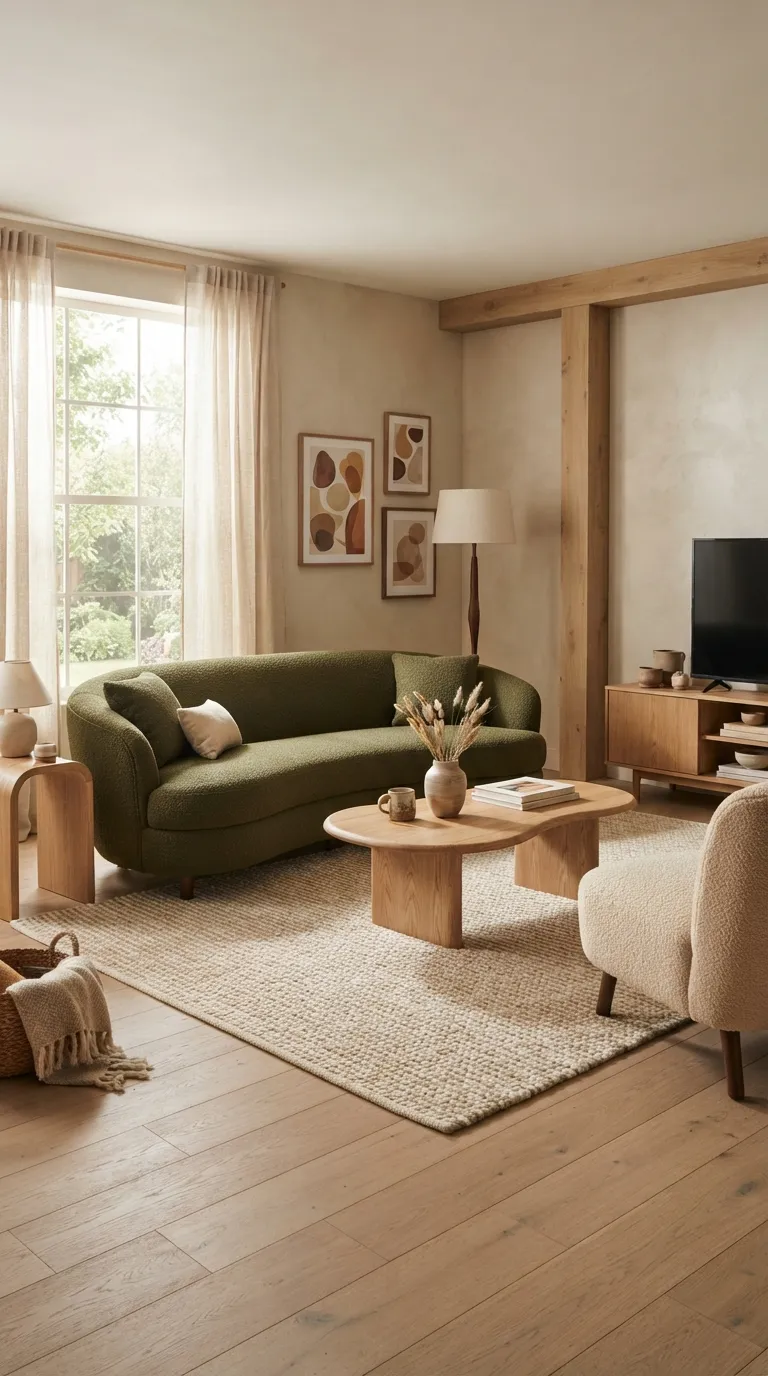
In a smaller living room, reduce the number of competing furniture moves
A compact room can still handle a curved sofa if the curve is treated as the main gesture. The mistake is often not the sofa alone but the number of secondary pieces competing for the same floor area. A petite arc paired with a slim side table and one movable center piece can feel purposeful, while a deep curve surrounded by several chairs, tables, and storage pieces can quickly make the plan feel crowded.
Look at what remains visible around the sofa: the path from the doorway, the floor beside the arms, and the wall or window beyond the back. Open space helps the curve read as a choice instead of an obstacle. When comparing products, verify actual overall dimensions and delivery requirements rather than relying on the apparent scale of a styled image.
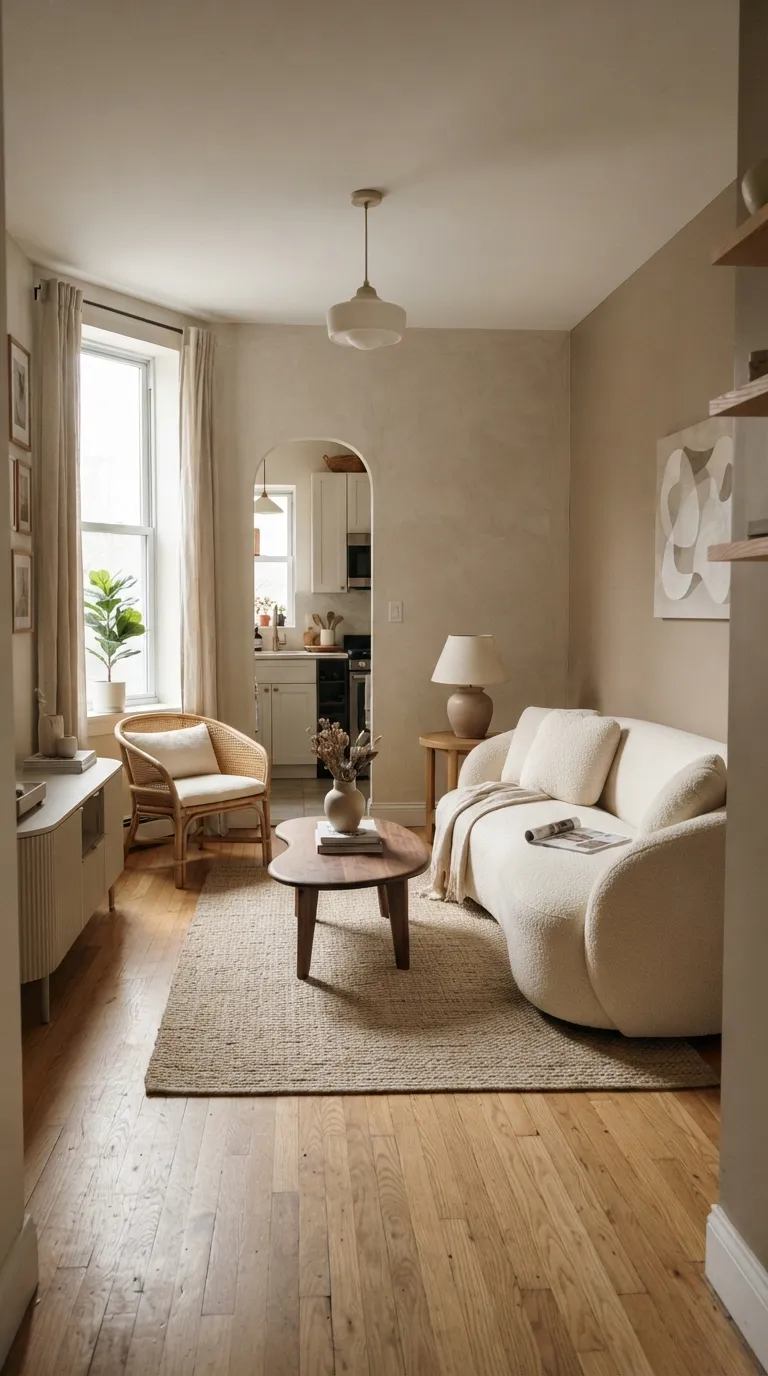
Before buying a curved sofa, verify the details the room photo cannot show
Curved sofas often look simpler in inspiration photography than they are to purchase and place. The exact product page should answer the questions that a room image cannot: overall dimensions, seat depth, upholstery composition, frame and cushion construction, assembly, care instructions, warranty, delivery access, and whether the piece arrives as one unit or multiple components.
Also check how the sofa is intended to sit in space. Some designs have a finished rear profile that suits floating placement; others make more sense closer to a wall. Some arcs create an intimate conversation shape, while others are only gently bowed and behave more like a conventional sofa. Match the geometry to the room first, then let color and texture refine the look.
The best curved-sofa room gives the curve a reason to exist
A curved sofa earns its footprint when it changes the room for the better. It can make an open plan easier to read, draw people toward a shared center, respond to a window or architectural feature, or give a quiet room one strong sculptural element. The most convincing layouts do not rely on the novelty of the shape. They make the curve part of the room’s circulation, hierarchy, and everyday use.
Start with that spatial role, then decide how visible you want the sofa to be. Cream can keep the effect soft and architectural; olive can make the same silhouette feel earthier and more assertive. Once the placement and visual weight are right, the rest of the room can stay comparatively simple.