Living Room
Green Sofa Living Room Ideas That Use Shade, Scale, and Contrast Well
Green sofa living room ideas for sage, olive, emerald, forest green, and deep moss sofas—using shade, scale, contrast, and circulation to keep the sofa visually clear.
A green sofa is never simply a color accent. Its shade sets the temperature of the room, but its silhouette and scale decide how emphatically that color arrives. A pale sage sofa can sit quietly among oak and cream, while an olive sectional becomes a broader field of color that organizes a family room. Emerald can work as a saturated focal point, forest green can hold its own beside warm brown, and deep moss can anchor a softer blue-and-cream palette.
The strongest green sofa living room ideas do not repeat green everywhere. They give the sofa a clear supporting cast and enough circulation to remain readable as the hero furniture. Pale wood, warm brown, cream, black, glass, stone, and soft blue can each reveal a different side of green. The six sections below preserve those differences rather than flattening every room into the same neutral styling formula.
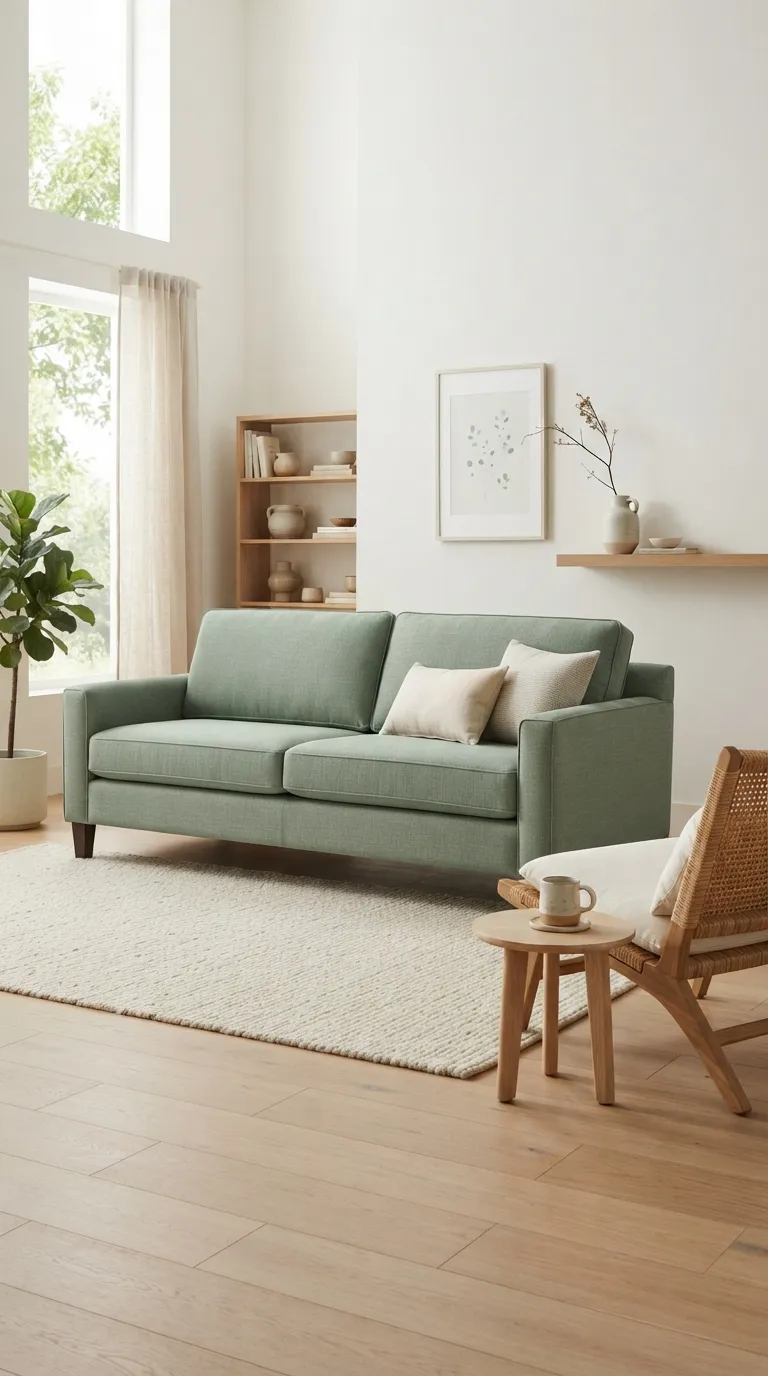
1. Let soft sage sit quietly with light oak and cream
Soft sage works best when it is allowed to be a low-contrast furnishing rather than a loud decorative signal. Against pale oak and a creamy rug, the sofa brings a muted green note while a leafy plant adds a second, more natural green element in the room.
The important distinction is that sage remains green. It should not be treated as gray, beige, or mint simply because the surrounding palette is light. Daylight can make the shade appear quieter, but pale wood and cream give it enough contrast to stay legible.
Visible texture can change the mood of the shade. A more visibly woven surface may make the room feel relaxed, while a smoother-looking surface can make the same green feel more tailored. Those are appearance cues only. Exact upholstery composition, care, construction, and performance still require merchant verification.
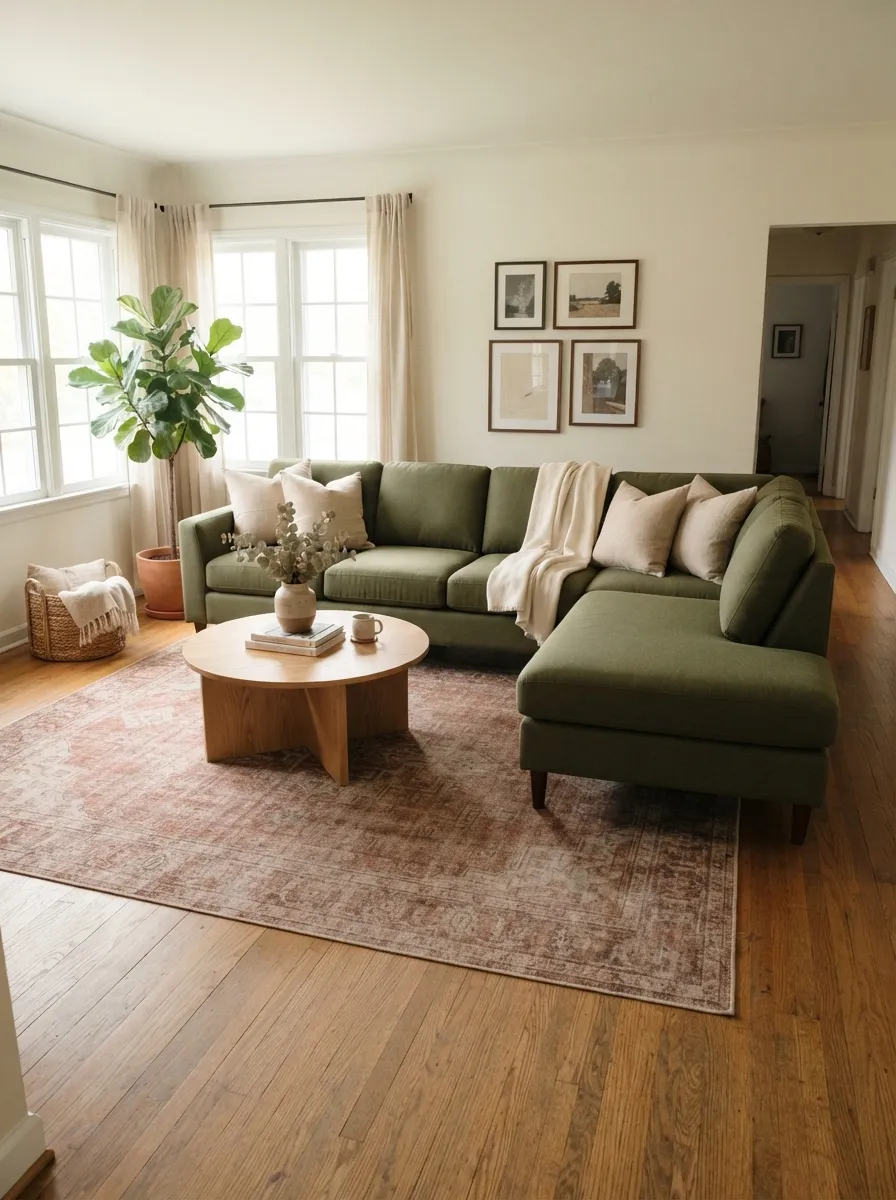
2. Use an olive sectional to organize a sunlit family room
Olive has enough earthiness to feel settled in a family room, particularly when natural wood and warmer muted accents sit nearby. Here, the sectional shape matters as much as the color because the chaise turns the sofa into a broad continuous gesture.
Pillows and a throw may cover parts of the upholstery, but the overall sectional configuration should remain readable without implying precise module boundaries that the image does not clearly show. The chaise direction, open end, rug, and center table do most of the planning work.
The useful question is whether the sectional creates a welcoming lounge zone while leaving a plausible path around it. The image can show that relationship. It cannot establish actual dimensions, comfort, internal construction, or configuration options.
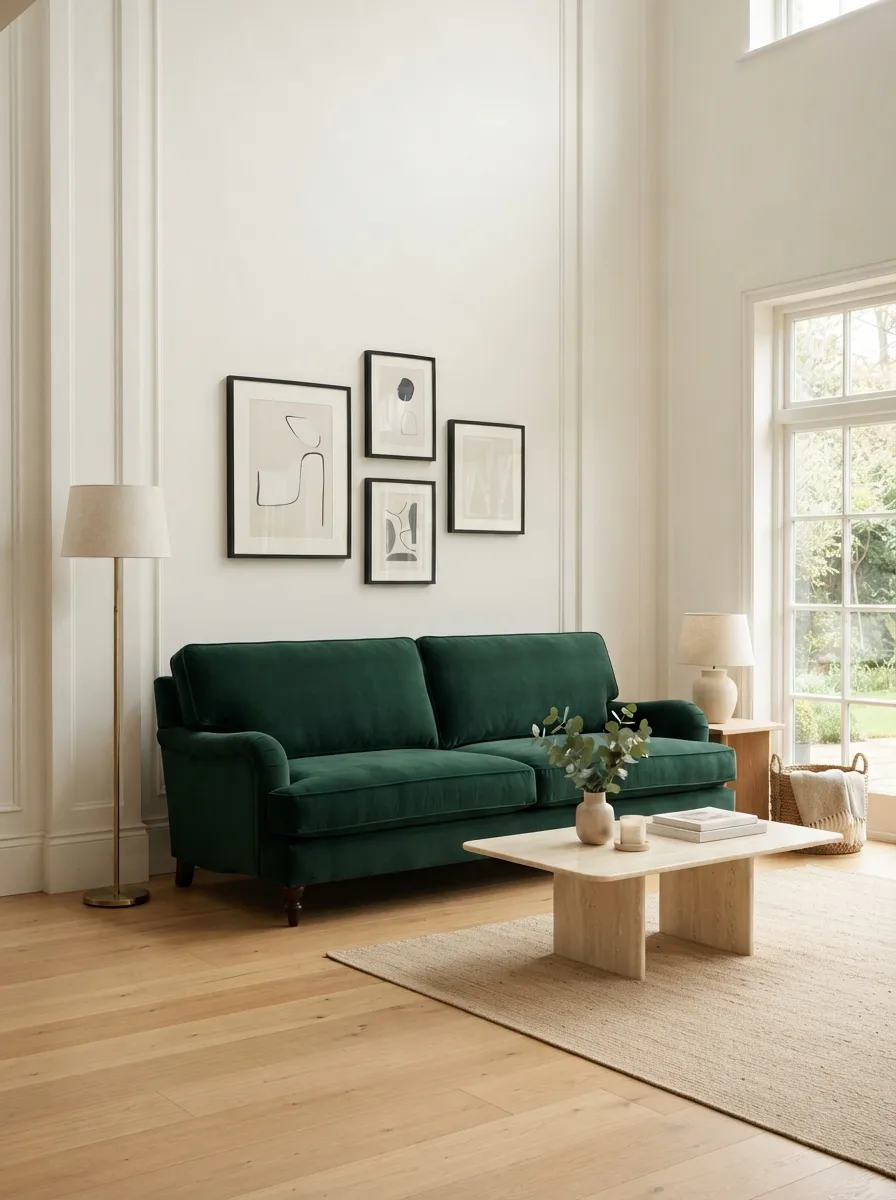
3. Let emerald become the saturated focal point
Emerald needs architectural air around it. Pale walls, a light floor, a restrained table, and slim lighting allow the sofa to register as the room’s strongest color without turning the entire composition dark.
The upholstery may show a velvet-like softness or restrained sheen in directional light, but that visible appearance should not be treated as proof of fiber composition or fabric specification. What the image can support is the contrast between a saturated green surface and calm pale architecture.
Negative space matters here. Enough visible floor and wall around the sofa keeps the deep color from becoming visually heavy. Small dark frames or metal details can sharpen the scene, but they should remain subordinate so the emerald sofa stays the color event.
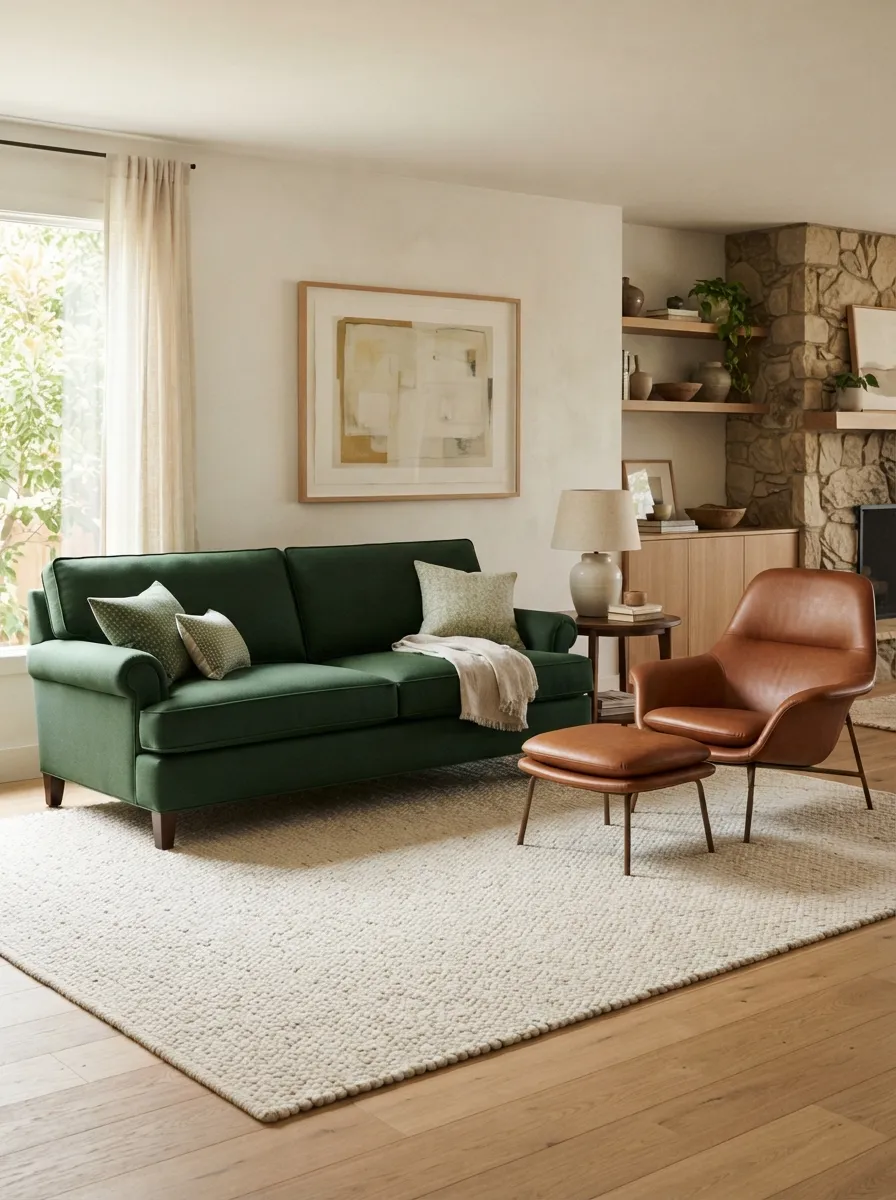
4. Pair forest green with warm brown without losing the sofa as hero
Forest green gains warmth when it sits beside a cognac-toned chair and walnut-toned furniture. The relationship works because the pieces differ clearly in color and visible surface, while the cream rug provides pale relief below both.
The chair should remain a supporting element rather than becoming a second product story. Its purpose in the composition is to introduce warm brown contrast and break up the green without matching the sofa. The table adds another warm note, but its exact wood species should not be inferred from appearance alone.
Spacing is important. Giving the chair its own patch of rug and enough separation from the sofa keeps the pair collected rather than crowded. Warm artwork can continue the palette upward without competing with the sofa’s larger saturated surface.
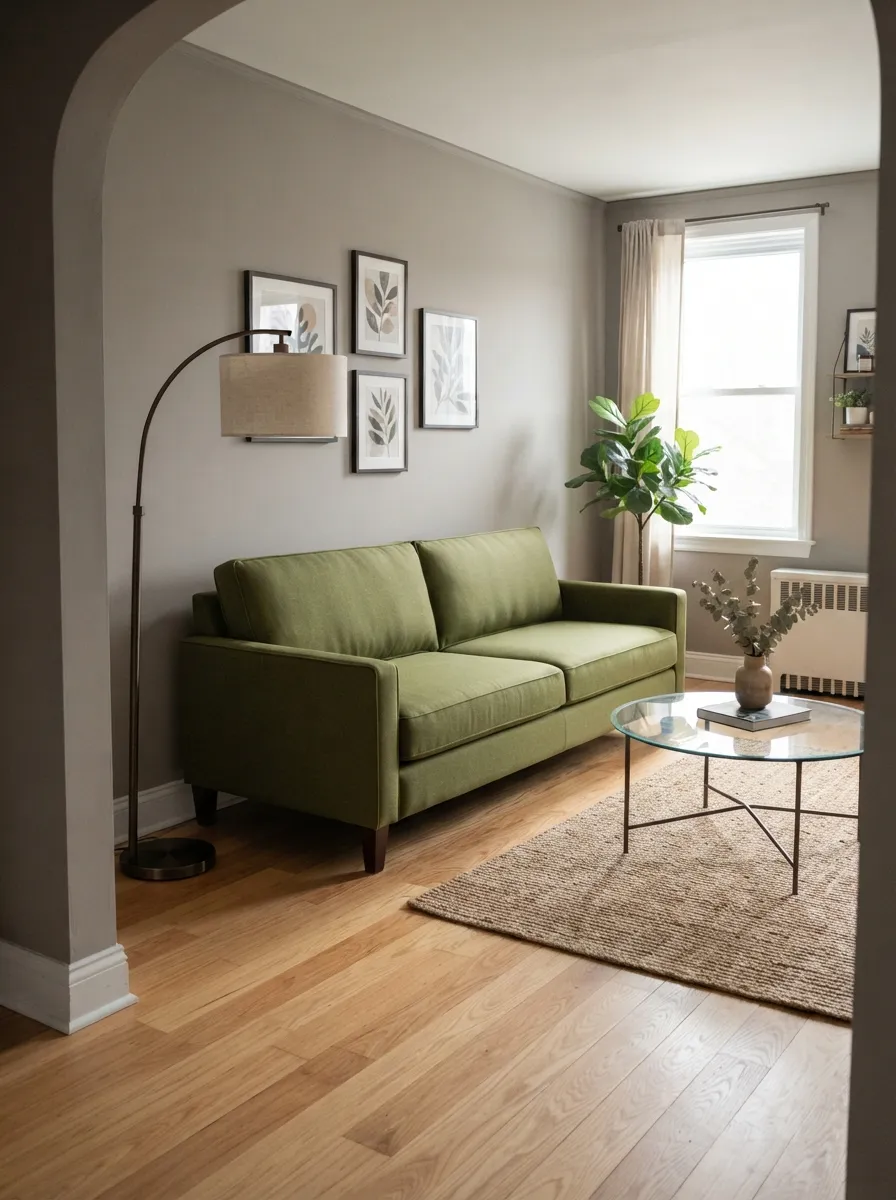
5. Keep an olive sofa compact with narrow arms and visible floor
In a compact room, a green sofa needs personality without becoming a wall. A narrow-arm olive sofa can carry the color while leaving more of the floor, rug, and entry path visible.
The round glass table matters because it creates a useful center without adding another opaque block beside the sofa. A sculptural floor lamp can add height while keeping the floor plan relatively clear. From the entry, the route through the room should remain easy to read.
Do not use the photograph to estimate exact sofa dimensions. The useful information is proportional: narrow arms, a visually lighter center table, visible floor, and an unblocked circulation path. Exact measurements and delivery constraints belong to the product listing.
6. Layer deep moss with pale blue and cream
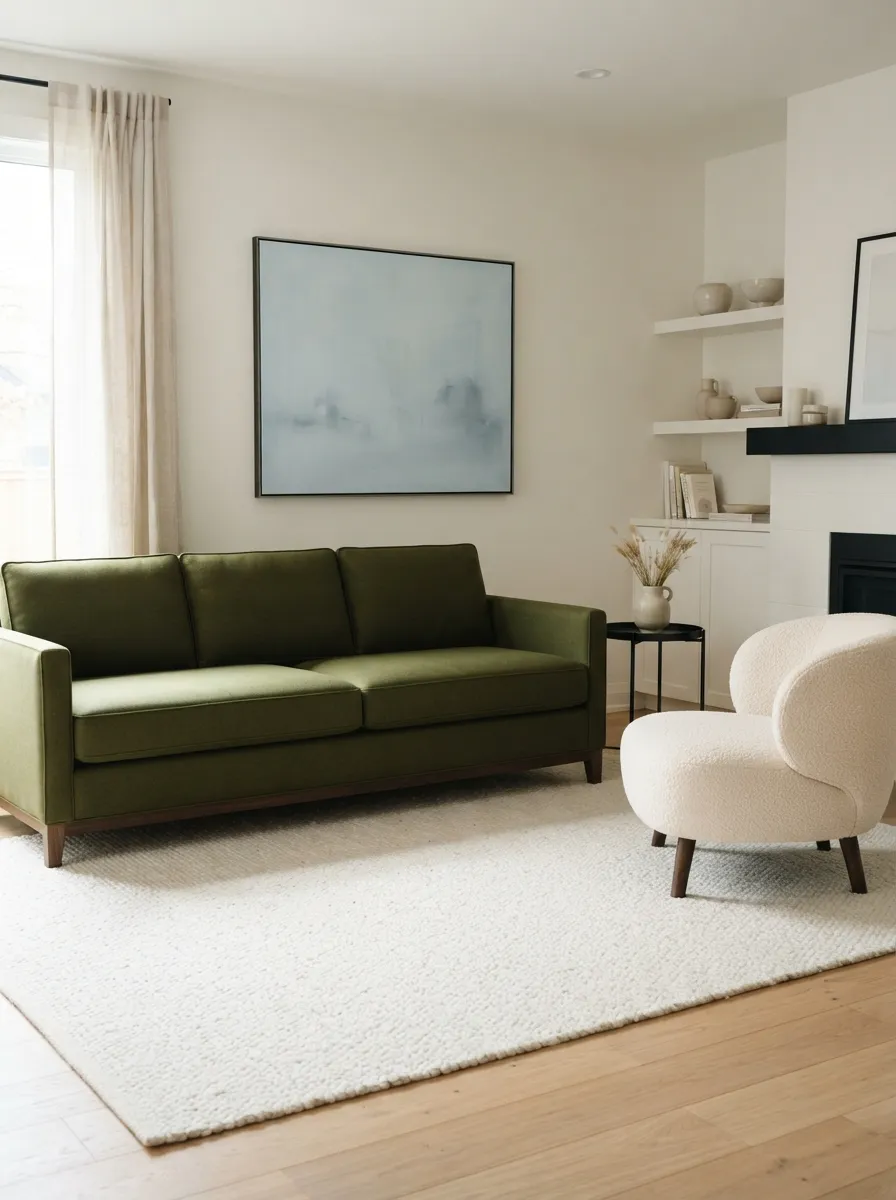
Deep moss can feel calm rather than dramatic when pale blue and cream stay subordinate. The sofa remains the largest saturated surface, while the lighter colors soften the room’s temperature without dividing it into competing color blocks.
The blue artwork should read as atmospheric rather than assertive. Cream seating and an off-white rug give the moss sofa a clean boundary, while restrained dark accents can add enough definition to keep the palette from becoming overly soft.
Compared with a lighter olive, deep moss has more visual gravity. It therefore needs fewer saturated companions, not more. The sofa should remain the first color the eye reads, with blue and cream acting as supporting layers.
Choose the shade before you choose the supporting palette
Sage, olive, emerald, forest green, and moss do not behave the same way in a room. Sage can sit quietly beside pale wood. Olive works well with earth tones and family-room scale. Emerald benefits from pale architectural space. Forest green can stand up to warm brown. Deep moss works with softer blue and cream when the rest of the room stays controlled.
That shade choice should lead the supporting palette rather than follow it. The goal is to make the sofa visibly green without turning the entire room into a themed scheme.
Let silhouette and circulation control the amount of color
A saturated sofa occupies visual space even before its physical footprint is considered. A compact narrow-arm shape can make olive easier to use in a smaller room, while a sectional spreads green across a much larger portion of a family room. A deeper emerald or moss sofa can feel heavier than sage even when the dimensions are similar.
That is why room planning remains part of color planning. Visible floor, an open path, a lighter table, pale architecture, or a separate chair can all reduce the sense of visual mass without weakening the green.
Use inspiration images to judge shade, silhouette, contrast, visible texture, room scale, light behavior, and furniture relationships. Hidden product specifications and household-use behavior should be verified directly with the merchant rather than inferred from an image.
A green sofa is most convincing when its shade is specific, its silhouette suits the room, and the supporting palette gives it enough contrast to remain the hero.