Living Room
Leather Sofa Living Room Ideas That Balance Color, Light, and Texture
Leather sofa living room ideas for cognac, deep brown, black, camel, olive-brown, and light tan sofas—with color, light, texture, and room planning shaping the look.
Leather sofas make their presence known through color, reflected light, visible grain or creasing, seam lines, edge definition, and shape. That clarity can be one of the room’s strongest design assets, but it also means the pieces around the sofa matter enormously. A pale rug can give a dark silhouette more breathing room. Woven curtains can soften a smoother-looking surface. A low table can keep a tailored sofa from feeling severe. Wood, plaster, stone, and fabric all change how the leather reads.
The most useful leather sofa living room ideas therefore begin with visible relationships rather than assumptions about hidden material specifications. The six rooms below explore cognac, deep brown, black, camel, olive-brown, and light tan leather sofas in different lighting and room contexts. Each one keeps the sofa as the hero while showing how color, contrast, and surrounding materials can make leather feel warm, architectural, moody, relaxed, or compact-space friendly.
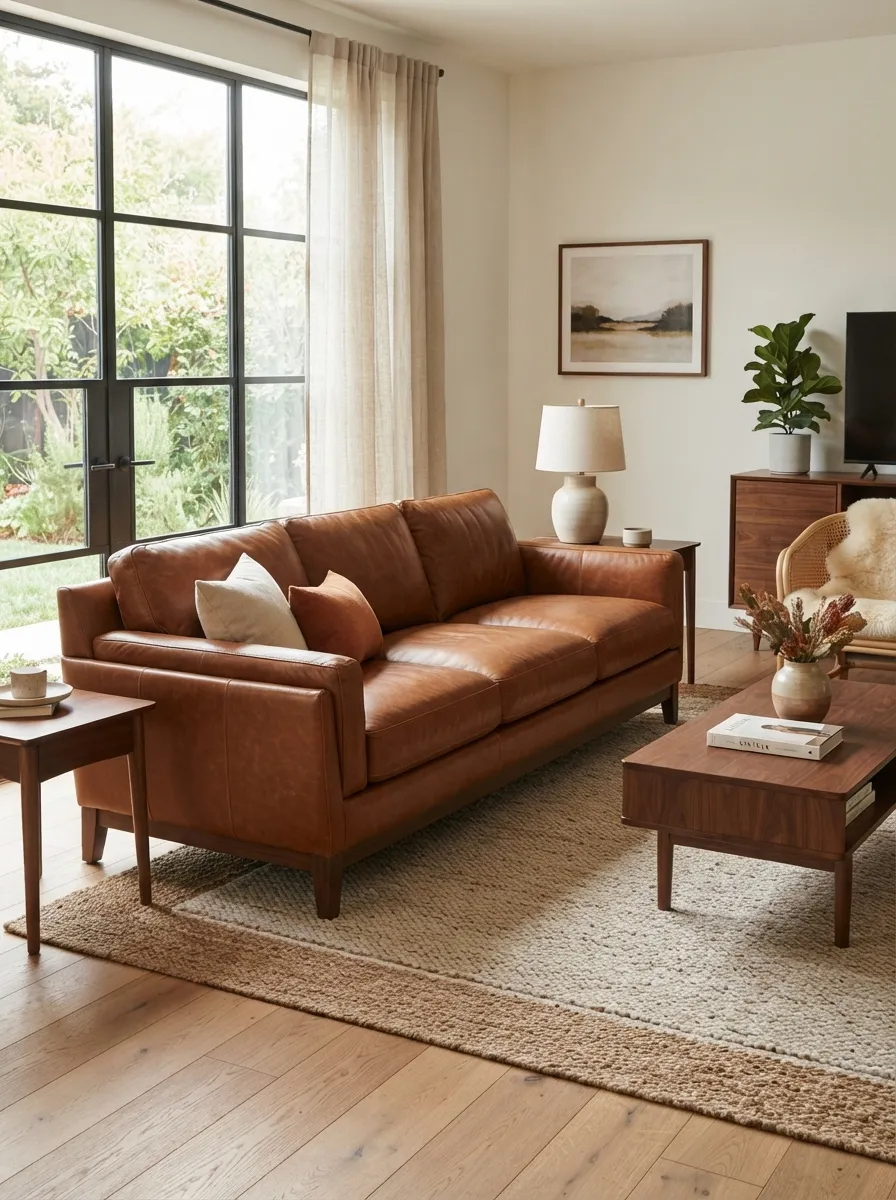
Let cognac leather bring warmth to a bright modern room
Creamy walls, a light rug, and natural wood can make a cognac leather sofa feel warm rather than heavy. The color already carries enough visual energy to anchor the seating group, so surrounding furniture can stay quieter. A simple wood coffee table, pale lounge chair, and restrained accessories allow the sofa to hold the center of the composition.
Bright daylight is useful here because it reveals subtle tonal variation across the exposed leather surface without requiring the room to depend on gloss. The sofa can still look relaxed if the surrounding finishes are matte and soft. A cream rug below the seating creates separation from the floor, while warm wood connects to the cognac tone without copying it exactly.
This kind of inspiration image is most useful for judging the visible direction: warm medium-brown color, clean silhouette, amount of exposed leather surface, and how much contrast the room gives the sofa. It cannot confirm hidden material classification, treatment, performance, or maintenance requirements. Those details should be verified with the merchant once the visual direction is clear.
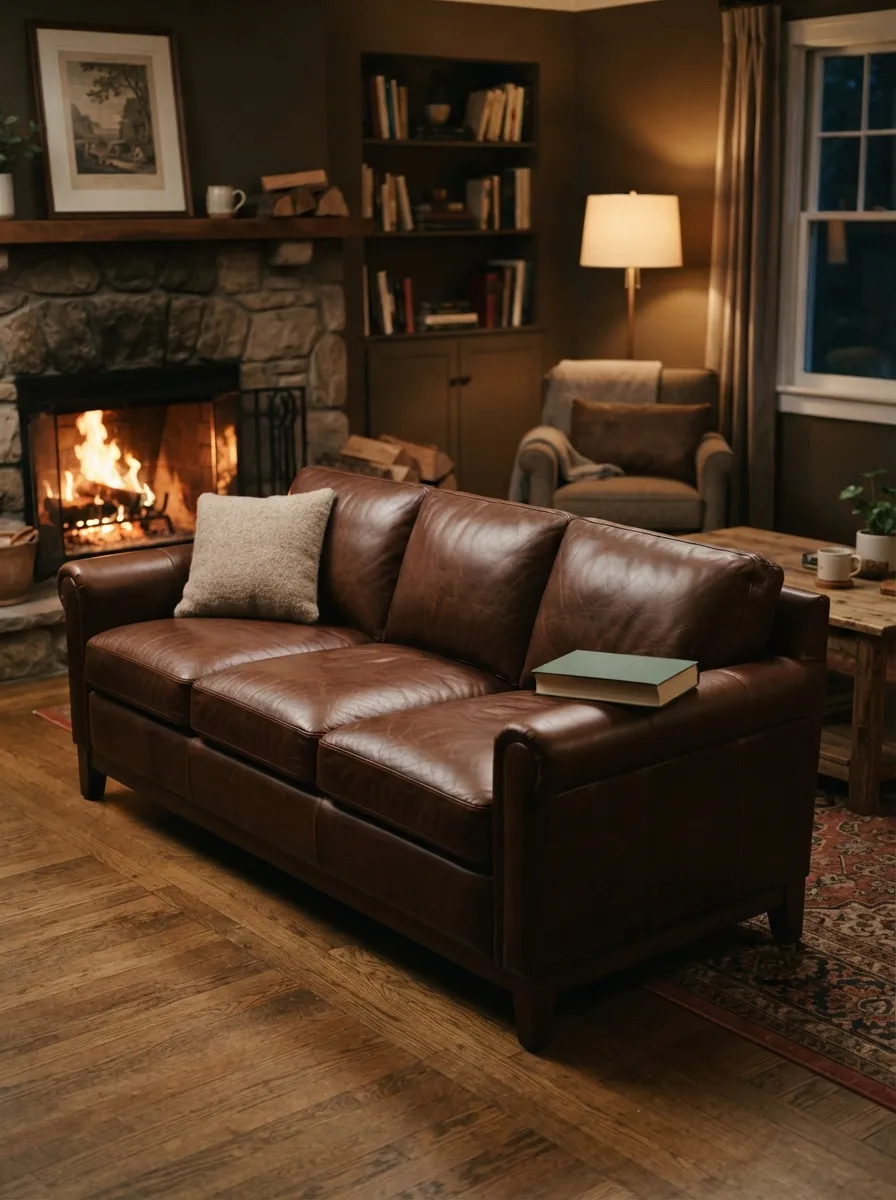
Use deep brown leather to ground a fireplace living room
Deep brown leather can feel especially at home in a cozy evening room because its darker color relates naturally to firelight, wood, and shadow. The key is to keep enough visual contrast around the sofa so the seating does not merge into the background.
A lighter rug can define the sofa’s footprint and preserve the outline of its arms and base. Warm lamps and the fireplace can deepen the room’s atmosphere without asking every object to become dark brown. A wood table belongs naturally in this palette, but changing the wood tone slightly keeps the center of the room from becoming one continuous block.
The fireplace does not need to dictate the position of every seat. A deep brown sofa can acknowledge the hearth while still supporting conversation across the room. What matters visually is that the sofa, center table, and surrounding seats form a readable group rather than simply lining up toward one focal point.
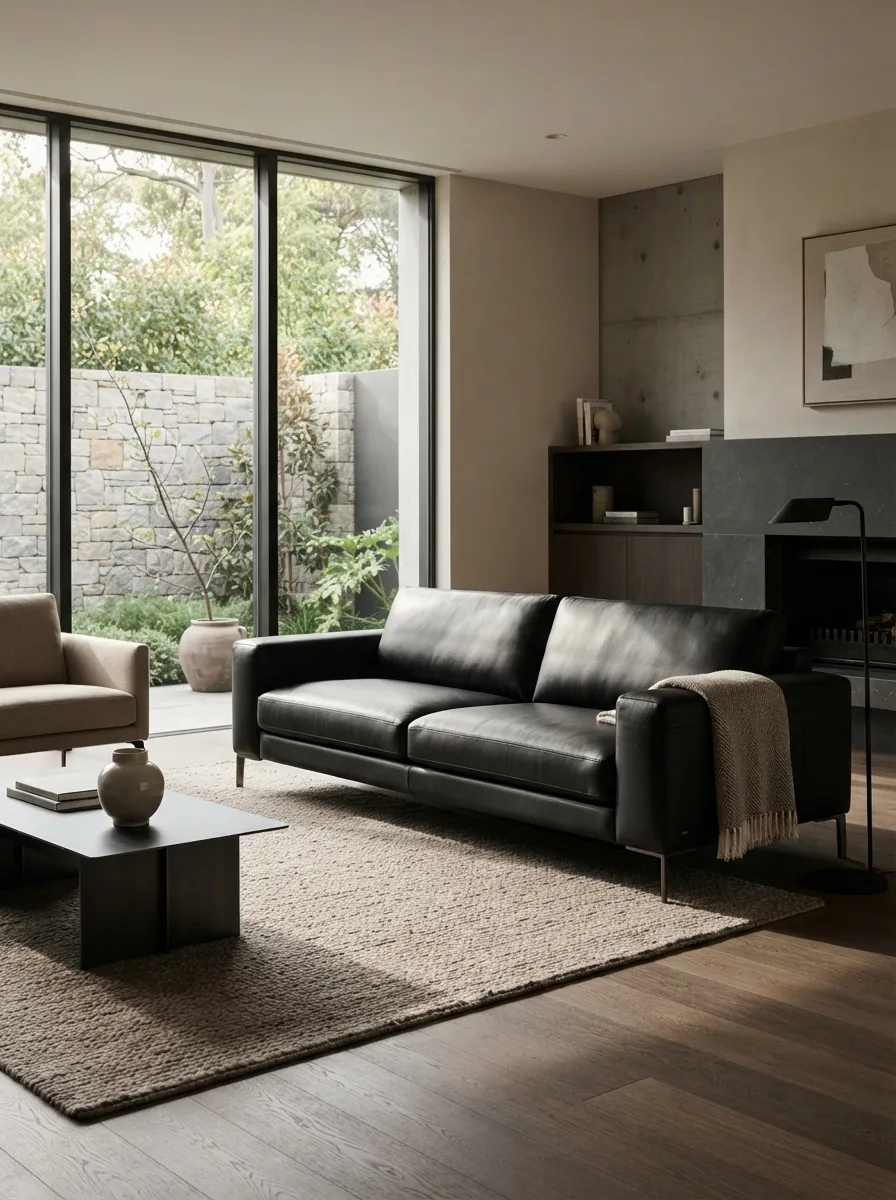
Make black leather feel crisp and architectural
Black leather can read as graphic rather than oppressive when the surrounding room is pale and structurally simple. Light floors, broad neutral walls, and restrained furniture give the sofa a strong outline and make its dark color feel deliberate.
A black sofa already contributes a large amount of contrast, so the rest of the room rarely needs equally strong dark furniture. Pale stone, a cream rug, chrome or dark metal accents, and minimal artwork can support the graphic quality without crowding it. The aim is to preserve the sofa’s silhouette from across the room.
This is also a useful color direction for judging visual mass. A black sofa can appear heavier than a camel or tan sofa even when the dimensions are similar. Leaving visible floor around the base, keeping the center table lighter, or using one less bulky secondary chair can help the room feel balanced.
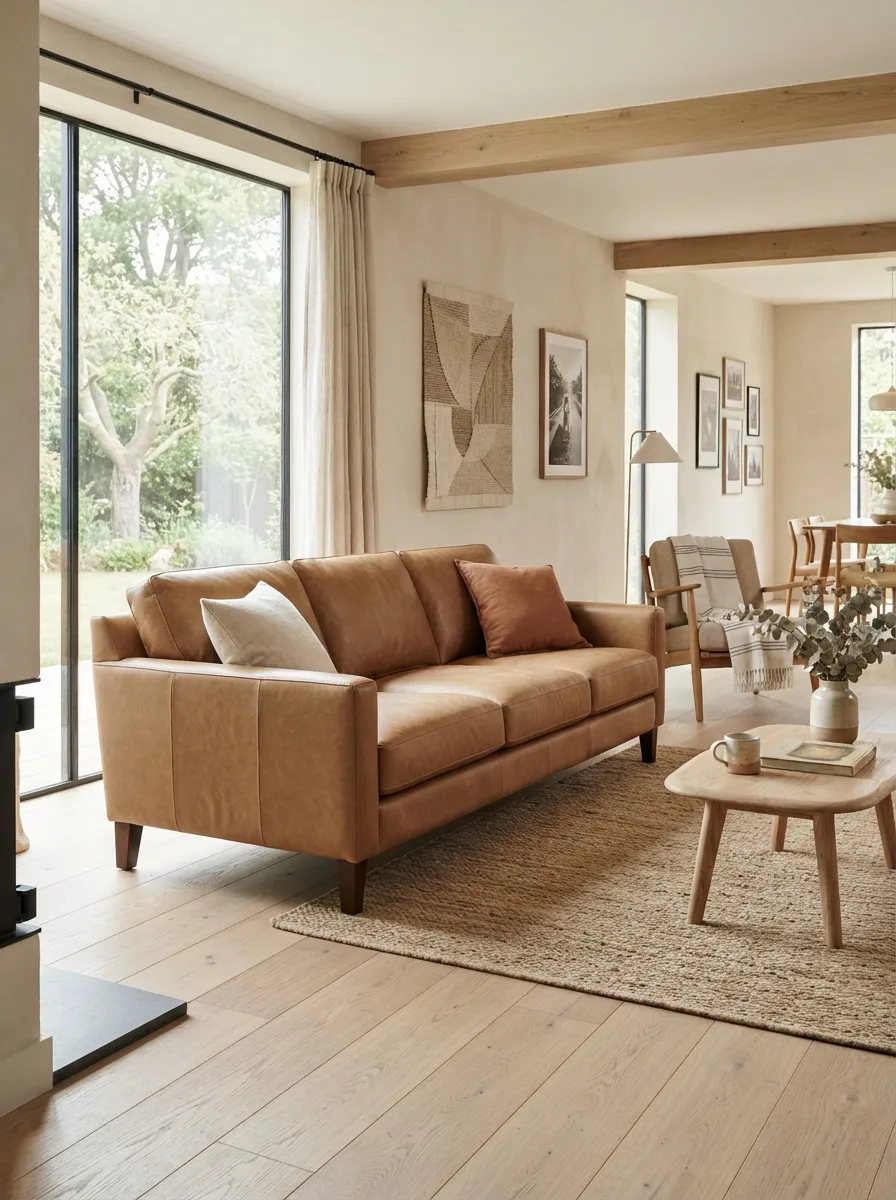
Keep camel leather relaxed in a bright open living room
Camel leather works well in a bright open room because the color is warm enough to stand out while still sitting comfortably beside pale walls, warm wood, woven rugs, and natural light. In this setting, the material appearance should stay understated rather than exaggerated.
The upholstery in this visual direction reads softer and more matte than the strongest leather examples, so the public styling language should focus on color, silhouette, and room relationship. A broad field of daylight, simple wood furniture, and pale textiles help the sofa feel easygoing rather than formal.
Camel also works well when the room needs warmth without the visual weight of deep brown or black. The sofa can become the warm center of the room while the architecture stays light. Treat the image as a guide to tone and overall posture; product-specific leather classification, finish, care, and construction still require merchant verification.
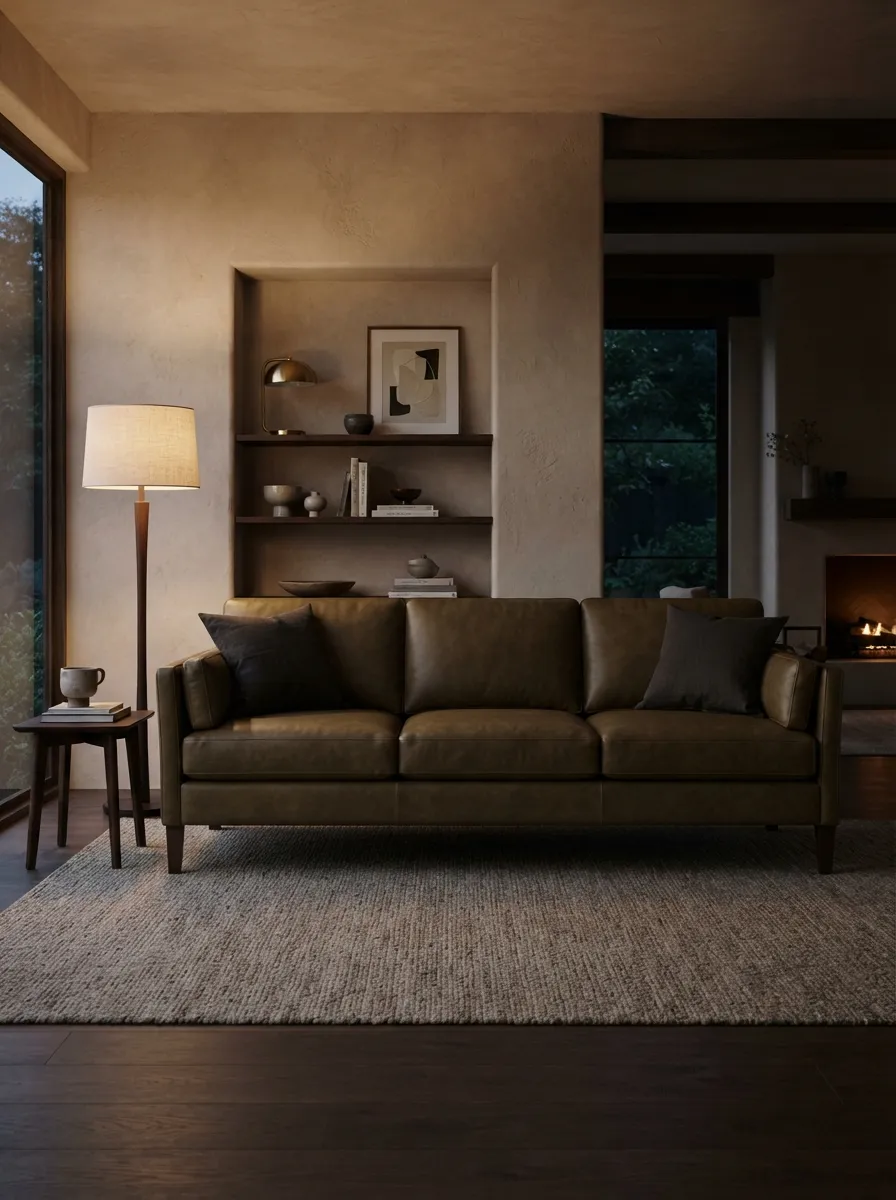
Let olive-brown leather deepen a moody room
Olive-brown leather sits between warm brown and muted green, which makes it useful in a room built around darker wood, warm plaster, and restrained lighting. The color can feel rich without becoming as stark as black or as traditional as a deeper chocolate brown.
In a quiet, low-light room, the sofa’s exposed surface can show subtle shifts in tone where light reaches the arms, cushions, and seat. That visible variation is enough to create depth, so the room does not need a large number of contrasting accessories. A pale or mid-tone rug, one stone or metal table, and a few warm lamps can preserve the outline of the seating.
The overall effect depends on restraint. If every surrounding piece is equally dark and visually dense, the leather sofa can disappear into the room. If the room introduces a few lighter or flatter surfaces, the olive-brown color becomes easier to read and the sofa remains the hero.
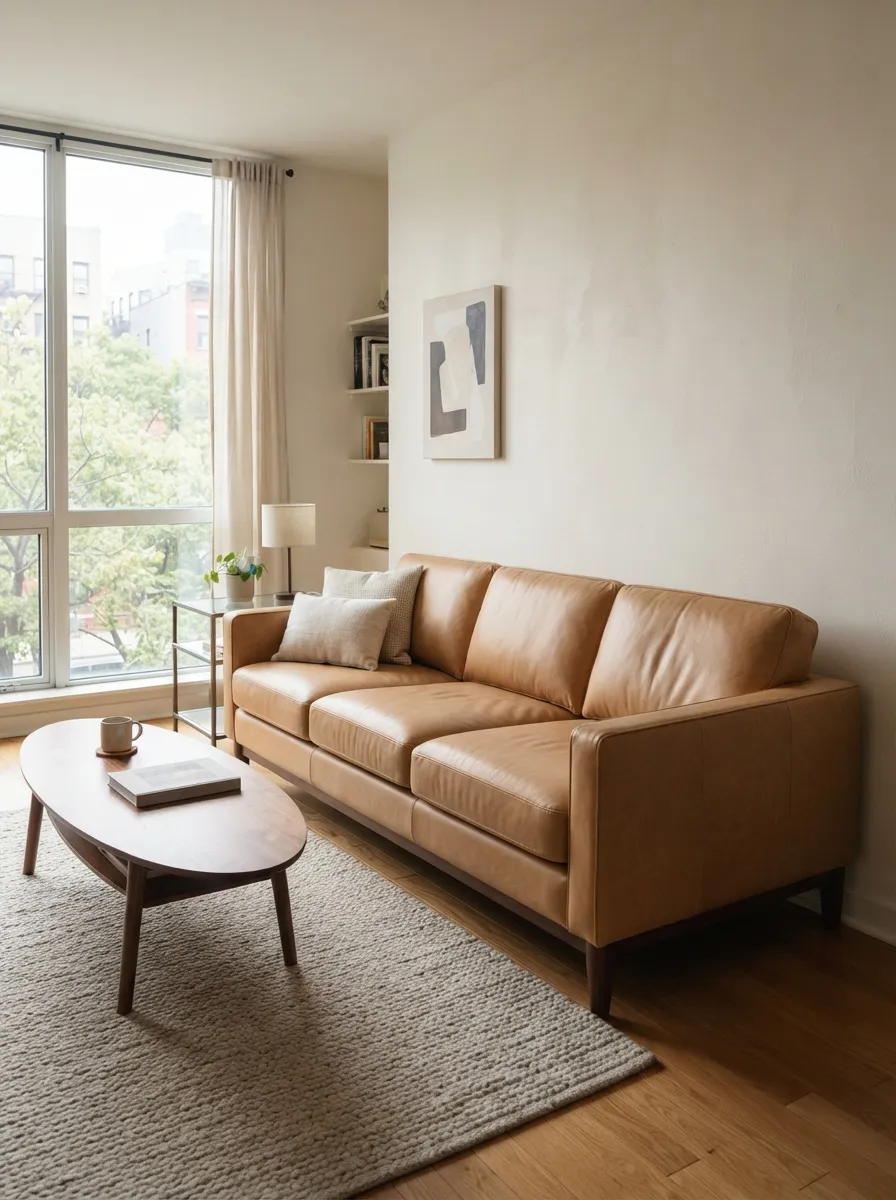
Use light tan leather to keep a compact room visually open
In a smaller living room, leather color and circulation work together. A light tan sofa can bring warmth without creating the same visual weight as a black or deep brown piece, but the room still needs an easy path around the seating.
Keep the center furniture modest and avoid building a second dense wall of upholstery opposite the sofa. A small table, one lighter chair, or a slim side surface can complete the seating group without closing the floor. The eye should be able to read the route from the entrance into the room in the same view as the sofa.
The visual can help define the desired relationship between sofa scale and circulation, but exact dimensions must come from the product listing. Before buying, verify the sofa’s footprint, arm width, delivery access, and any other measurements that determine whether the room will function as comfortably as the image suggests.
Use surrounding texture to soften leather without hiding it
Leather does not need to be matched with more leather to feel coherent. In the original editorial logic for this article, softer companions—woven curtains, textured rugs, bouclé or fabric chairs, and matte walls—help the sofa remain dominant without making the room feel hard or overly polished.
The useful contrast is visible rather than technical. A smoother-looking leather surface beside a woven rug feels more defined. A curved fabric chair can soften a tailored sofa. Oatmeal curtains can reduce the visual severity of black or deep brown leather. Wood and stone can add structure without copying the upholstery.
The goal is not to disguise leather. It is to give the sofa enough material contrast that its color, seams, grain, creasing, or restrained sheen can be read as one part of a balanced room.
Let color decide the mood before details decide the product
Cognac brings warm modern energy. Deep brown feels grounded and cozy near a fireplace. Black creates a strong architectural outline. Camel keeps a bright open room relaxed. Olive-brown supports a moody, quietly luxurious atmosphere. Light tan works naturally with smaller rooms and lighter circulation-focused layouts.
Those differences are visible in the room and can guide the editorial direction. Hidden qualities cannot be inferred safely from appearance alone. Use the image to decide which visible combination of color, silhouette, surface appearance, and room context suits the space. Then use the merchant listing to verify material classification, maintenance requirements, internal construction, dimensions, warranty terms, and current availability.
Keep the leather sofa as the room’s strongest surface
The best leather sofa rooms do not make every surrounding material compete for attention. The sofa already contributes color, edge definition, reflected light, and visible surface variation. A quieter wall, rug, table, and secondary chair give those qualities room to register.
That is the through-line across all six directions. The room can be bright or moody, modern or cozy, spacious or compact, but the sofa should remain the clearest furniture decision. Once that relationship is right, the rest of the room can support it rather than trying to correct it.