Living Room
Leather vs. Fabric Sofa: Which Upholstery Makes More Sense for Your Home?
Compare leather and fabric sofas by visible material character, daily-life care, pets, sunlight, color and pattern range, aging, and product verification before buying.
Short answer: Choose leather when easier surface wipe-downs, a cleaner-lined look, and visible aging character matter more than broad color and pattern choice; choose fabric when tactile softness, texture, and a wider design range matter more. Those are material-level tradeoffs supported by the cited sources, not properties that can be certified from the room images below 1 2 3.
The practical choice comes down to how the sofa will be used: spills, pets, naps, sunlight, cleaning routines, visual texture, and how you want the upholstery to change over time. The visuals are most useful for comparing appearance and context—smooth versus woven-looking surfaces, sheen, color, pattern, room relationship, and close-detail character—while actual leather grade, fiber content, stain resistance, abrasion ratings, cleaning codes, and other performance claims still need the product listing and manufacturer documentation.
| Decision lens | Leather | Fabric |
|---|---|---|
| Everyday look | Smoother, often cleaner-lined visual surface | Wider range of woven looks, colors, textures, and patterns |
| Household routine | Often easier to wipe at the surface, depending on finish | Care varies widely by fiber, weave, treatment, and cleaning code |
| Pets | Hair may be easier to remove, but scratches can show | Tight weaves and some performance textiles can suit active homes, but specs matter |
| Aging | Can develop visible creasing and patina | Can show flattening, pilling, fading, or wear depending on textile |
| Verify before buying | Leather type, finish, care, scratch behavior, warranty | Fiber content, weave, abrasion data, cleaning code, treatment, warranty |
1. Daily life and room appearance: smooth leather-like or woven fabric-like?
If daily life includes drinks, snacks, children, or frequent use, care requirements deserve as much attention as color. The source material notes that many leather surfaces are easier to wipe than absorbent textiles, but protection level varies by leather type and finish; some leathers require more careful products and conditioning 1 2. Fabric performance also varies substantially: natural and synthetic fibers behave differently, and stain-resistant or “performance” claims depend on the actual textile and treatment 1 2.
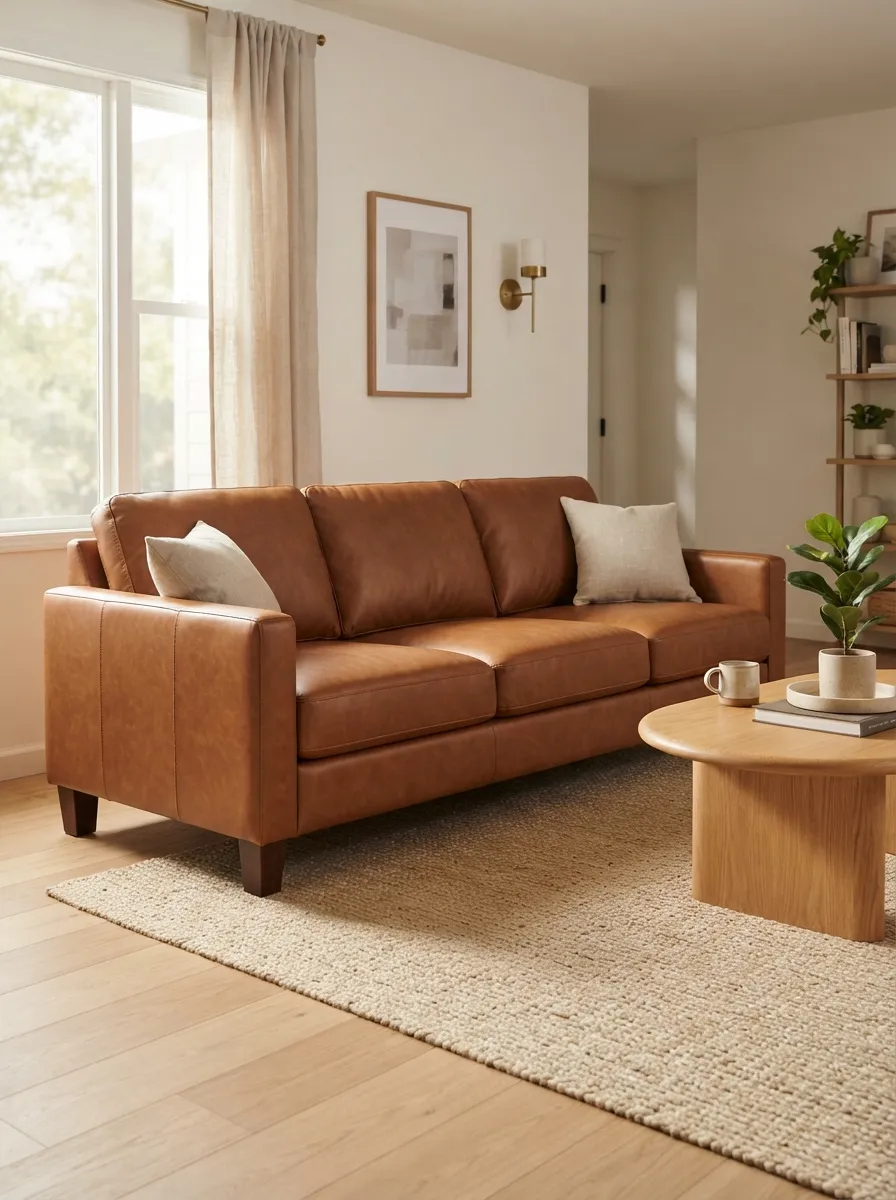
The first room comparison shows one warm cognac-to-medium-brown standard sofa with a complete silhouette, both arms, back, cushions, front edge, and legs visible. Its surface looks smooth and leather-like, with subtle grain-like variation, natural-looking creasing, and controlled low-gloss highlights. The bright family room, neutral rug, warm-white walls, and secondary coffee table keep the upholstery character easy to read without proving what the material actually is.
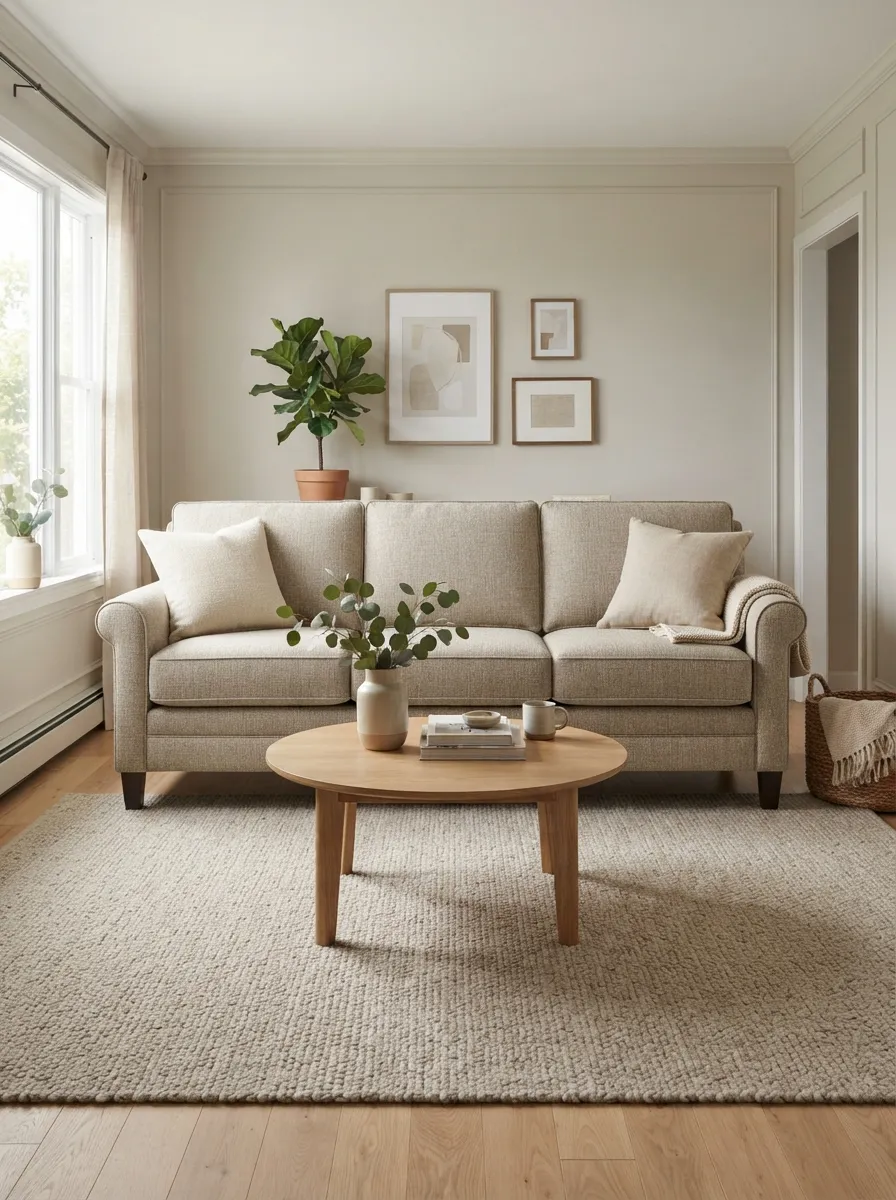
The paired image keeps the room broadly comparable but shifts the hero to one light warm-neutral sofa with a woven-looking fabric-like surface. Fine textile variation and a soft matte finish replace the smoother sheen of the first sofa, while the full silhouette, arms, back, cushions, front edge, and legs remain readable.
These images support a visual comparison only. They do not prove genuine leather, leather grade, natural or synthetic fiber content, performance-fabric status, stain resistance, abrasion performance, washability, comfort, or care requirements.
2. Pets and household context: compare the setting, not a performance test
Pets make material choice more complicated because hair, claws, spills, dander, and cleaning routines do not affect every upholstery type the same way. The source framework notes that hair is often easier to brush from smoother leather surfaces, while leather can show scratches; tightly woven or performance fabrics may resist abrasion better than loose weaves, and patterns can visually disguise some day-to-day marks 1 2. Those are source-backed category observations, not guarantees for a particular sofa.
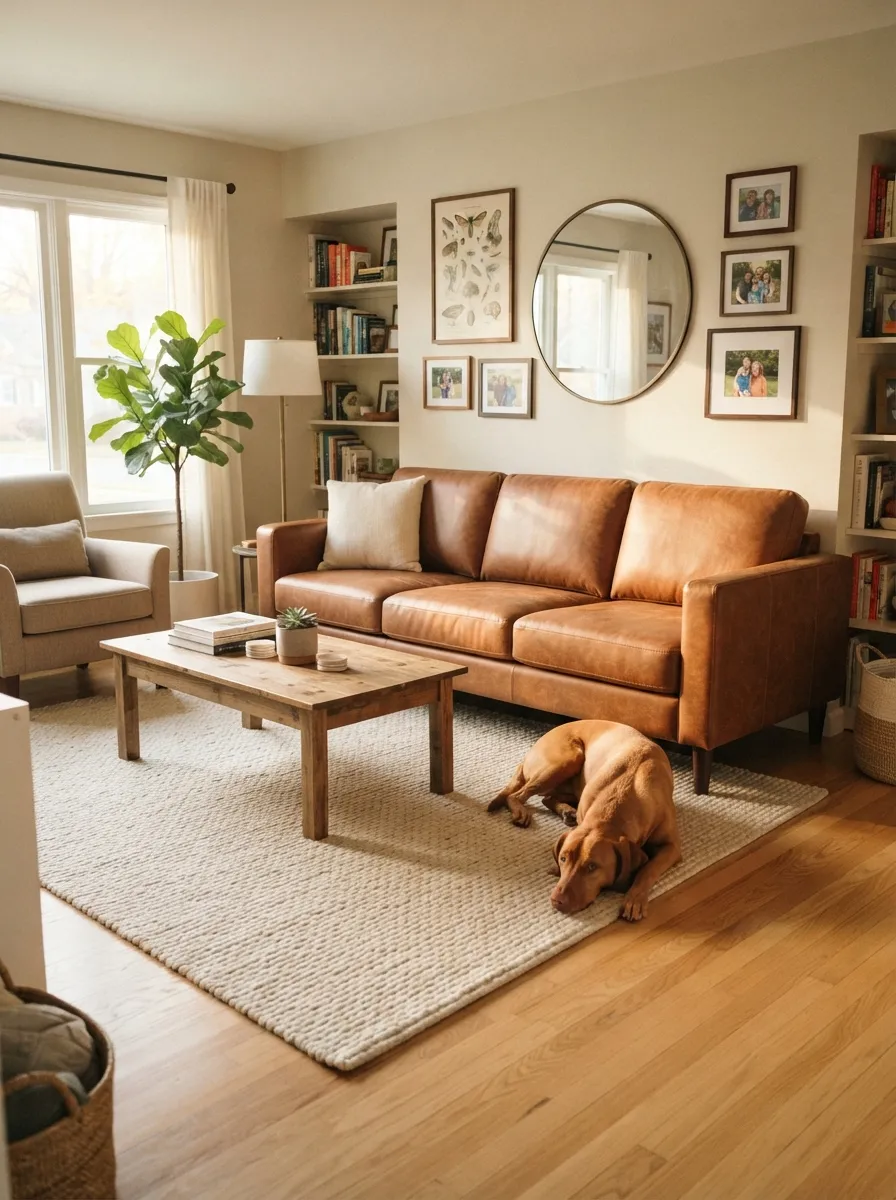
The leather-like pet scene contains exactly one warm brown sofa and exactly one calm medium-size dog resting naturally on the rug. The dog stays secondary while the sofa remains fully readable, including its smooth-looking surface, grain-like variation, and natural creasing. There is no damage, cleaning demonstration, spilled liquid, fur test, or scratch test.
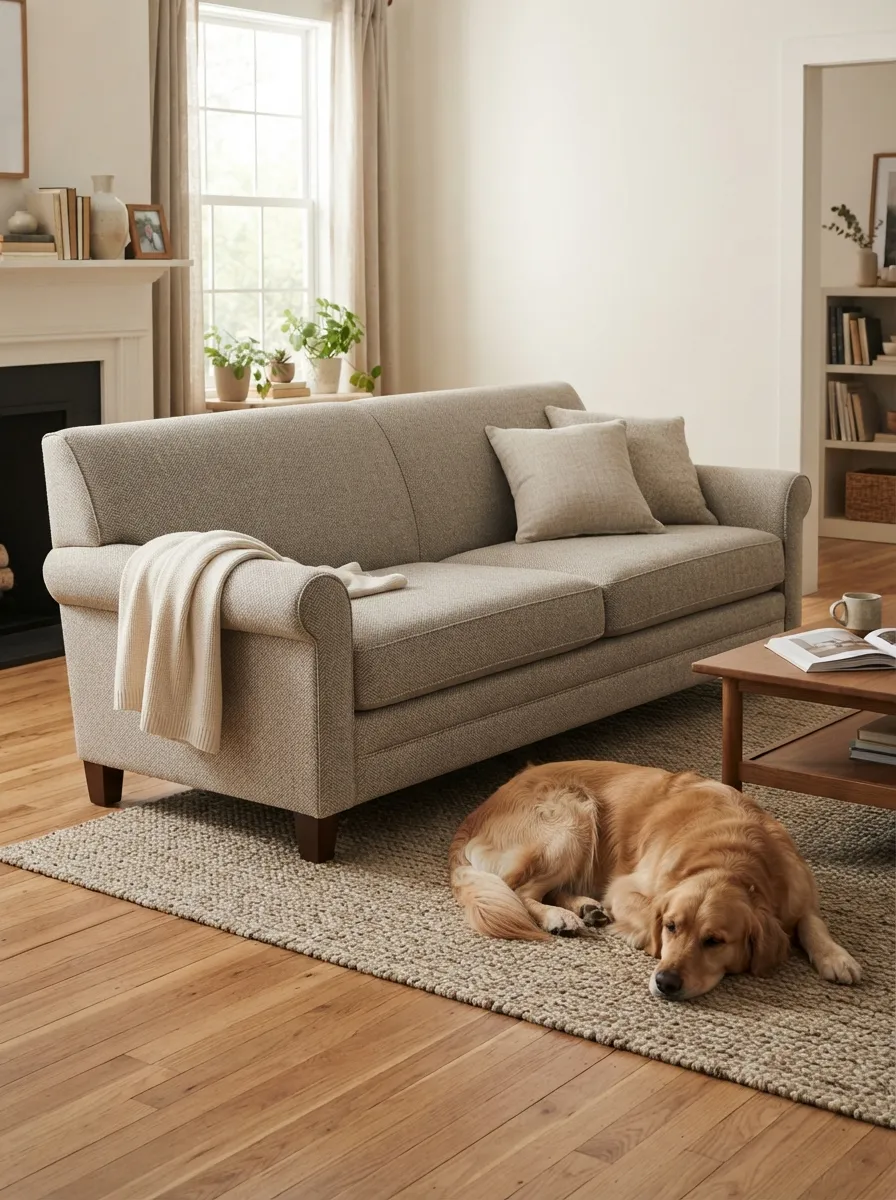
The fabric-like companion also shows exactly one sofa and one calm medium-size dog. Its upholstery has a fine woven-looking surface with subtle tonal variation and a restrained small-scale pattern. That pattern is present but intentionally not described as bold or highly pronounced. The dog again supplies household context rather than evidence that the upholstery hides hair, resists claws, or cleans easily.
For a real pet household, verify scratch sensitivity, abrasion information where supplied, fiber content, finish or treatment, cleaning code, and manufacturer care instructions. “Pet friendly,” “easy clean,” and “performance” are product claims, not conclusions that can be drawn from these scenes.
3. Material character up close: visible grain-like cues or a fine woven-looking surface?
Tactile comfort is important, but touch cannot be judged from a photograph. The source material describes fabric as offering immediate warmth and softness across many textiles, while leather can feel sleeker and cooler and may develop creasing and patina with use 2 3. Those are material-category considerations that should be confirmed in person or through verified product information when feel is central to the purchase.
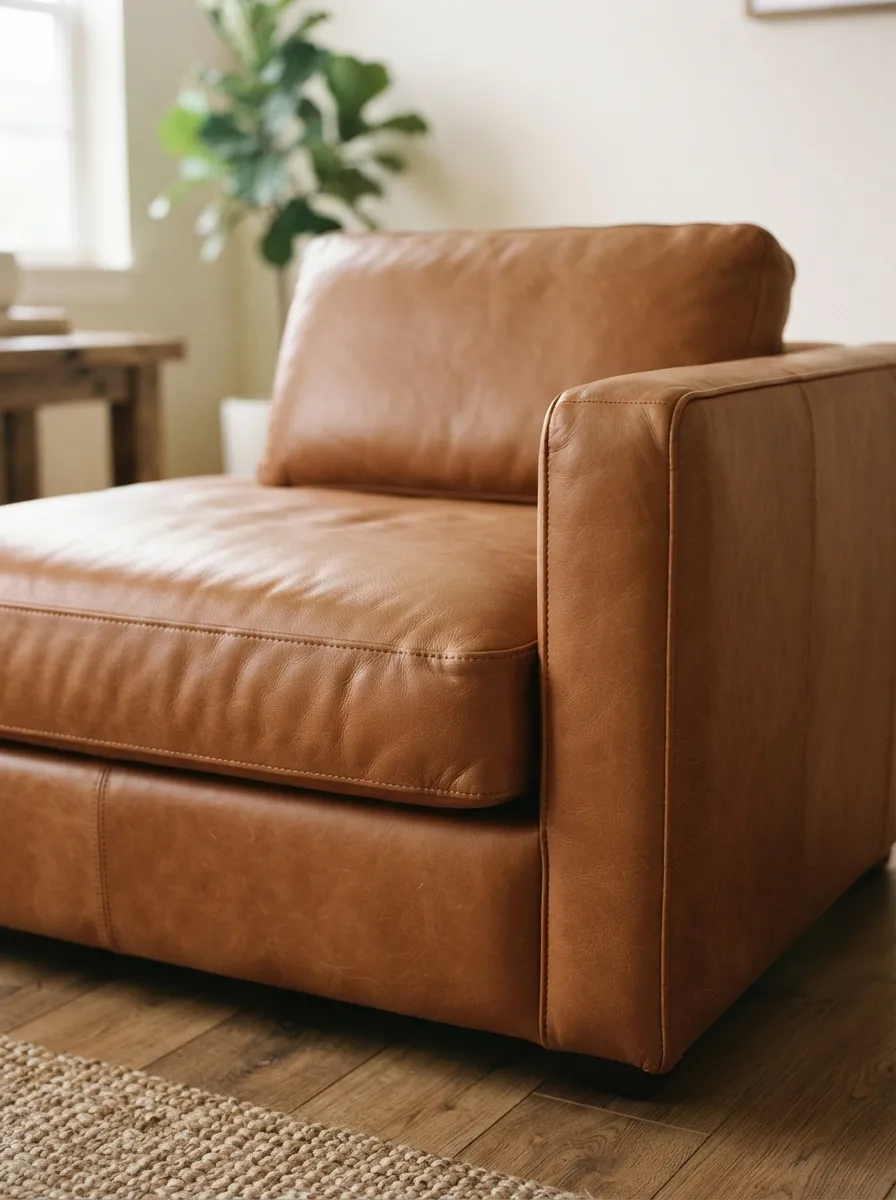
The leather-like detail keeps the furniture identity explicit rather than turning into an abstract swatch. The seat cushion, arm front and side, back cushion, seams, piping, and stitching remain visible. Warm brown upholstery shows subtle grain-like variation, natural-looking creasing, and controlled low-gloss highlights.
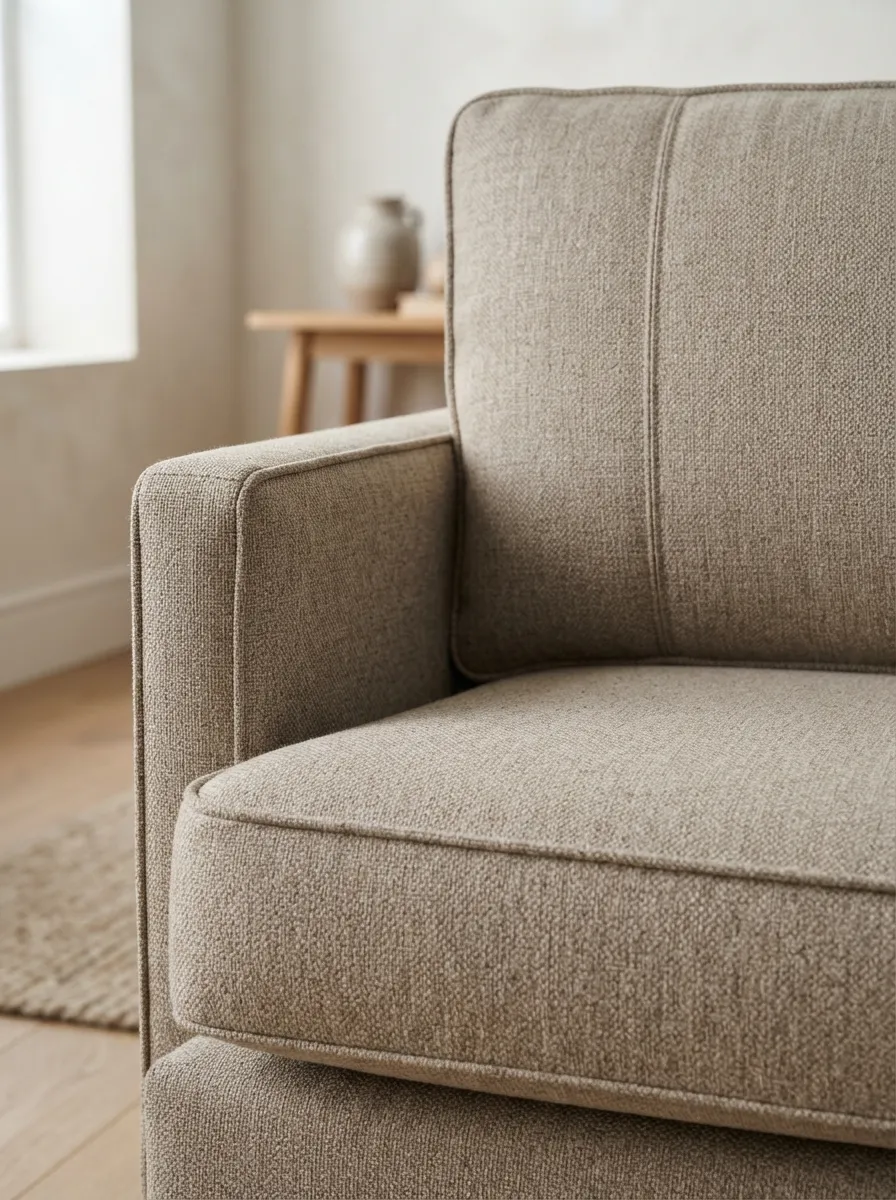
The fabric-like detail also remains recognizably part of a sofa. A seat cushion, arm edge, back-cushion area, piping, seams, and stitching are visible, with a fine woven-looking surface and soft tonal variation. Its framing is slightly tighter and retains less room context than the leather-like companion, which is acceptable for this close comparison.
Neither detail image proves full-grain, top-grain, protected, aniline, or semi-aniline leather; nor does it establish natural fiber, synthetic fiber, performance fabric, weave construction, abrasion rating, cleaning code, tactile softness, temperature feel, or cleanability.
Sunlight, color, and pattern flexibility
The original comparison also treats sunlight and design range as meaningful decision factors. Leather typically offers a narrower palette than fabric and can change in tone and character as it ages, while fabric provides a much broader range of colors, textures, and patterns 1 3. Direct sun can affect both categories: the source material notes fading or drying risks depending on material and care, so room placement and window exposure should be part of the decision 1 3.
Use those observations as planning guidance, then confirm the actual product. A particular leather finish may behave differently from another leather, just as a performance textile can behave very differently from a loose natural weave.
Cleaning routines and realistic upkeep
Leather and fabric both need maintenance, but the routine depends on the exact material. The source package recommends manufacturer-directed products and conditioning where appropriate for leather, and following fiber-specific cleaning instructions and cleaning codes for fabric 1 2. Some fabric covers may be washable; others are spot-clean or professional-clean only. Some protected leather surfaces may tolerate easier wipe-downs than more sensitive finishes.
The key is not to buy based on the generic word “leather” or “fabric.” Check the current listing for leather type or upholstery fiber, finish or treatment, cleaning code, removable-cover instructions where applicable, and approved cleaning products.
Aging character and how you live with wear
Leather can develop visible creasing and patina over time, while fabric may show pilling, flattening, fading, or wear depending on fiber, weave, use, and exposure 1 3. Some buyers like the evolving character of leather; others prefer the wider color and pattern options available in fabric.
Avoid treating either material as universally more durable. Heavy-use performance depends on the specific upholstery, construction, household routine, and care. If long-term appearance matters, verify abrasion data where supplied, finish characteristics, care instructions, and warranty terms rather than relying on material category alone.
Decision logic you can use right now
Start with three practical questions: What kinds of messes or pet activity actually happen in the room? How important are tactile softness, color, pattern, and visible surface texture? How much maintenance are you realistically willing to do?
Choose a leather sofa when the verified product offers the finish and care profile you want and you prefer a smoother visual surface with the possibility of visible aging character. Choose fabric when you want broader texture, color, and pattern choice and can select a weave, fiber, cleaning code, and performance level that fit your household 1 2 3.
The source package identifies protected leather sofa, tightly woven or performance-fabric sofa, and patterned fabric sofa as useful product archetypes. Treat those as merchant-verified shopping categories only. The leather-like visuals in this article are not verified protected-leather products, and the fabric-like visuals are not verified performance fabrics.
Before buying, confirm leather type or fiber content, finish, cleaning code, abrasion or performance information where supplied, cushion construction, dimensions, warranty, replacement or repair policies, and current availability with the merchant or manufacturer. If feel is a deciding factor, an in-person sit and touch test remains more informative than appearance alone 1 2.