Living Room
Modular Sofa Living Room Ideas for Flexible, Reconfigurable Spaces
Modular sofa living room ideas for large rooms, compact apartments, chaise layouts, separated ottomans, and flexible seating systems that can change with daily life.
A modular sofa is most useful when the room is allowed to change. Instead of treating the seating as one fixed block, think of it as a group of sections that can establish a large conversation zone, form a compact chaise, separate into smaller pieces, or accept an ottoman when the household wants more lounging space. That ability to adjust the composition is what separates a modular sofa from a conventional sectional in the way a room is planned.
The strongest modular sofa living room ideas make that flexibility visible without making the space feel temporary. Repeated seat units, corner pieces, chaise modules, and ottomans should still read as one intentional furniture system. The room around them can then respond to scale, circulation, light, and daily routine rather than forcing every activity into a single permanent layout.
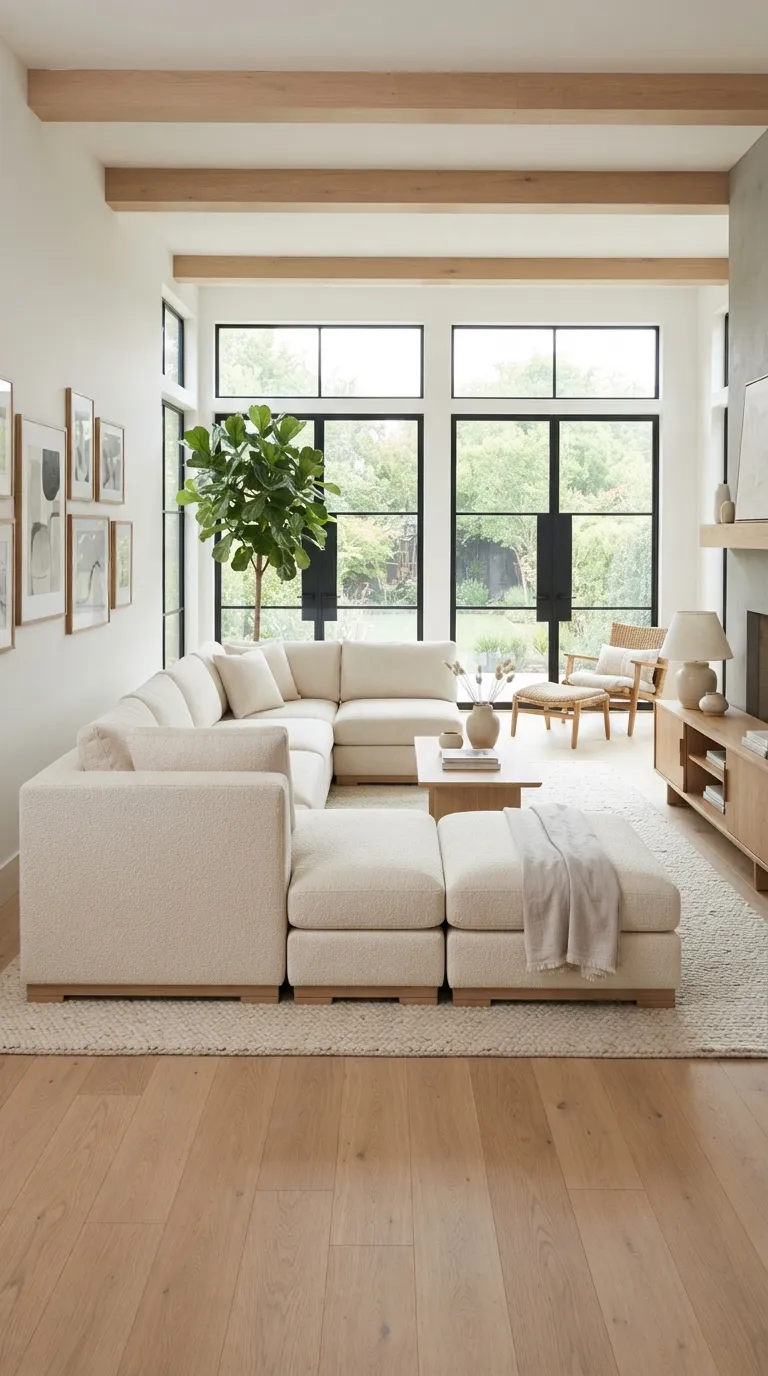
Let a large modular sofa become the room’s organizing center
In a spacious living room, a modular sofa can carry enough visual presence to organize the entire seating zone. The key is to let the individual sections remain readable. A long run of repeated modules, a corner turn, or an extended chaise should create a clear rhythm rather than becoming one indistinct upholstered mass.
A light cream or warm neutral upholstery can make a large configuration feel calmer because the seams, cushions, and changes in direction are described by shadow rather than strong color contrast. In a bright architectural room, that lets the sofa occupy significant floor area without making every other element compete for attention. A restrained coffee table and a broad rug can reinforce the seating zone while allowing the modular geometry to remain the main idea.
Before shopping, look beyond the total length of the arrangement. Compare the width and apparent depth of the individual units, how the corners connect, and whether the rear and side profiles look finished enough for the way you intend to place the sofa. The room image can help define the visual form; exact dimensions, connectors, construction, and component availability still need to be verified with the merchant.
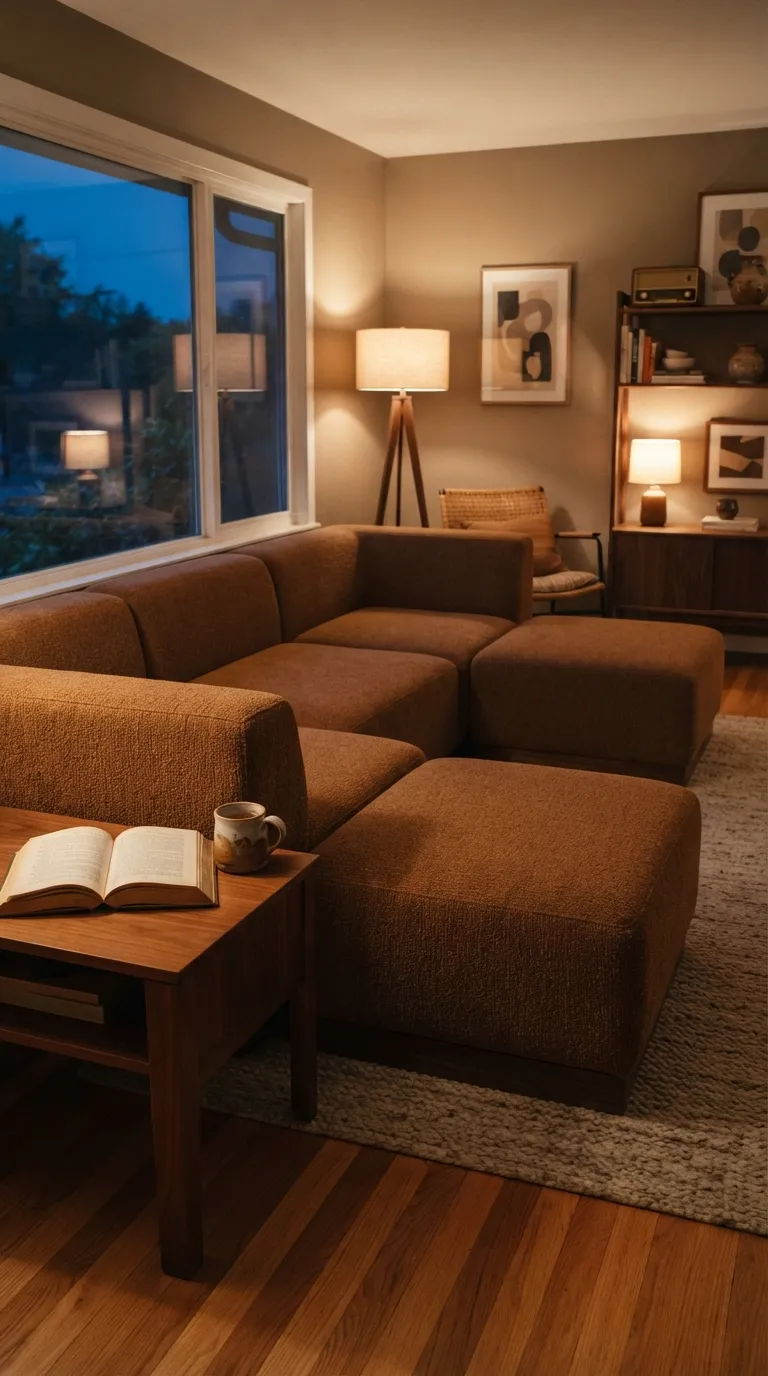
Use warm color and softer styling to make modular seating feel lived in
Modular sofas can sometimes look highly engineered in product photography because every join and repeated cushion is emphasized. A living room does not have to preserve that showroom feeling. Warm upholstery, layered lighting, books, side tables, and textiles can make the same modular structure feel established and personal.
Brown and other earthy tones are especially useful when the goal is a cozy evening room. They give the sofa visual weight while letting wood, warm light, and textured surfaces build depth around it. The important distinction is that the room still shows where one section ends and the next begins. Modularity should remain legible even when the styling is relaxed.
This is also a useful reminder that flexibility does not require frequent rearranging. A modular sofa can spend most of its time in one comfortable configuration and still be valuable because the system can adapt when the room changes, when the household moves, or when another section is added later. The benefit is optionality, not constant furniture shuffling.
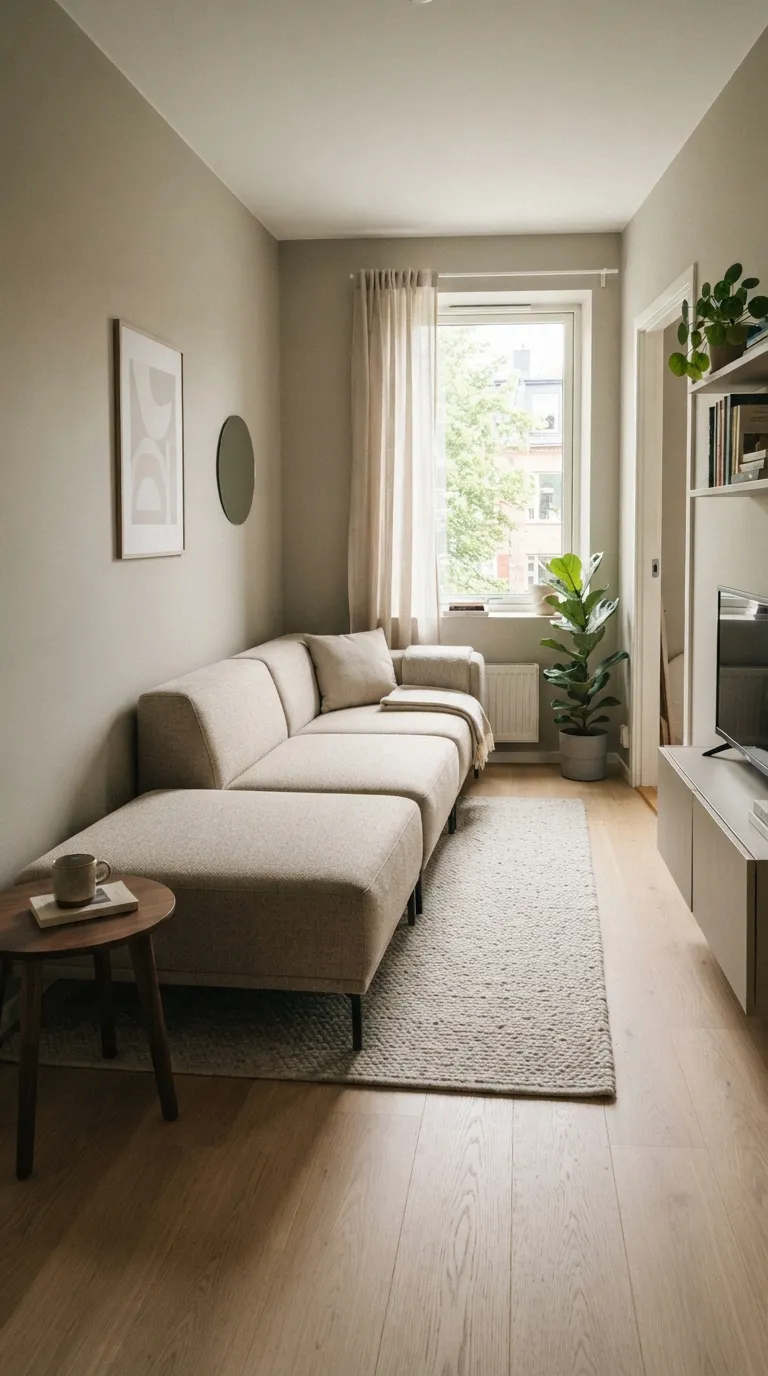
In a small apartment, make one modular move do most of the work
A compact living room benefits from restraint. Instead of building the largest possible sectional, use a smaller set of modules to create one purposeful extension, such as a chaise on the side where it does not interrupt the main route through the room.
A chaise can make a small sofa feel more relaxed without adding a second lounge chair, but its orientation matters. It should reinforce the room’s natural edge rather than project into the path between the entrance, windows, storage, or adjacent spaces. If the system allows the chaise or ottoman element to move, that flexibility can be useful when the apartment layout changes.
Keep the surrounding furniture visually light. A compact center table, one side surface, and wall-mounted or narrow lighting can leave more floor visible around the modular seating. Product photography may make a compact system look smaller or larger than it is, so verify the actual footprint and component dimensions before assuming a styled apartment image will translate directly to your room.
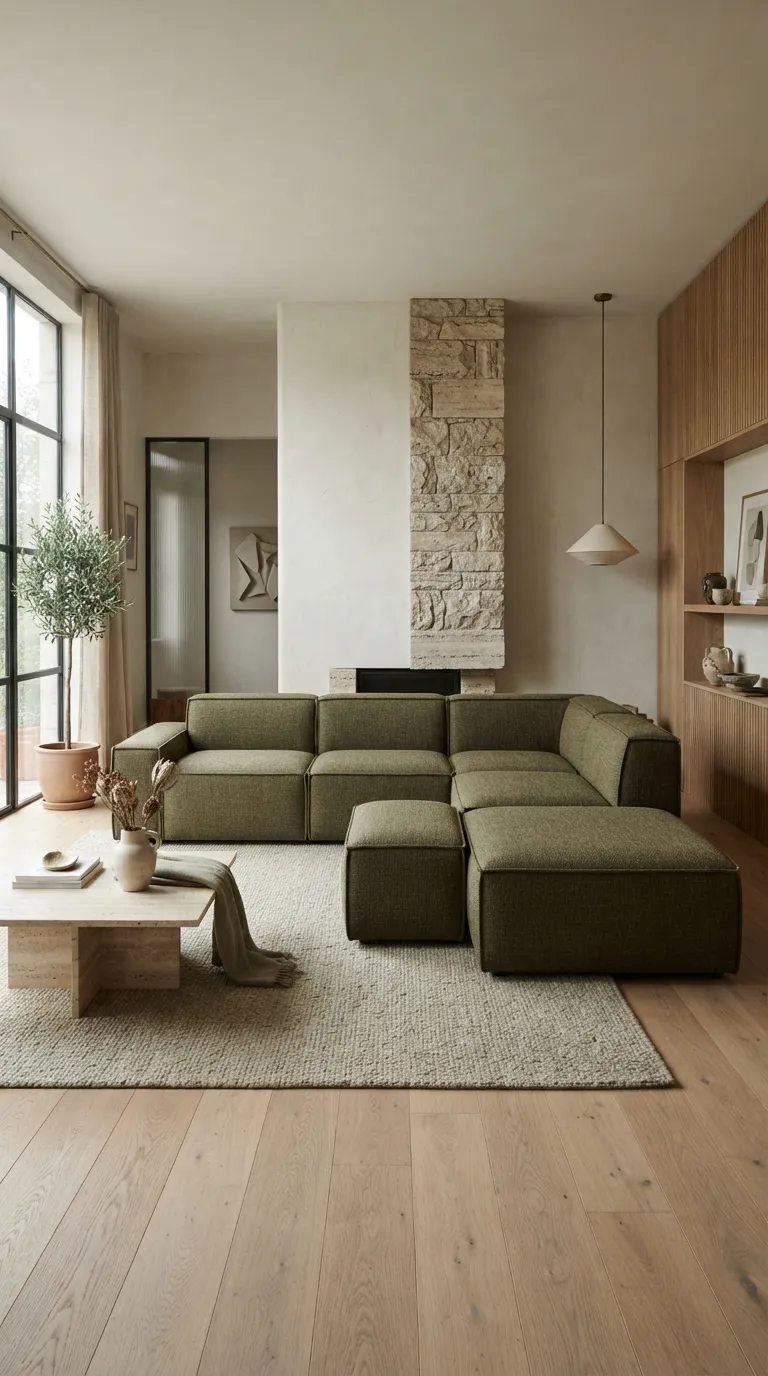
Make the modules part of the architectural rhythm
One of the most distinctive qualities of modular seating is repetition. The lines between seat units, back cushions, and base sections can create a rhythm that feels almost architectural. Rather than disguising those divisions, a room can use them deliberately.
A strong olive upholstery makes the system easier to read against pale walls and floors. Each section becomes part of the overall silhouette, while the repeated geometry keeps the larger sofa from feeling shapeless. This is a different effect from a conventional sectional designed to appear as one continuous piece. With a modular sofa, the joins can communicate flexibility and structure.
That visual clarity is useful when comparing systems. Ask whether the individual units look complete enough to work in more than one arrangement, whether the corner treatment creates a clean turn, and whether the base looks coherent when modules sit beside one another. Those are visible questions. The mechanism that holds the pieces together, the exact upholstery, and the limits on compatible components belong to product verification.
Use a separated ottoman to show what the system can become
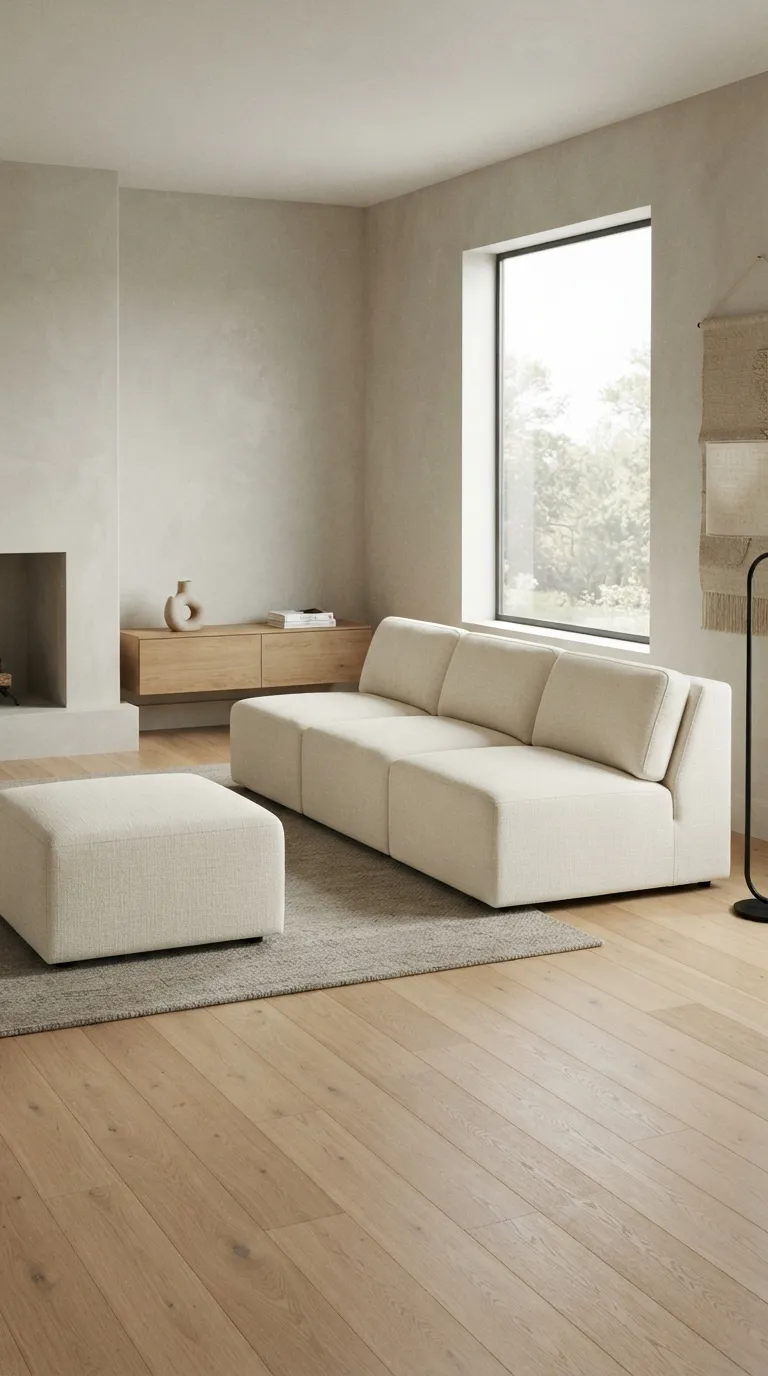
An ottoman is one of the simplest ways to make modularity useful without rebuilding the entire sofa. It can extend a seat into a lounge position, move toward the center of the group, or separate from the sofa so the room feels more open.
In a light neutral room, the visual connection between sofa and ottoman can come from matching scale, upholstery appearance, and cushion language rather than physical attachment. When the ottoman is pulled away, the gap itself becomes useful: circulation opens, the seating group feels less dense, and the center can be reorganized around conversation. When it is brought back, one seat gains a more extended lounging posture.
If this type of reconfiguration matters to you, check how independently each piece is designed to function. Some modular systems are most convincing when tightly connected; others give individual pieces more finished sides and bases. The inspiration image can reveal the kind of flexibility you want, but the exact product listing should confirm whether the ottoman, chaise, arms, and seat units are truly interchangeable or simply visually coordinated.
Let a dark modular sectional carry a moody room without losing definition
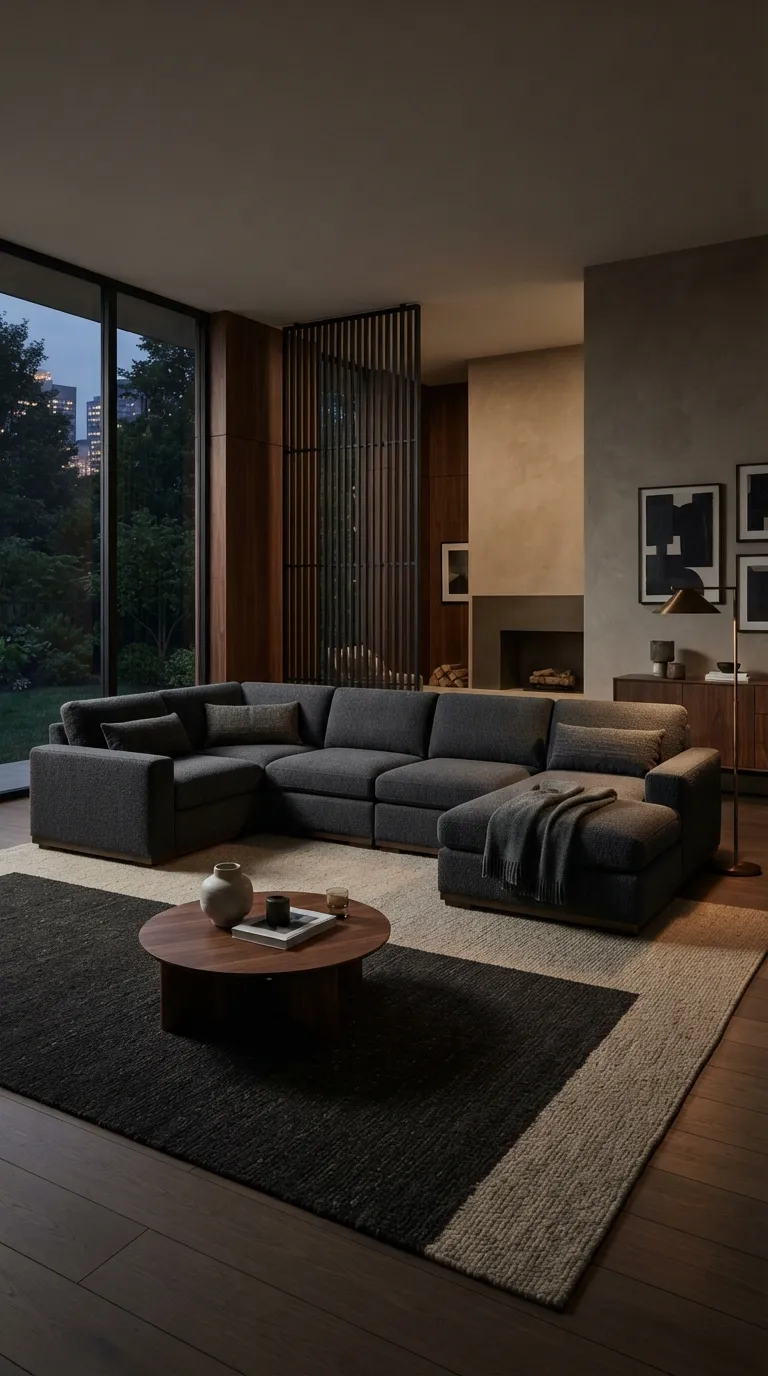
A deep charcoal modular sofa can anchor a darker living room, but the room still needs enough contrast to show the system’s shape. Warm wall color, a lighter rug, directional lamps, or small areas of wood and metal can separate the individual sections from the background.
This approach works because modularity provides its own subtle pattern. Cushion breaks and module seams interrupt a large dark surface, helping the sofa read as a structured composition instead of a single heavy block. In a quiet, low-light room, that can be more interesting than adding several contrasting accent colors.
A dark configuration also makes visual mass more obvious. If the sofa is large and grounded, keep secondary furniture from forming another wall around it. A lower table, a little visible floor, and open space at the ends can preserve breathing room. As with any styled image, color and apparent texture can guide the aesthetic direction, while actual fabric composition, care, durability, and comfort require merchant-level verification.
Decide which modules solve the room you have now
The most useful modular system is not necessarily the one with the most available pieces. Start with the arrangement that solves the room’s current friction. A large open living room may need enough modules to establish a clear social zone. A compact apartment may only need a short sofa plus a chaise. A flexible household may get more value from an ottoman or an extra armless seat than from committing to a permanent U-shaped layout.
Think about the room in terms of repeatable situations rather than theoretical possibilities. Where do people normally sit? Which side needs to stay open for movement? Does the sofa need to face a screen, a window, another seating group, or more than one of those at different times? A modular system is strongest when a small number of components can answer those real patterns without making every setup feel compromised.
Before buying, verify how modular the sofa really is
“Modular” can describe a wide range of furniture systems. Inspiration photography can show separate-looking sections, but it cannot confirm how those pieces connect, which units are compatible, whether a chaise can change sides, or whether additional modules will remain available later.
Use the room images to identify the visible traits you want: repeated sections, a clear corner unit, independent-looking ottoman, low or high back, grounded or raised base, compact or deep profile, and a rear view suitable for floating placement if needed. Then verify the practical details on the exact product: overall and per-module dimensions, component list, connectors, assembly, upholstery, care, delivery access, warranty, and the merchant’s current configuration options.
That distinction keeps the editorial inspiration useful. The room should help you recognize the modular layout that fits your life; the product information should confirm whether a particular sofa can actually deliver it.
The best modular living room feels composed before it feels flexible
A good modular sofa does not need to advertise every possible arrangement at once. It should first make the living room feel complete. The flexibility sits underneath that composition: the option to extend one side, move an ottoman, break a long run into smaller groups, or rebuild the layout when the room changes.
That is why module visibility matters. When each section reads as intentional, the sofa can change without losing its visual logic. Cream can keep a large system light and architectural, brown can make it cozy and lived in, olive can emphasize the repeated geometry, and charcoal can give a moody room a strong anchor. The color changes the mood, but the editorial through-line stays the same: choose a modular configuration that makes the room work now and gives it a credible way to work differently later.