Living Room
Velvet Sofa Living Room Ideas That Use Color and Light Well
Velvet sofa living room ideas for emerald, rust, navy, taupe, burgundy, and ochre sofas—with color, light, and room context shaping the look.
Velvet can change the mood of a living room before any other furniture is added. Its visible surface catches directional light, deepens color, and creates subtle tonal variation across cushions and arms. That makes a velvet sofa more than a colored seating piece: it becomes the room’s material focal point.
The most useful velvet sofa living room ideas therefore begin with three visible questions. What color should lead the room? What kind of light reaches the upholstery? And how much visual contrast should the surrounding materials provide? Those decisions matter whether the sofa is emerald, rust, navy, taupe, burgundy, or ochre. The sofa stays the hero, while walls, rugs, wood, stone, and lighting determine whether the velvet reads as dramatic, quiet, earthy, architectural, or playful.
Let emerald velvet become the sophisticated focal point
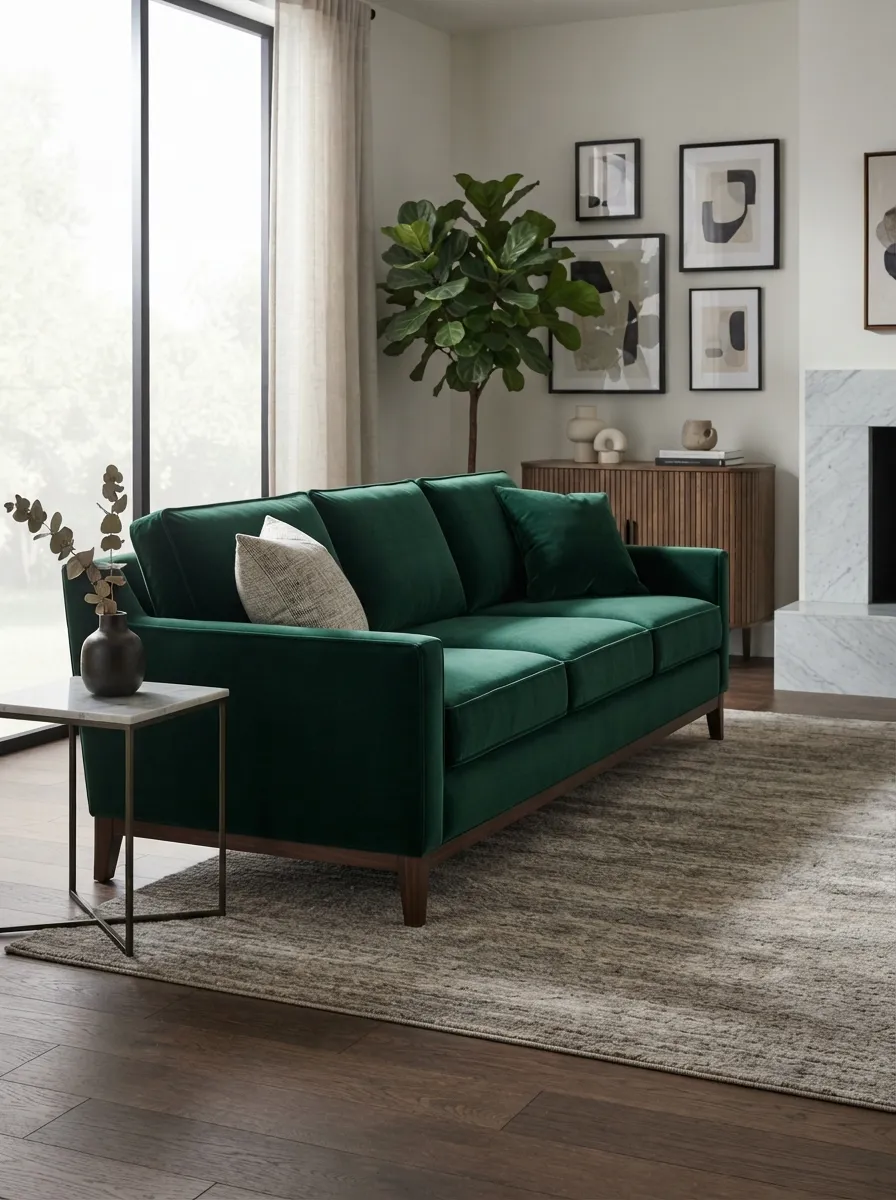
A deep emerald velvet sofa works best when the room gives the color enough calm space to register. Warm plaster, pale stone, muted wood, and a restrained rug can all support the green without turning the room into a collection of competing jewel tones.
Directional daylight is particularly useful here because it creates visible light-and-dark shifts across the exposed upholstery surface. That variation helps the sofa feel dimensional even when the silhouette itself is simple. A matte wall or a quiet rug gives the eye somewhere to rest, while a small amount of darker wood or metal can give the green enough visual weight to feel intentional.
The color is already doing the decorative work, so surrounding furniture can stay comparatively restrained. A low table, one sculptural lamp, and a few carefully chosen accents are usually enough to frame the sofa. When moving from inspiration to shopping, compare the visible color, silhouette, and surface appearance first; exact fiber composition, care guidance, and product performance should be confirmed with the merchant.
Use rust velvet to build an earthy, warm living room
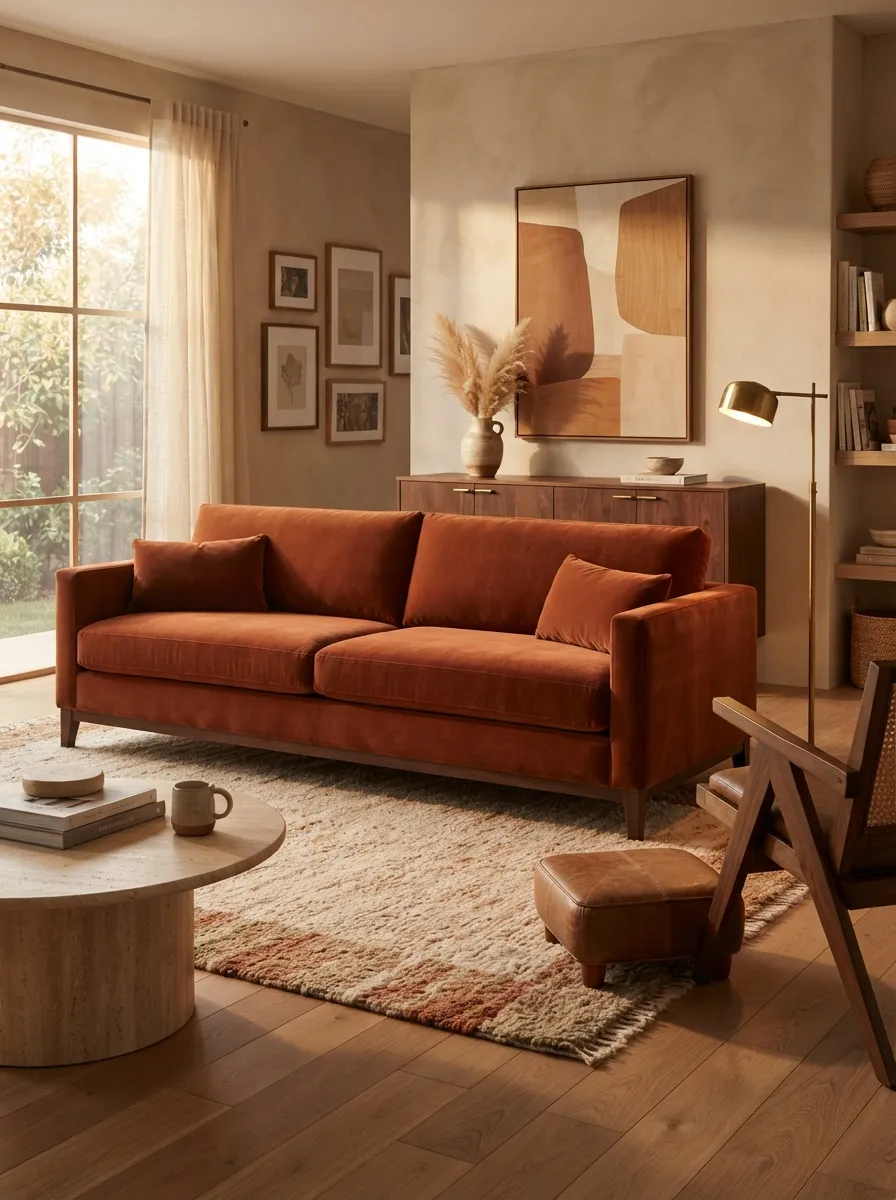
Rust sits naturally beside wood, terracotta, warm stone, and soft neutral walls. On velvet, that earthy color becomes richer because light moves across the upholstery instead of reading as one completely flat field.
Late-afternoon light can make a rust sofa feel especially connected to the room because the upholstery and surrounding woods share a warm visual register. The effect is strongest when the room avoids too many equally saturated accents. Let the sofa carry most of the orange-red intensity, then use natural wood, cream, brown, and soft black to give the palette structure.
The sofa should still read clearly as furniture, not simply as a block of color. Visible arm shape, cushion breaks, and the relationship between the seat and the floor help keep the silhouette legible. A rust velvet sofa can feel relaxed or tailored depending on the form, so the public image should guide the style direction while product-specific construction and upholstery details remain a separate verification step.
Make navy velvet feel architectural with cooler daylight
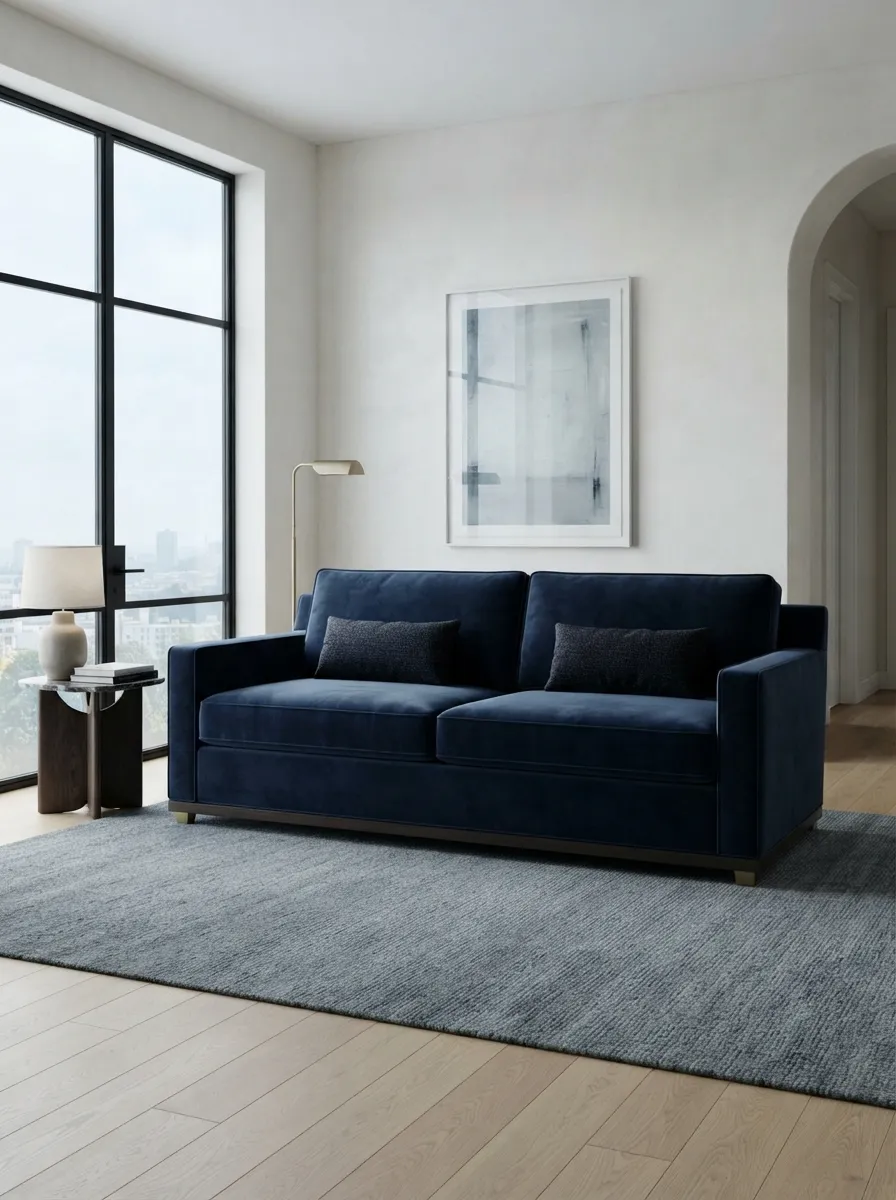
Navy velvet can move a room in a more formal or architectural direction, especially when it sits against pale walls, clean lines, and cooler daylight. The color is deep enough to anchor a large wall but restrained enough to work without a highly decorative palette.
Cooler daylight makes the blue easier to distinguish from charcoal or black while still preserving the sofa’s depth. A pale floor, light stone table, or soft gray rug can create separation around the upholstery, making the sofa’s outline easier to read from across the room.
This is a useful setting for a more tailored sofa form because the saturated blue already provides enough visual interest. The rest of the room can rely on geometry rather than additional color. If the sofa will sit against a strong architectural backdrop, look carefully at the back height, arm shape, and base treatment in product imagery. Those visible features determine how cleanly the piece relates to the surrounding lines.
Let taupe velvet add texture without taking over the room
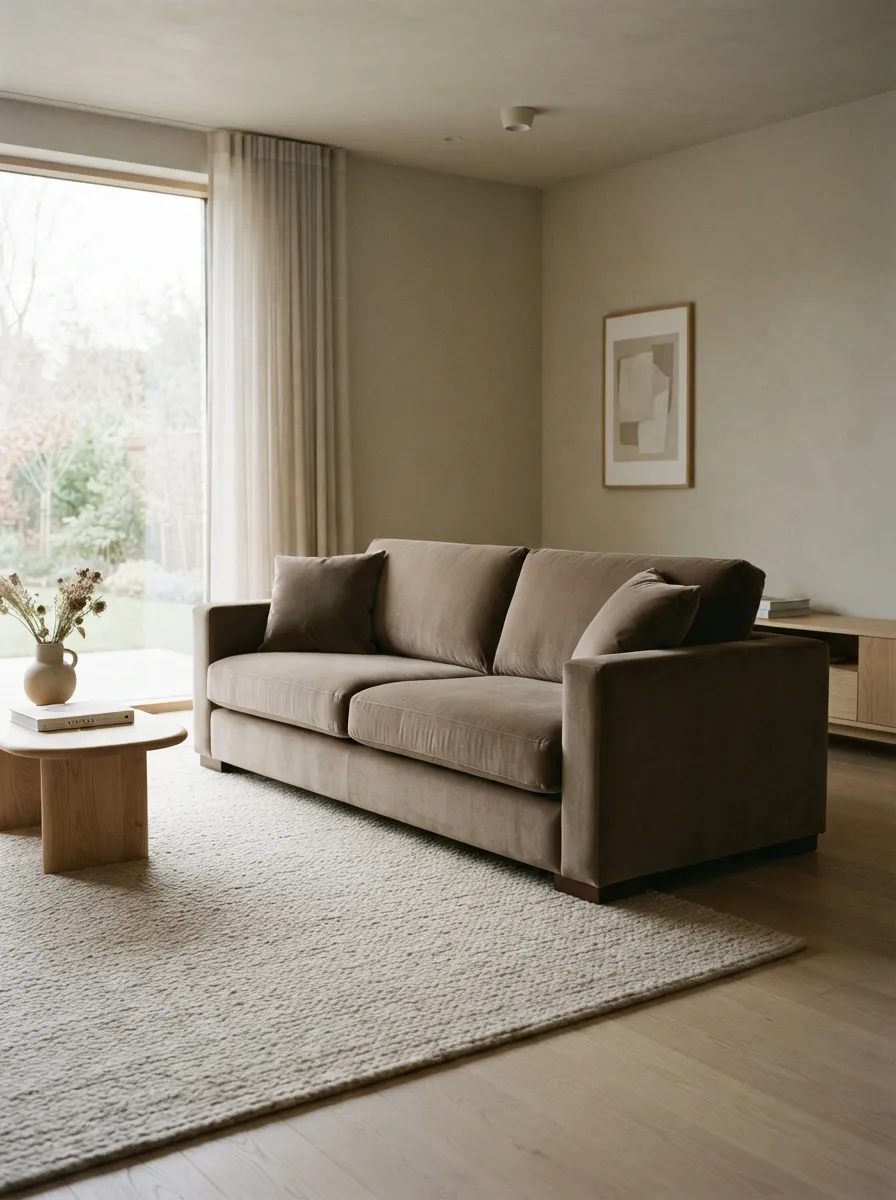
Not every velvet sofa needs to be a high-contrast statement. Mushroom and taupe tones can make velvet function more quietly, using surface variation rather than saturated color as the main source of depth.
In a warm minimalist room, this is useful because the sofa can stay within the same family as the walls, rug, and wood while still remaining visually distinct. Soft morning light across a broad upholstered surface can reveal changes in tone that would disappear on a flatter material.
Keep the surrounding palette narrow but not identical. Pale oak, warm white, soft brown, and stone can create small differences in value and texture around the sofa. The result is calmer than a jewel-tone room but still material-rich. For product matching, focus on the visible taupe or mushroom color, the amount of exposed upholstery surface, and the sofa silhouette; do not infer hidden fiber or performance properties from the photograph.
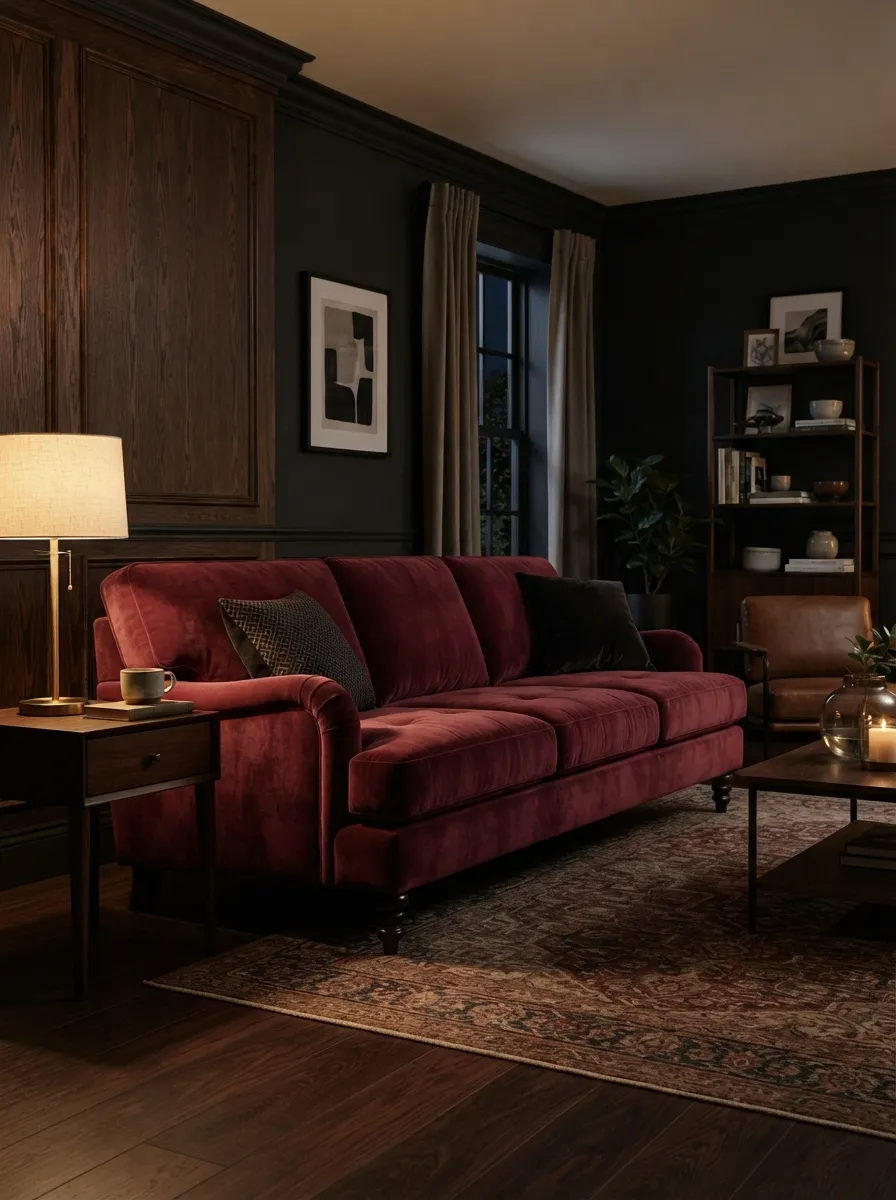
Use burgundy velvet to deepen a moody evening room
Burgundy velvet works especially well when the living room is designed around low light, dark wood, and warm pools of illumination. The sofa can hold a rich red tone without requiring bright contrast elsewhere.
The challenge is keeping the room from becoming one continuous dark mass. A slightly lighter rug, a reflective or pale tabletop, or a warm lamp near the sofa can reveal the outline of the seating and keep the burgundy distinct from nearby wood. The soft sheen visible on velvet can also help separate curved arms, cushion edges, and back panels in lower light.
Because burgundy already carries a lot of emotional weight, the rest of the room can stay edited. One or two warm accents are enough. If the image inspires a purchase, treat it as a guide to color and atmosphere, then verify the exact upholstery, care requirements, dimensions, and other product-specific details separately.
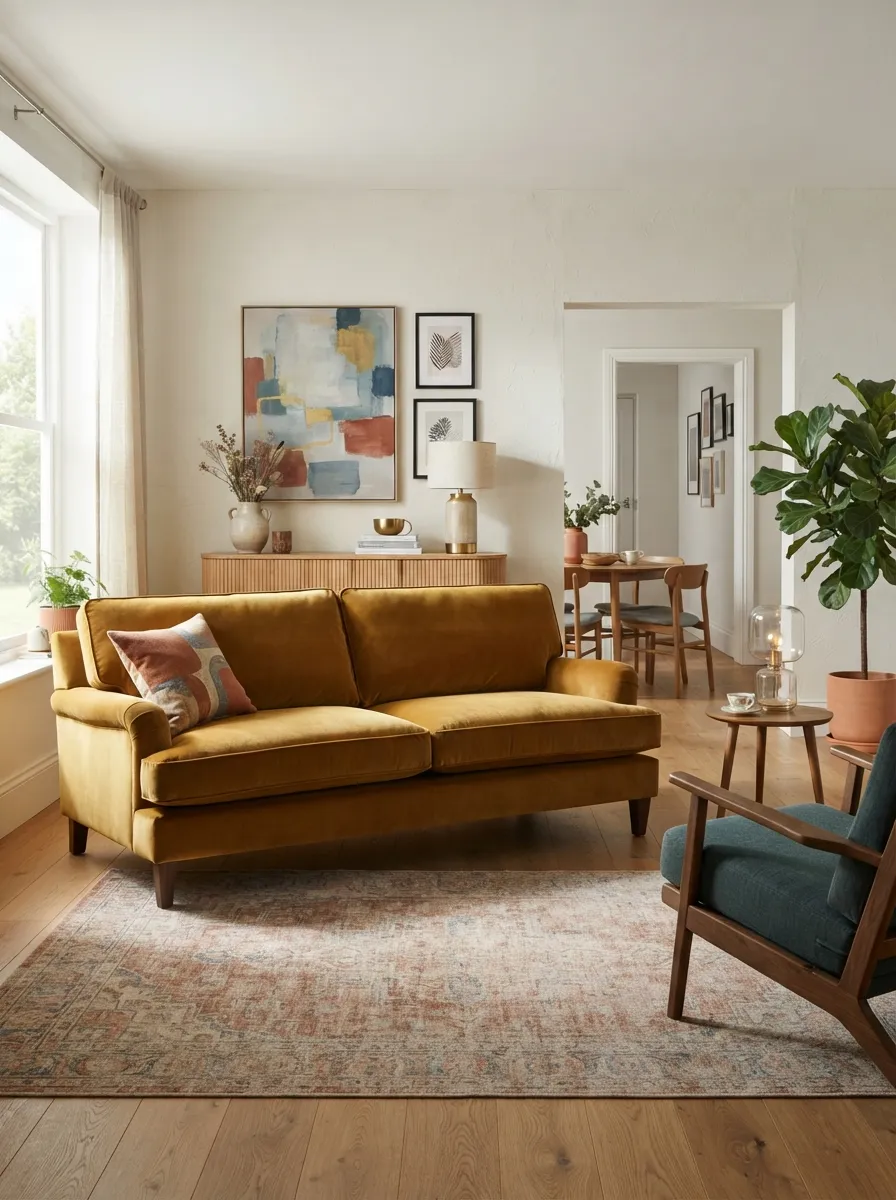
Let ochre velvet energize a brighter eclectic-modern room
Golden ochre velvet is useful when the goal is color without heaviness. It can act as the living room’s hero while allowing art, wood, ceramics, and other accents to add personality around it.
Natural daylight makes ochre feel more open and yellow-forward, while the visible velvet surface keeps the color from reading as a single flat block. That combination works well with an eclectic-modern mix because the sofa is strong enough to unify several different supporting materials.
Keep the largest surrounding surfaces relatively calm. A light wall, neutral rug, and simple table can give the ochre sofa room to lead, while smaller accents can introduce blue, green, terracotta, or black without competing for dominance. The key is hierarchy: the sofa should remain the first object the eye reads.
Use light to reveal velvet, not to make unsupported promises
Across all six color directions, the most important visual quality is the way light moves across the exposed upholstery. Directional daylight can create subtle tonal shifts. Softer morning light can make a neutral velvet sofa look quiet and tactile. Evening lamps can deepen burgundy or brown-red tones. Cooler daylight can sharpen navy, while bright natural light can make ochre feel more energetic.
Those are visible styling observations, not product-performance claims. An image cannot establish what fibers are used, how a fabric should be cleaned, how it will age, or how it will perform in a particular household. If those questions matter to the purchase, the exact merchant listing and manufacturer guidance should decide them.
This distinction helps keep inspiration useful. Let the image answer the visual questions—color, sheen, silhouette, room context, and light. Let the product page answer the hidden ones.
Keep the sofa as the room’s material hero
Velvet is most convincing when the room does not compete with it at every surface. A sofa with a visible directional surface already brings texture, color depth, and changing light into the composition. Surrounding materials should give that effect contrast rather than duplication.
Matte plaster, wood, stone, woven rugs, glass, and metal can each frame velvet differently. Harder or flatter surfaces make the sofa feel softer by comparison; warm wood can pull out earthy undertones; pale stone can sharpen jewel colors; darker wood can deepen burgundy and navy. The relationship is visual rather than technical, and it is one of the clearest ways to decide which velvet color belongs in a particular room.
Choose the color that matches the room you want to build
Emerald creates a sophisticated green focal point. Rust makes a room feel earthy and warm. Navy gives the sofa a cooler, more architectural presence. Taupe lets velvet behave as quiet texture. Burgundy supports a dark, intimate evening atmosphere. Ochre brings a brighter, more playful kind of color.
The best choice is the one that works with the room’s existing light and materials without requiring every other element to change around it. Once the color direction is clear, compare sofa silhouettes and visible upholstery appearance, then verify all hidden specifications with the merchant before buying.
A velvet sofa should be memorable because of the way color, surface, and light work together. When those three elements are aligned, the sofa becomes a clear living-room hero rather than just another upholstered piece.